Why Mold Happens Around the World
Let’s begin with something we often take for granted: the freshness of our food. We rinse a handful of strawberries, toss them into lunchboxes, or store leafy greens hoping they’ll last until the week’s end. But mold doesn’t wait for dinner plans. It doesn’t care if food is organic, homegrown, or air-freighted. All it needs is warmth, moisture, and a small crack in the system.
In today’s unstable climate and overburdened food chains, fungi are silently taking over. Fungal contamination now causes up to 25% of global crop loss annually (FAO, 2023). That’s more than spoiled fruit—it’s food insecurity, economic loss, and health risks wrapped in plastic.
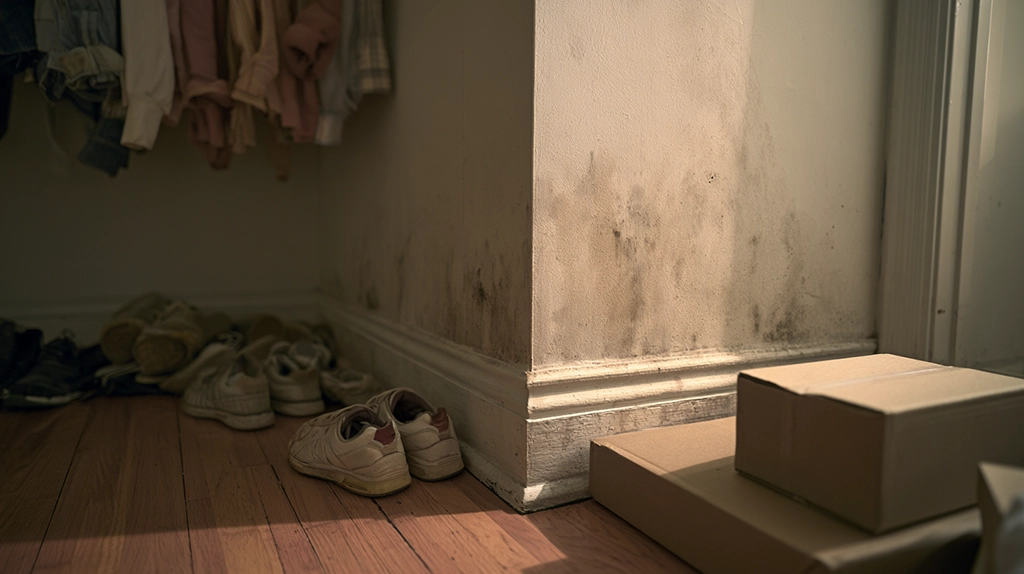
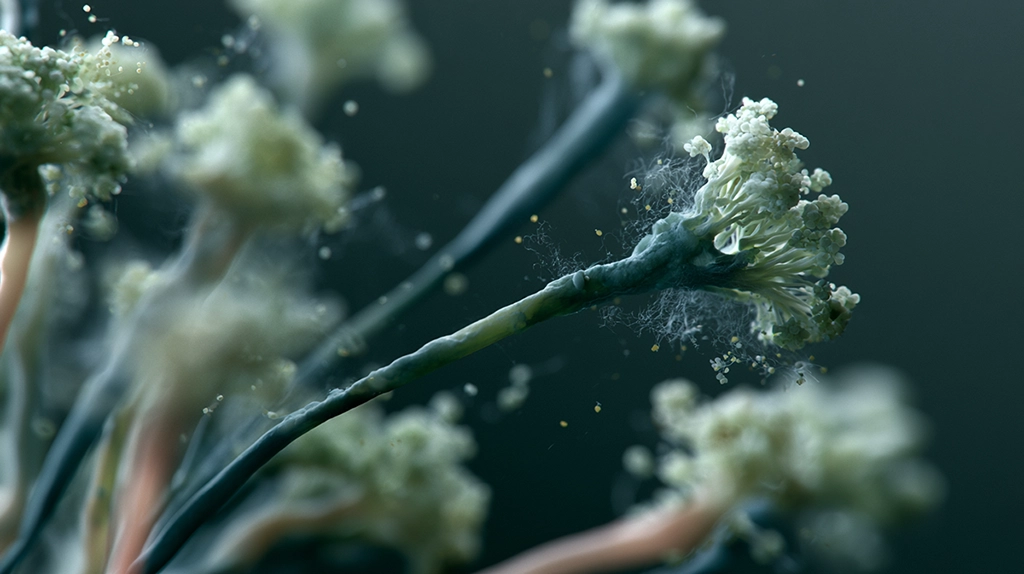
Chemical fungicides are being banned, and resistance is rising. At the same time, most of our inspection tools only see the surface—letting fungi spread unnoticed. Spores hide not only on produce but in packaging, plastic crates, and poorly ventilated corners. These overlooked places—like rubber fridge seals or damp storerooms—are where dangerous molds such as Aspergillus niger and Stachybotrys chartarum silently thrive.
That’s where linalool enters the scene.

Source: Wikimedia Commons, CC BY 2.5
From Spa Scent to Fungal Fighter
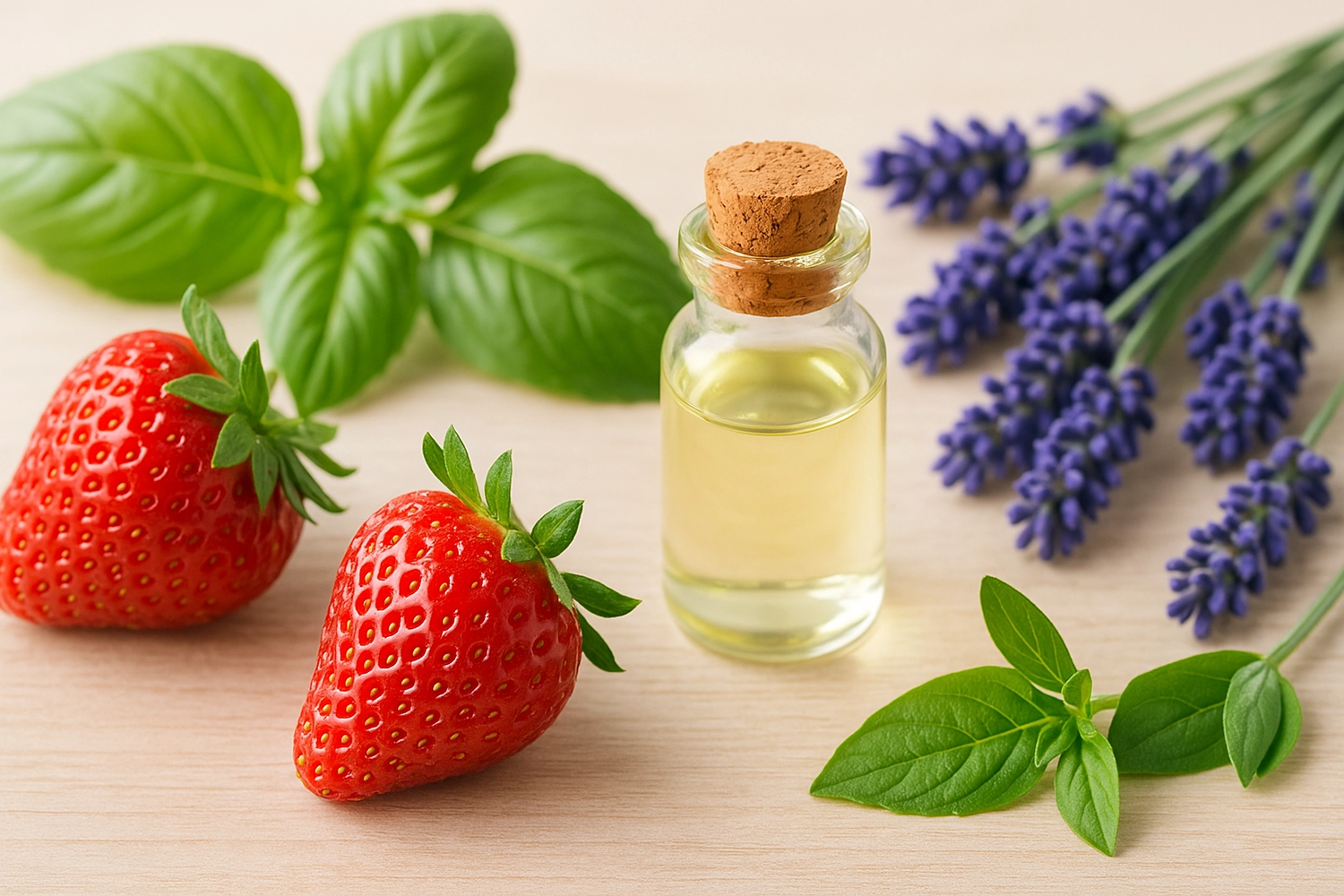
Linalool, a natural compound found in lavender and basil, is best known for its soothing scent. But researchers are now discovering its unexpected superpower: fighting mold.
In a 2024 study, scientists tested linalool on goji berries infected with Alternaria alternata, a mold that commonly ruins fruit after harvest. What happened was remarkable. Lesion size on the berries shrank by 78% in five days. Mold spore growth dropped over 90%. At a molecular level, the linalool interfered with how the fungus built its cell walls and protected itself, causing it to collapse from the inside.
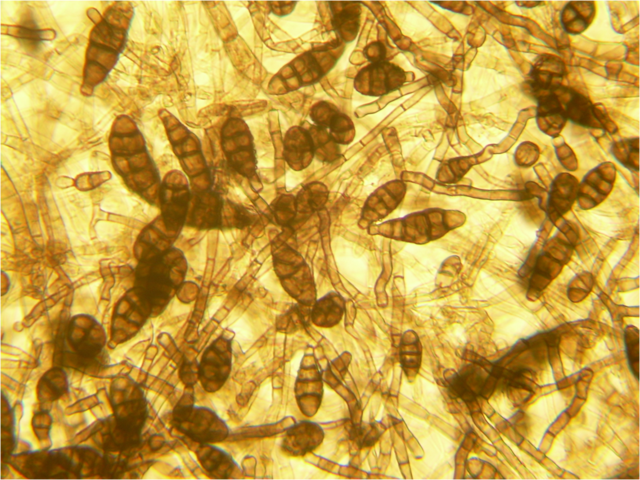
Source: Wikimedia Commons, CC BY 2.5
The Bigger Promise
Half of fruit spoilage happens after harvest. That means damage during shipping, while sitting in warehouses, or even on store shelves. When heat and moisture rise, mold spreads—quickly. Current solutions rely on harsh fungicides, many of which are now under scrutiny or banned. Linalool offers a safer alternative. It can be added as a natural vapor in storage, misted over produce, or included in packaging.
But the threat isn’t just on the fruit. Mold hides in unexpected places: crate linings, packaging foam, the corners of coolers. These become invisible breeding grounds for black mold, which not only damages food but also releases harmful spores that affect health.
Linalool’s vapor doesn’t just protect fruit—it helps disinfect the air and surfaces around it. That makes it more than a preservative. It’s an environmental shield.
From Farms to Pharmacies
Linalool’s mold-fighting abilities don’t stop at produce. Because it disrupts genes in fungi, scientists are exploring its medical potential—like creams for skin infections, dental rinses, or hospital sprays for sterilization. With the right delivery systems, it could one day show up in over-the-counter creams or air-sanitizing devices in clinics.

Source: Wikimedia Commons, CC BY 2.5
What’s Holding It Back
Here’s the challenge: linalool evaporates fast. That’s great in aromatherapy, but not ideal for long-term mold control. If it fades too quickly, its power vanishes before it can fully protect food.
Scientists are now working on ways to stabilize it—like trapping it in microbeads or blending it into slow-release coatings. These innovations could turn linalool into an antifungal spray or vapor that works for days instead of minutes. It might soon be possible to use linalool safely in food storage, hospital settings, and even home refrigerators.
If these stabilization methods succeed, linalool could change the way we protect food and spaces—offering a cleaner, safer alternative to chemical preservatives.
What Needs to Happen Next
To make this shift real:
- Researchers must improve delivery of linalool, ensuring effectiveness over time.
- Food companies and cold-chain operators should test linalool mists, liners, and containers.
- Pharma developers should investigate linalool-based solutions for skin and respiratory fungal issues.
- Regulators need to include safe natural antimicrobials like linalool in safety standards.
A New Standard for Clean
Consumers are ready for a new standard of clean—one that protects their food and health without harsh chemicals. Linalool is more than a fragrance; it’s a practical, natural solution for mold control across food storage, air treatment, and even healthcare settings.
Its promise is clear: lower spoilage, cleaner environments, and safer alternatives to synthetic fungicides. But its potential will only be realized if we build it into systems now—before contamination becomes the cost of inaction.
References
- IPCC – Climate Change Reports
- Wikipedia – Aspergillus niger, Stachybotrys chartarum, Alternaria alternata, Linalool
- Wikipedia – Microencapsulation
- The Lancet – Fungal Resistance Overview
Key Takeaways
- Linalool—a naturally occurring monoterpene alcohol found in lavender, coriander, basil, and hundreds of other plant species—is emerging as a promising natural antifungal agent for post-harvest fruit and vegetable preservation.
- Studies have demonstrated linalool’s effectiveness against common post-harvest mold pathogens including Botrytis cinerea (grey mold), Penicillium expansum (blue mold), Aspergillus niger, and Rhizopus stolonifer (black bread mold) at relatively low concentrations.
- The mechanism of linalool’s antifungal action includes disruption of fungal cell membrane integrity, inhibition of ergosterol biosynthesis, and interference with mitochondrial function—multiple simultaneous targets that reduce the likelihood of resistance development.
- Linalool vapor (volatile form) can inhibit mold growth on produce in closed storage environments, potentially allowing fumigation-style treatment without the food safety concerns of synthetic chemical fumigants.
- Consumer acceptance of linalool-based post-harvest treatments may be higher than for synthetic fungicides because linalool is naturally derived, has low toxicity, and is associated with the pleasant floral/citrus scents of familiar products.
Frequently Asked Questions
What is linalool and where does it come from?
Linalool is a naturally occurring monoterpenoid alcohol with the chemical formula C₁₀H₁₈O—one of the most abundant terpenoid compounds in nature and a major component of the essential oils of hundreds of plant species. Chemical identity: linalool exists in two mirror-image forms (enantiomers): (R)-(-)-linalool has a woody, lavender-like scent and is the predominant form in lavender (Lavandula spp.) and many other plants; (S)-(+)-linalool has a sweeter, more floral scent and predominates in coriander (Coriandrum sativum) and some citrus. Plants producing significant linalool: lavender (Lavandula angustifolia)—perhaps the most familiar source; linalool comprises 25–40% of lavender essential oil. Coriander (Coriandrum sativum) seed oil—60–80% linalool; responsible for the characteristic fragrance. Basil (Ocimum basilicum)—several chemotypes, some linalool-rich. Sweet orange (Citrus sinensis)—linalool in orange peel oil contributes floral notes. Rosewood (Aniba rosaeodora)—historically a major commercial source of linalool; now threatened by overharvesting; synthetic linalool is preferred for sustainability. Industrial production: linalool is commercially produced both by extraction from plant sources and by chemical synthesis from petrochemical precursors; global production is estimated at thousands of tonnes annually; it is one of the most widely used fragrance ingredients in cosmetics, personal care, and household products. Regulatory status: linalool is Generally Recognized as Safe (GRAS) by the US FDA as a food flavouring ingredient; it is approved as a food additive in the EU (E1105 as a flavouring); it is listed in the International Fragrance Association (IFRA) guidelines as a safe fragrance ingredient with allergen disclosure requirements at higher concentrations.
How effective is linalool against common post-harvest molds?
Research on linalool as a post-harvest antifungal agent has produced encouraging results across multiple fungal pathogens and produce types, positioning it as one of the more scientifically validated natural compound alternatives to synthetic post-harvest fungicides. Documented antifungal activity: Botrytis cinerea (grey mold)—one of the most economically important post-harvest pathogens, affecting strawberries, grapes, table grapes, tomatoes, and many vegetables; linalool at concentrations of 1–10 μL/mL (in vitro) consistently inhibits B. cinerea spore germination and hyphal growth; vapour phase linalool at 0.5–2 μL/L (air concentration) inhibits B. cinerea on strawberries in closed storage experiments, with studies from China, Spain, and Italy showing 50–80% reduction in disease incidence. Penicillium expansum (blue mold on apples and pears)—linalool shows strong inhibitory activity; combination with physical treatments (heat treatment, UV-C) enhances efficacy. Aspergillus niger—responsible for ‘black mold’ on onions, dates, and other produce; linalool effective in vitro; field application studies are more limited. Rhizopus stolonifer (black bread mold, soft rot on strawberries, peaches)—inhibited by linalool in post-harvest experiments. Mechanisms underlying these effects: cell membrane disruption—linalool is lipophilic and integrates into fungal plasma membranes, altering membrane permeability and causing intracellular content leakage; ergosterol biosynthesis inhibition—linalool interferes with sterol biosynthesis pathways, depleting ergosterol and compromising membrane integrity; mitochondrial dysfunction—studies show linalool reduces mitochondrial membrane potential and inhibits complex II activity in Botrytis.
Is linalool safe to use on food?
Linalool has an established food safety profile reflecting its widespread natural occurrence in commonly consumed plant foods and its long history of use as a food flavouring ingredient. Safety profile overview: natural occurrence—linalool is consumed daily by virtually everyone who eats herbs and spices; normal dietary intake from naturally occurring linalool in foods (fresh herbs, citrus, spices) is estimated at hundreds of micrograms to low milligrams per day. GRAS status—the US FDA has affirmed linalool GRAS status as a food flavouring ingredient; maximum use levels permitted vary by food category but are in the range of 1–100 mg/kg in processed foods. EU food additive approval—linalool is approved as a flavouring substance (FLAVIS number 02.014) in the EU; the EFSA Panel on Food Additives and Flavourings (ANS) has evaluated linalool as safe at current use levels. Allergen considerations: linalool is a recognised fragrance allergen under EU Cosmetics Regulation; it must be listed on cosmetic labels when present above 0.001% in rinse-off products or 0.01% in leave-on products; this allergen potential is primarily relevant for dermal contact (cosmetics), not oral exposure; contact sensitisation from food-borne linalool is extremely rare. Post-harvest treatment residues: when linalool is used as a post-harvest treatment (washing, coating, or vapour fumigation), residue levels in treated produce depend heavily on the application method; linalool is volatile and evaporates rapidly from produce surfaces; brief vapour treatment leaves minimal residue; comprehensive residue studies for regulatory approval as a post-harvest treatment would be required before commercial use. Safety summary: linalool at naturally occurring food levels and at typical flavouring concentrations is well-established as safe; use as a post-harvest antifungal agent would require regulatory review and specific residue tolerance approval in most markets.
What essential oils have the strongest antifungal properties?
Multiple essential oils and their constituent compounds have demonstrated antifungal activity in laboratory and post-harvest studies, with potency varying substantially by target fungus and application conditions. Most potent antifungal essential oils (documented by systematic review evidence): thyme oil (thymol, carvacrol)—consistently among the most potent antifungal essential oils in laboratory studies; thymol (at 50–500 μg/mL) inhibits virtually all tested fungal species; disrupts cell membrane integrity; effective against Candida, Aspergillus, Fusarium, and many post-harvest pathogens. Oregano oil (carvacrol, thymol)—similar potency and mechanism to thyme; carvacrol and thymol are the primary active components. Clove oil (eugenol)—strong antifungal activity; eugenol disrupts fungal membrane function; effective against Candida biofilms; also analgesic properties relevant to dental applications. Cinnamon bark oil (cinnamaldehyde)—potent antifungal; disrupts multiple fungal cellular functions; stronger activity than leaf oil; highly irritating at therapeutic concentrations. Tea tree oil (terpinen-4-ol)—documented antifungal activity, particularly against dermatophytes and Candida; clinical evidence for tinea pedis treatment. Lemongrass oil (citral)—effective against Aspergillus and other food-contaminating molds; potential food preservation application. Lavender oil (linalool, linalyl acetate)—antifungal activity, though more moderate than thyme or oregano; better tolerability for cosmetic and therapeutic applications. Important caveats: in vitro laboratory efficacy does not always translate to practical efficacy in complex food matrices or on produce surfaces; many essential oil compounds are highly volatile and lose activity rapidly; they can also affect food flavour at antifungal concentrations; formulation into stable delivery systems is a major challenge for food and therapeutic applications.
Could linalool replace synthetic fungicides in post-harvest produce treatment?
Linalool and other essential oil components have genuine potential to replace some synthetic post-harvest fungicide uses, but complete replacement faces practical limitations related to efficacy, formulation, regulatory approval, and cost. Where replacement is most feasible: organic produce post-harvest treatment—the organic market prohibits most synthetic fungicides; linalool and other approved natural compounds are among the limited options available for organic post-harvest treatment; consumer willingness to pay premiums for organic produce offsets the higher cost and potentially lower efficacy of natural alternatives. Short-shelf-life produce—for produce sold quickly (strawberries, soft fruits, fresh herbs), the limited persistence of linalool is less problematic than for produce requiring months of storage. Complementary rather than replacement approach: combining linalool with other natural treatments (heat treatment, UV-C, biocontrol agents, modified atmosphere) creates synergistic effects that overcome individual treatment limitations; a ‘multi-hurdle’ approach using lower concentrations of multiple antimicrobials (each below individual efficacy thresholds) can achieve together what neither achieves alone; this reduces residue concentrations and resistance development risk while maintaining efficacy. Practical barriers to complete replacement: efficacy gap—synthetic fungicides like fludioxonil and azole fungicides achieve 90–95%+ disease reduction under commercial conditions; linalool alone typically achieves 50–70% reduction in optimal conditions; this gap is significant for commercial growers targeting near-zero losses. Formulation challenges—linalool is volatile and hydrophobic; formulation into stable, water-dispersible sprays or coatings that maintain antifungal activity while allowing application at commercial scale requires significant development. Regulatory pathway—each country has its own post-harvest pesticide registration requirements; obtaining approval for linalool as a registered post-harvest fungicide in major markets (US, EU, Japan) requires extensive efficacy and residue data; cost and time of registration may limit commercial development.