There are topics in science that stay in textbooks.
And then there are those that begin to move the world — quietly, steadily, and with mounting influence. Zearalenone is the latter. A toxin you’ve likely never heard of unless you’ve walked the fields of crop science, studied food safety, or stepped inside the corridors of biotechnology.
But its effects? Profound.

Source: Wikimedia Commons, CC BY-SA 4.0
What Is Zearalenone — And Why Does It Matter?
According to recent market research, the development of zearalenone-targeting antibodies is gaining noticeable momentum. Estimates suggest the global market could grow from approximately $11.8 million in 2023 to over $45 million by 2031.
While this data doesn’t imply a financial recommendation, it highlights an important global trend: growing awareness, investment in research, and increasing demand for diagnostic solutions in the face of toxin-related risks.
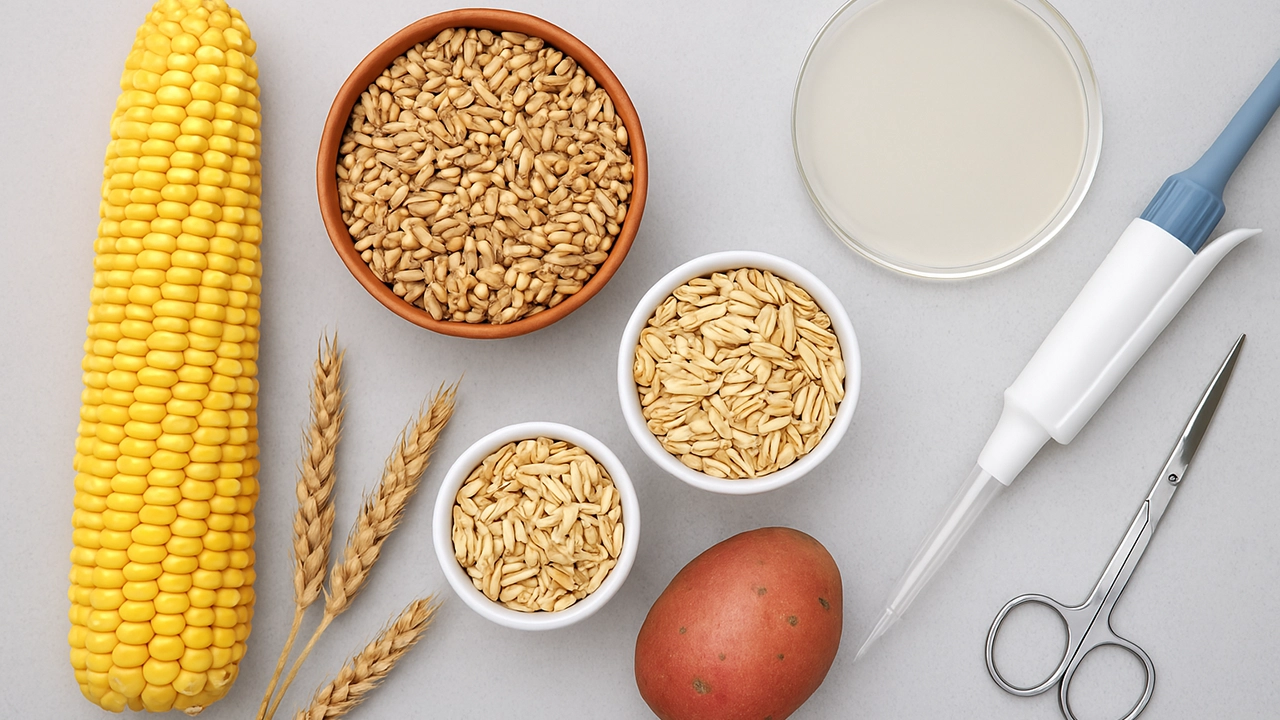
Zearalenone is a mycotoxin produced by certain Fusarium fungi. It thrives in grains like corn, wheat, and barley — especially when crops are stressed by humidity and poor storage.
But it isn’t just a nuisance for farmers.
Zearalenone mimics estrogen. It’s what scientists call “estrogenic” — meaning it can disrupt hormone systems in both humans and animals. The toxin’s presence has been linked to reproductive issues, especially in livestock. In humans, long-term exposure is a growing concern in public health circles, although research continues.
For decades, zearalenone flew under the radar. But now, with increasing global focus on food safety and endocrine disruptors, it’s stepping into the spotlight. The world is becoming more attuned to what’s entering our food systems — and what that means for long-term health.
What’s Changing in Science and Industry?
One of the most notable shifts is how detection has evolved. In the past, identifying zearalenone in food and feed took time — and often, by the time results came in, contamination had already done damage. But antibody-based technologies are changing that.
Antibodies — particularly monoclonal and polyclonal — are now being developed to detect zearalenone with remarkable accuracy. These are tools used in diagnostics, helping laboratories detect toxins faster and with greater reliability.
ELISA tests, immunofluorescence, and immunohistochemistry are among the primary methods now leveraging these antibodies.
Biotech companies are contributing to this transformation. From Europe to North America, and across Asia, research labs and production firms are refining how we spot mycotoxins.
And with climate change shifting the fungal ecology of many agricultural zones, there’s a sense of urgency.
It’s not simply about science anymore — it’s about preparedness.
Food security, agricultural health, and public trust all depend on the ability to manage invisible threats like zearalenone.
Global Market Trend Towards Mycotoxin Antibody
Recent life science advancements highlight a focus on sophisticated biological tools.
Merck‘s May 2024 acquisition of Mirus Bio to enhance gene and cell therapy, while not mycotoxin-specific, signals investment in antibody-based technologies with diagnostic potential.
Similarly, Proteintech’s April 2024 launch of the MultiPro™ Antibody Cocktail showcases evolving antibody research that could indirectly impact contaminant diagnostics like zearalenone.

Source: Wikimedia Commons, CC BY-SA 4.0
Globally, mycotoxin management varies. North America and Europe have strong regulations and testing, but emerging agricultural economies in Asia-Pacific, Latin America, and Africa face uneven access despite growing awareness.
International cooperation, research sharing, and affordable testing technologies are crucial to bridge this gap.
Despite regional differences, the shared goal is safer food through better diagnostics and prevention.
Stakeholders are exploring:
- Routine mycotoxin testing across stages
- Transparent toxin reporting for traceability
- Incentives for toxin-free certification aligning stakeholders
These strategies improve public health, reduce costs, enhance export readiness, and build supply chain resilience.
Beyond the Lab — The Broader Implications
The rise of zearalenone antibody research offers a deeper reflection of our time. It’s a convergence of science, policy, and public health.
We are learning to see food not just as a commodity, but as a system — one deeply affected by biology, climate, and global movement.
And within that system, mycotoxins like zearalenone serve as both a challenge and an indicator: of how well we store food, how fast we act, and how much we invest in science that protects people before they fall ill.
Zearalenone may be invisible to the naked eye, but it is no longer hidden.
From crop fields to lab benches, from policy rooms to international research journals, it is part of a much larger conversation.
This conversation isn’t just about a single toxin.
It’s about how we, as a global community, respond to subtle but significant risks — not with fear, but with understanding, with science, and with coordinated action.
References
- FAO/WHO Joint Expert Committee on Mycotoxins (JECFA) Report, 2022
- PubMed: Reproductive toxicity of zearalenone in mammals (2018).
- EFSA (2023). Mycotoxin Regulations and Risk Assessment in Europe.
Key Takeaways
- Zearalenone (ZEN) is a mycotoxin produced by Fusarium species that contaminates cereal grains globally and has attracted growing regulatory attention because of its potent estrogenic activity—it mimics the hormone estrogen and can disrupt reproductive function in exposed mammals.
- ZEN and its metabolites bind to estrogen receptors with high affinity, classifying it as a mycoestrogen—one of the most potent naturally occurring endocrine-disrupting compounds found in the human food chain.
- Swine are the most sensitive domestic animal species to ZEN toxicity, with reproductive effects (hyperestrogenism syndrome) occurring at dietary concentrations well below those causing clinical effects in other species.
- Global cereal grain monitoring consistently detects ZEN at significant frequencies—EU surveillance data show ZEN presence in approximately 35–60% of cereal grain samples tested, though most at levels below regulatory limits.
- Climate change models predict increased Fusarium infection pressure in cereal crops due to warmer, wetter growing seasons in key producing regions, suggesting future increases in ZEN contamination if mitigation strategies do not keep pace.
Frequently Asked Questions
What is zearalenone and why is it concerning?
Zearalenone (ZEN) is a mycotoxin—a toxic secondary metabolite produced by fungi—specifically by Fusarium species including F. graminearum (the most important), F. culmorum, F. cerealis, F. equiseti, and F. crookwellense. It contaminates maize, wheat, barley, oats, sorghum, and other cereal crops globally, particularly in temperate and subtropical regions. What makes ZEN uniquely concerning: estrogenic activity—ZEN has strong structural similarity to natural estrogens; it was actually first described as a growth-promoting compound isolated from corn and initially called F-2 toxin or zearanol (a reduced metabolite that was commercialised as a growth promoter in cattle); its ability to bind to estrogen receptors and activate estrogenic signalling makes it one of the most biologically potent naturally occurring food contaminants. Metabolic activation—in mammalian metabolism, ZEN is converted to two metabolites with different receptor affinities: α-zearalenol (α-ZOL)—has higher estrogen receptor binding affinity than ZEN itself; is the predominant metabolite in pigs; responsible for the most severe reproductive effects; β-zearalenol (β-ZOL)—has lower receptor affinity; is the predominant metabolite in ruminants and humans. Species-specific metabolism explains why pigs are more sensitive than cattle or humans. Occurrence and exposure: widespread contamination of staple cereal foods means that human dietary ZEN exposure is not negligible; EFSA (European Food Safety Authority) dietary exposure assessments have found that ZEN exposure exceeds the tolerable daily intake (TDI) for some consumer groups, particularly children with high cereal intake.
How does zearalenone affect human health?
The human health implications of dietary zearalenone exposure are an active area of research and regulatory concern, with established effects in animal models and growing epidemiological evidence regarding human populations. Hormone disruption mechanism: ZEN and its metabolites bind to both estrogen receptor alpha (ERα) and estrogen receptor beta (ERβ), the two forms of the estrogen receptor found in human cells; ERα binding drives classic estrogenic effects (uterine stimulation, breast cell proliferation); ERβ binding may have antiproliferative effects in some tissues; the balance of α and β receptor activation by ZEN and its metabolites depends on tissue type and metabolism. Reproductive effects: in pre-pubertal girls, estrogenic contamination from any source accelerates puberty onset; early studies in Puerto Rico (1985) investigated whether ZEN-contaminated food contributed to premature thelarche (early breast development) in young girls—this remains epidemiologically controversial but biologically plausible. Women of reproductive age exposed to ZEN show altered menstrual cycle length and hormone profiles in some but not all studies. Cancer risk: estrogen-sensitive cancers (breast, uterine) may be influenced by chronic low-level ZEN exposure; in vitro studies show ZEN stimulates breast cancer cell proliferation; epidemiological evidence for ZEN specifically (independent of endogenous estrogen) is limited due to the difficulty of isolating dietary ZEN exposure from other factors. Immune effects: ZEN has been shown to impair immune cell function in animal and in vitro studies; immunosuppressive effects at realistic dietary exposure levels are being assessed. Gut microbiome: ZEN at dietary levels alters gut microbiome composition in animal studies, with downstream effects on estrogen metabolism through the enterohepatic circulation.
What are the regulatory limits for zearalenone in food?
Zearalenone is regulated in the European Union and in an increasing number of other countries, with maximum levels (MLs) set for different food and feed commodities based on dietary exposure assessments and risk characterisation. EU regulatory framework (Commission Regulation (EC) No 1881/2006 and subsequent amendments): unprocessed cereals (maize, wheat, barley, oats): 100 μg/kg (ppb); cereal flour and bran: 75 μg/kg; maize flour, meal, and grit: 200 μg/kg; bread and baked goods: 50 μg/kg; breakfast cereals: 50 μg/kg; maize-based snacks: 50 μg/kg; processed cereal-based foods for infants and young children: 20 μg/kg (lower limit acknowledging higher sensitivity in young children). EFSA tolerable daily intake (TDI): EFSA set a TDI of 0.25 μg/kg body weight/day for ZEN (including metabolite equivalents); dietary exposure assessments show that this TDI may be exceeded for some high-cereal consumers, particularly children. US regulatory status: the FDA has not established specific action levels for ZEN in human food; ZEN is monitored as part of general mycotoxin surveillance but there is no enforceable ML; animal feed guidance exists for specific animals. Global variation: Japan, China, South Korea, and many other countries have established national limits; considerable variation exists in limit values and the commodities covered; Codex Alimentarius has not yet established an international standard for ZEN in human food.
Which foods are most contaminated with zearalenone?
Zearalenone contamination is primarily associated with cereal grains, with contamination levels varying substantially by crop species, geographic region, growing season weather conditions, and post-harvest handling practices. Highest-risk commodities: maize (corn)—the commodity with the highest average ZEN contamination in global monitoring data; maize is particularly susceptible because Fusarium graminearum, the primary ZEN-producing species, is a major maize pathogen; maize-based products including popcorn, corn tortillas, corn chips, polenta, and baby food made from maize are among the highest exposure sources. Wheat—a major contributor to ZEN exposure in wheat-consuming populations due to high per capita wheat consumption; winter wheat in temperate climates is particularly susceptible to Fusarium head blight, the infection that produces ZEN in wheat. Barley and oats—also susceptible to Fusarium and commonly contaminated; beer made from ZEN-contaminated barley has been found to contain ZEN and its metabolites. Processing effects on ZEN contamination: grain cleaning removes some surface-contaminated grain kernels; milling redistributes ZEN—ZEN preferentially accumulates in the outer layers of the grain (bran), so bran and wholegrain products may have higher ZEN concentrations than refined flour; heat processing (baking, brewing) partially degrades ZEN but does not eliminate it; fermentation can reduce ZEN levels; nixtamalisation (traditional alkaline processing of maize in Mexican cuisine) significantly degrades ZEN. Food safety advice: current dietary exposure to ZEN from a varied diet in most populations is considered low; consumers particularly concerned about ZEN exposure (e.g., those consuming very high cereal diets) can moderate risk by choosing varied grains and well-sourced products.
Is zearalenone in beer a concern for consumers?
Beer is a relevant pathway for human zearalenone exposure because malted barley—the primary brewing cereal—can be contaminated with Fusarium and ZEN, and because ZEN survives the brewing process to a significant extent. ZEN in beer: monitoring studies across European and other countries have found ZEN in beer, with most samples containing low levels; EU monitoring data show that a minority of beer samples exceed the guidance level of 100 μg/kg used for unprocessed cereals, though there is no specific EU maximum level for ZEN in beer; ZEN concentrations in positive beer samples typically range from a few μg/L to occasionally 10–50 μg/L; beer consumption in European countries is high enough that beer could contribute meaningfully to daily ZEN exposure in regular drinkers. ZEN metabolites in beer: the fermentation process converts some ZEN to its metabolites, including α-zearalenol and β-zearalenol; these metabolites have different estrogenic potencies (α-ZOL is more potent); the presence of metabolites means that measuring only parent ZEN may underestimate total estrogenic activity. Dietary exposure context: for a moderate beer consumer (e.g., 500 mL/day of beer at ZEN 10 μg/L), ZEN intake from beer alone would be approximately 5 μg per day; compared to EFSA’s TDI of 0.25 μg/kg body weight/day (~17.5 μg for a 70 kg adult), this represents approximately 28% of the TDI from beer alone, before accounting for dietary exposure from cereal foods; for heavy beer drinkers consuming higher-ZEN beers, the contribution could approach or exceed the TDI. Risk perspective: EFSA’s dietary exposure assessments find that ZEN exposure from all dietary sources combined approaches but does not consistently exceed the TDI for average European adult consumers; heavy consumers and children are the populations of greatest concern.