
According to PHYS.ORG
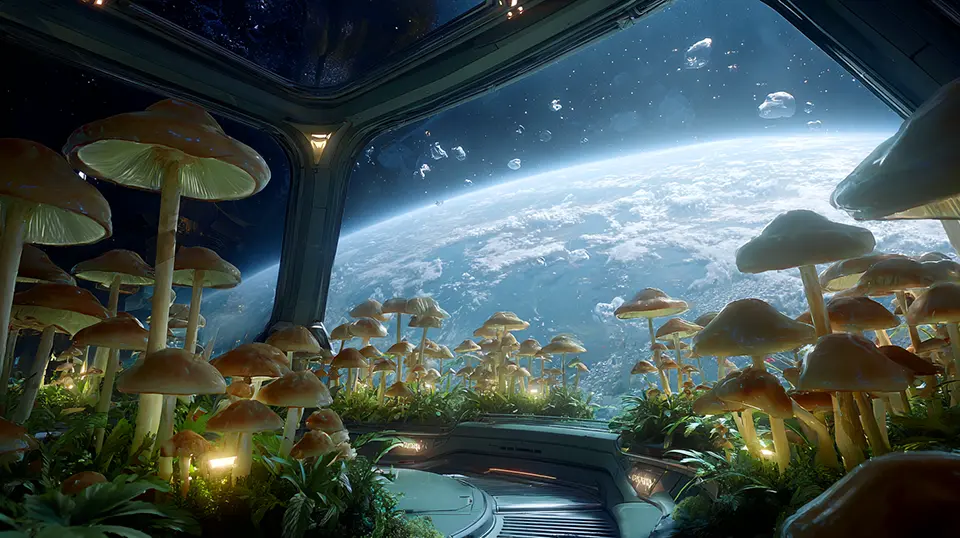
Scientists have reported that mushrooms cultivated in space were safe for human consumption, offering new insights into the feasibility of producing fresh food beyond Earth. The findings come from a study examining fungi grown under spaceflight conditions, addressing long-standing questions about food safety, nutrition, and biological resilience in extreme environments.
The research forms part of broader efforts to develop sustainable life-support systems for long-duration space missions, where resupply from Earth is limited and astronauts must rely increasingly on locally produced food. Mushrooms, long valued on Earth for their nutritional density and low resource requirements, are emerging as promising candidates for space-based agriculture.

Source: Wikimedia Commons – Image Page, CC BY-SA 4.0
Why Mushrooms Matter in Space
Mushrooms occupy a unique position in food systems. As fungi, they do not require sunlight to grow and can thrive on organic substrates, making them well suited to enclosed environments such as spacecraft or space stations. They are rich in protein, fiber, vitamins, and minerals, while also being relatively fast-growing compared with many plants.
For space agencies and researchers, mushrooms offer an attractive solution to several challenges: reducing payload mass, recycling waste, and providing astronauts with fresh food that can supplement packaged meals. However, questions remained about whether fungi grown in microgravity or elevated radiation environments would remain safe and nutritionally stable.

Source: Wikimedia Commons – Image Page, CC BY-SA 3.0
Growing Fungi Beyond Earth
In the reported study, researchers cultivated mushrooms under spaceflight or space-simulated conditions. These environments differ dramatically from Earth in terms of gravity, radiation exposure, atmospheric composition, and microbial dynamics. Such factors could theoretically alter fungal growth patterns, metabolism, or the production of secondary metabolites.
Scientists monitored the mushrooms throughout their development, examining their physical characteristics, growth rates, and biochemical profiles. Particular attention was paid to whether the fungi produced any unexpected toxins or harmful byproducts as a result of the unusual environment.
The Taste Test and Safety Assessment
To assess real-world safety, researchers ultimately consumed the space-grown mushrooms themselves. This step, while unusual, provided a direct demonstration that the fungi posed no immediate health risk. No adverse effects were reported, and the mushrooms were described as comparable in taste and texture to those grown on Earth.
In addition to this practical test, laboratory analyses were conducted to evaluate nutritional content and microbial safety. The results indicated that the mushrooms remained within normal ranges for edible fungi, with no evidence of contamination or harmful chemical changes.
The researchers emphasized that consumption was undertaken cautiously and as part of a controlled scientific process, not as a publicity stunt. The outcome supports the conclusion that mushrooms can remain safe and edible even when cultivated under space conditions.

Source: Wikimedia Commons – Image Page, CC BY-SA 3.0
What the Findings Reveal About Fungal Resilience
One of the most significant implications of the study is what it reveals about the adaptability of fungi. Mushrooms demonstrated an ability to grow normally despite environmental stressors that might disrupt other organisms. This resilience reinforces the idea that fungi could play a central role in future off-world ecosystems.
Fungi are already known for their capacity to survive extreme conditions on Earth, from radioactive zones to nutrient-poor environments. The study adds spaceflight to the list of contexts in which fungi can function effectively, expanding scientific understanding of their biological flexibility.
Implications for Long-Term Space Missions
For missions to the Moon, Mars, or beyond, the ability to grow fresh food is critical. Reliance solely on pre-packaged meals can lead to nutritional deficiencies, reduced morale, and logistical challenges. Mushrooms offer a potential supplement that requires minimal space, water, and energy compared with many crops.
The findings suggest that astronauts could safely cultivate and consume mushrooms as part of a closed-loop life-support system. In such systems, fungi could also contribute to waste recycling by breaking down organic material that would otherwise need to be stored or disposed of.
Food Safety and Future Research
Despite the positive results, researchers stress that further study is needed before space-grown mushrooms become a standard component of astronaut diets. Long-term experiments are required to assess consistency, scalability, and potential cumulative effects of consuming space-grown fungi over extended periods.
Scientists also note the importance of understanding how space conditions might influence fungal genetics over multiple generations. While no harmful changes were observed in this study, continued monitoring is essential to ensure safety and predictability.
Broader Scientific Significance
Beyond space exploration, the research contributes to a growing body of knowledge about how life responds to extreme environments. Studying fungi in space helps scientists test fundamental assumptions about biology, adaptation, and the limits of life.
These insights may also have applications on Earth. Understanding how fungi maintain stability under stress could inform agricultural innovation, food security strategies, and the development of resilient crops in regions affected by climate change.
Conclusion
The study demonstrates that mushrooms grown in space can be safe to eat, offering a small but meaningful step toward sustainable human presence beyond Earth. By successfully cultivating and consuming fungi under space conditions, researchers have shown that fresh, biologically produced food is not limited to our home planet.
As space agencies plan longer and more ambitious missions, the humble mushroom may prove to be an important ally. Its ability to grow in confined environments, recycle resources, and provide nutrition highlights the broader potential of fungi as foundational organisms in future space-based ecosystems.
References
NASA – Human Research Program & Space Food Systems
European Space Agency – Life Sciences
According to PHYS.ORG
Key Takeaways
- Scientists have reported that mushrooms cultivated in space were safe for human consumption, offering new insights into the feasibility of producing fresh food beyond Earth.
- Mushrooms, long valued on Earth for their nutritional density and low resource requirements, are emerging as promising candidates for space-based agriculture.
- They are rich in protein, fiber, vitamins, and minerals, while also being relatively fast-growing compared with many plants.
- In the reported study, researchers cultivated mushrooms under spaceflight or space-simulated conditions.
- Such factors could theoretically alter fungal growth patterns, metabolism, or the production of secondary metabolites.
Frequently Asked Questions
Why Mushrooms Matter in Space?
Mushrooms occupy a unique position in food systems. As fungi, they do not require sunlight to grow and can thrive on organic substrates, making them well suited to enclosed environments such as spacecraft or space stations. They are rich in protein, fiber, vitamins, and minerals, while also being re
What should you know about growing Fungi Beyond Earth?
In the reported study, researchers cultivated mushrooms under spaceflight or space-simulated conditions. These environments differ dramatically from Earth in terms of gravity, radiation exposure, atmospheric composition, and microbial dynamics. Such factors could theoretically alter fungal growth pa
What should you know about the Taste Test and Safety Assessment?
To assess real-world safety, researchers ultimately consumed the space-grown mushrooms themselves. This step, while unusual, provided a direct demonstration that the fungi posed no immediate health risk. No adverse effects were reported, and the mushrooms were described as comparable in taste and te
What the Findings Reveal About Fungal Resilience?
One of the most significant implications of the study is what it reveals about the adaptability of fungi. Mushrooms demonstrated an ability to grow normally despite environmental stressors that might disrupt other organisms. This resilience reinforces the idea that fungi could play a central role in
What should you know about implications for Long-Term Space Missions?
For missions to the Moon, Mars, or beyond, the ability to grow fresh food is critical. Reliance solely on pre-packaged meals can lead to nutritional deficiencies, reduced morale, and logistical challenges. Mushrooms offer a potential supplement that requires minimal space, water, and energy compared