
People often think mold can be stopped by simply putting the right things in the room—some moisture absorbers, a few charcoal bags, or maybe a diffuser with essential oils.
But the truth is, mold doesn’t grow because you forgot to “put something” there—it grows because your room’s microclimate allows it to.
Mold only needs three things to thrive: moisture, warmth, and a bit of organic matter. And since these exist almost everywhere in our homes, the real goal isn’t to remove mold completely but to make the environment less suitable for it.
So instead of buying one more “anti-mold” product, start by changing the air itself: make it drier, make it move, and let nature add a subtle protective layer. Here are the three things that actually work.
1. Keep the Air Truly Dry — Humidity Control Is the Foundation
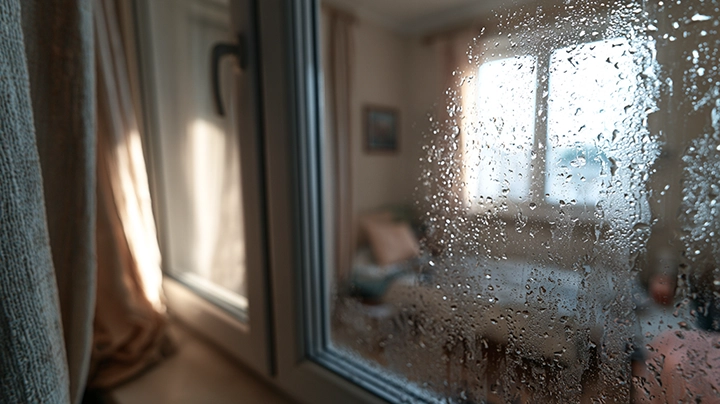
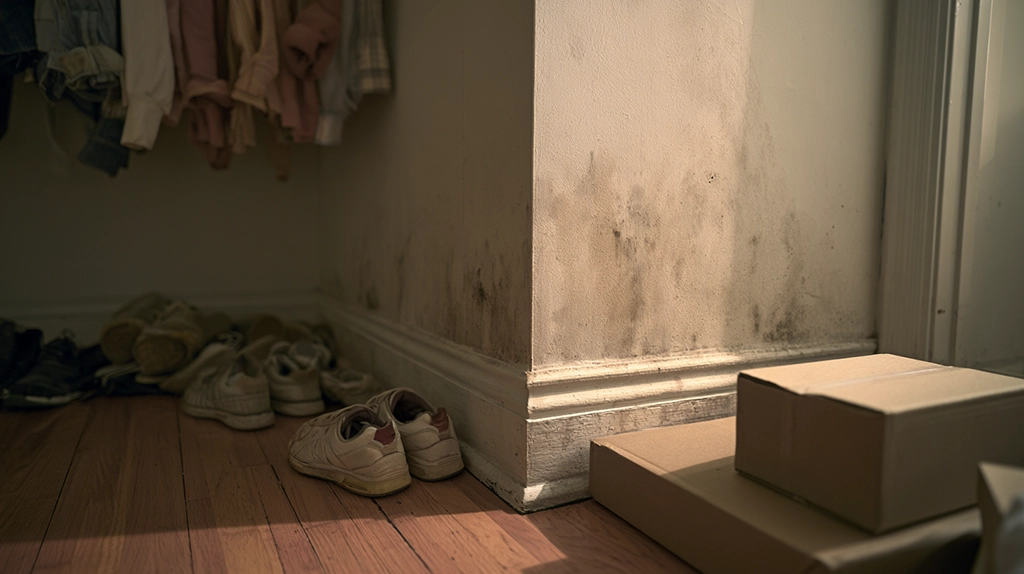
For mold, moisture in the air is food. When relative humidity stays above 60%, spores can germinate and spread. That’s why corners, wardrobes, and the space behind furniture are the first to show black spots—they trap water vapor.
A dehumidifier is the most effective tool, but only if it’s used correctly. Place it near damp spots such as outer walls or window corners, and run it long enough to keep humidity around 50%. If you don’t have one, use your air conditioner’s dry mode or place desiccant boxes inside closets.
Studies on indoor environments consistently show that lower humidity levels significantly slow down mold activity. Keeping the air dry isn’t about comfort—it’s about removing the one condition mold depends on most.
2. Let the Air Move — Ventilation Is More Powerful Than You Think

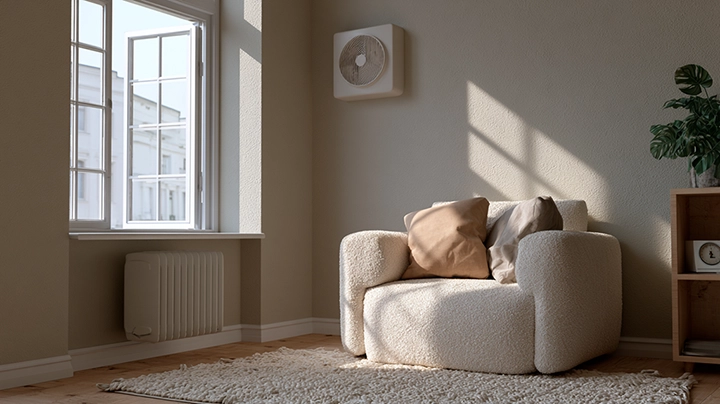
Still air is mold’s favorite habitat. Mold spores are everywhere, but they only grow where humidity lingers and air doesn’t circulate. Opening windows for twenty minutes a day helps moisture escape, while fans or mechanical ventilation keep air moving when the weather is humid.
Ventilation and dehumidification work best together. The dehumidifier removes excess water, while airflow prevents localized condensation. Even in rooms that feel dry, blocked airflow behind furniture or under beds can create hidden damp zones. Keeping a small gap—about two to four inches—between furniture and walls makes a big difference.
Invisible airflow, not scented sprays, is often your most reliable cleaning tool.
3. Use Scent as a Shield — How Natural Essential Oils Help

Once humidity and airflow are under control, natural essential oils can serve as an eco-friendly layer of protection. Research shows that certain plant oils contain volatile compounds that interfere with fungal cell membranes or inhibit spore germination.
For instance:
- Clove oil (Syzygium aromaticum) contains eugenol, known to disrupt the hyphae of Aspergillus species.
- Lemongrass oil (Cymbopogon citratus) has been shown to limit mold growth on wood surfaces.
- Cinnamon oil (Cinnamomum cassia) and thyme oil (Thymus vulgaris) contain cinnamaldehyde and thymol, compounds that can suppress fungal development in laboratory studies.
These oils can be diffused at low concentrations or used in diluted sprays—but always in well-ventilated rooms. They help delay surface contamination and musty odors but cannot replace proper humidity control. Think of them as natural assistants, not miracle fixes.
4. Don’t Put the Wrong Things — Some Materials Invite Mold
Paper boxes, cloth bags, wooden furniture, and thick carpets tend to absorb moisture and trap it inside. Even heavy curtains can hold damp air that feels dry to the touch. To reduce risk, use metal, plastic, or coated surfaces that can be wiped clean, and avoid sealing storage spaces too tightly.
In short, the best anti-mold measure isn’t adding one more item—it’s removing the ones that quietly store moisture.
5. The Real Secret: Invisible Habits

Effective mold prevention doesn’t rely on expensive gadgets or miracle sprays—it’s built into everyday habits.
Monitor humidity, keep the air moving, and add a touch of natural aroma only after the basics are right. When your room’s air stays dry and alive, mold simply can’t get started.
In the end, what keeps mold away isn’t what you put in your room—it’s how you let moisture leave and how you let air flow.
References
- PubChem Database: Eugenol (CID 3314), Cinnamaldehyde (CID 637511), Thymol (CID 6989)
- Wikipedia: Syzygium aromaticum, Cymbopogon citratus, Cinnamomum cassia, Thymus vulgaris, Aspergillus, Essential oil, Microclimate, Mechanical ventilation
- Environmental Health Perspectives. (2024). Volatile plant oils as natural antifungal agents.
- Journal of Applied Microbiology. (2023). Antifungal properties of eugenol and thymol against indoor mold species.
Key Takeaways
- Three evidence-based interventions most effectively control indoor mold in a single room: controlling the humidity source, improving ventilation, and addressing any water intrusion pathways—all other interventions are secondary.
- A standalone dehumidifier maintaining relative humidity below 50% in a mold-prone room is among the highest-impact single interventions, as most indoor mold species cannot grow or survive below this threshold.
- HEPA air purifiers reduce airborne mold spore concentrations within a room and can reduce allergic exposure, but they do not kill mold on surfaces or eliminate the conditions enabling mold growth.
- Anti-mold paints containing biocides delay mold establishment on painted surfaces for 2–5 years but are not a substitute for moisture control—they will fail when the underlying moisture problem persists.
- Improving room temperature by 2–4°C reduces relative humidity and surface condensation risk on exterior-facing walls, making heating one of the most underrated tools for room mold prevention.
Frequently Asked Questions
What are the three most effective things to stop mold in a room?
The three interventions with the most evidence-based effectiveness for controlling indoor mold in a specific room are: (1) Eliminate the moisture source—this is always the most important step and without it, all other interventions provide only temporary benefit. Every mold problem has a moisture source: condensation from inadequate heating or ventilation, water ingress from leaks or rising damp, excess indoor humidity from activities, or plumbing failures. Identify and eliminate this source before spending money on other interventions. (2) Control room humidity below 50% RH—using a dedicated dehumidifier sized for the room volume (typically rated in litres per day extraction capacity; a 10–12 litre/day unit is appropriate for a typical bedroom or living room), or by improving ventilation (mechanical extractor in bathrooms and kitchens; through-ventilation in living spaces). (3) Improve ventilation—natural ventilation through window-opening, trickle vents, or mechanical ventilation removes moisture-laden air and replaces it with drier outdoor air; bathroom extractor fans and kitchen range hoods should be running during and after moisture-generating activities. Surface cleaning and mold-resistant products are secondary to these three fundamentals.
Do dehumidifiers really stop mold growth?
Dehumidifiers that maintain indoor relative humidity consistently below 50% are highly effective at preventing mold growth, with strong evidence base from indoor air quality research. Mechanism: most common indoor mold species require surface water activity (Aw) above 0.80–0.85—equivalent to surface equilibrium RH of 80–85% or higher—for germination and hyphal growth. When room air RH is maintained at 45–50%, surfaces equilibrate to moisture levels below the threshold for mold growth; without adequate surface moisture, spores present on surfaces cannot germinate. Evidence: studies comparing mold prevalence in rooms with and without humidity control consistently find lower mold growth and lower airborne spore counts in humidity-controlled spaces. Dehumidifier selection: for a standard 20m² (215 sq ft) room, a unit rated at 10–12 litres/day extraction at 30°C/80% RH is typically adequate; note that rated extraction capacity is measured at warm, humid conditions and actual performance in cooler rooms will be lower. Limitations: dehumidifiers cannot remedy mold growing in wall cavities where the dehumidifier’s air exchange does not reach; they cannot address water intrusion that continuously introduces liquid water; and they consume energy (typically 200–500W for residential units), adding to electricity costs. For rooms with water ingress problems (rising damp, penetrating damp), a dehumidifier removes water from air but cannot address water that continues to enter through the structure.
Should I use anti-mold paint to stop room mold?
Anti-mold paints—interior paints incorporating fungicide compounds (typically IPBC, zinc pyrithione, or quaternary ammonium compounds)—provide genuine but time-limited benefits against surface mold development. What anti-mold paint does well: creates a surface that inhibits mold establishment on the painted surface for 2–5 years (product-dependent); this can be genuinely useful in rooms where humidity is controlled but surface mold has been a recurring nuisance; the biocide compounds leach slowly from the paint film, creating a toxic surface that prevents spore germination on that surface. What anti-mold paint cannot do: eliminate existing mold in wall structures behind the paint surface; address moisture sources—paint applied over damp walls will peel and fail, and the mold will grow between the wall and paint surface regardless of the anti-mold formulation; provide permanent protection—biocide leaching depletes over time; provide protection against heavy condensation that washes biocide from the surface. Practical guidance: anti-mold paint has value as part of a comprehensive mold prevention strategy in rooms where moisture has been controlled but recurring surface mold has been a problem; it is a poor substitute for moisture control and is a waste of money applied to walls that remain damp. Before applying anti-mold paint, the wall must be thoroughly dried and all existing mold must be killed and removed.
How does room temperature affect mold growth?
Room temperature affects mold growth through two distinct mechanisms: direct effects on mold growth rate and indirect effects on surface condensation risk. Direct temperature effects on mold: most indoor mold species grow optimally at 20–30°C and have minimum growth temperatures of approximately 5–15°C; colder rooms are therefore somewhat less conducive to mold growth. However, the effect of temperature on mold is much smaller than the effect of moisture—a cold, damp room is more mold-prone than a warm, dry room. The condensation effect is more important in practice: cold surfaces attract condensation when warm, humid room air contacts them; the physics of condensation means that for every 5°C increase in room temperature, the dew point—the temperature at which condensation forms—decreases, meaning surfaces need to be colder before they collect condensation. In a cold room (16°C), condensation forms on surfaces below approximately 10°C if indoor RH is 65%; in a warmer room (20°C), condensation forms below approximately 13°C at the same RH. Cold exterior-facing walls in winter are the most common condensation site; raising room temperature warms these walls, reduces their condensation risk, and simultaneously reduces relative humidity (warmer air holds more moisture, so the same absolute humidity produces lower relative humidity). UK housing research shows that maintaining rooms above 18°C dramatically reduces mold risk compared to rooms maintained at 14–16°C.
Can simply opening windows prevent mold in a room?
Opening windows can effectively reduce room humidity and mold risk under certain conditions, but is less effective in others—and can actually be counterproductive in some climates and seasons. When opening windows helps: in dry weather with lower outdoor humidity than indoor humidity, opening windows dilutes humid indoor air with drier outdoor air, reducing RH; this is particularly effective after moisture-generating activities (cooking, bathing) and is the mechanism behind traditional advice to ‘air out’ rooms. When it doesn’t help: in warm, humid summer weather (particularly in tropical and subtropical climates), outdoor air has higher absolute humidity than air-conditioned indoor air; opening windows increases indoor humidity. In cold weather, outdoor air that appears ‘dry’ (low RH) is dry only because it is cold; when this cold outdoor air enters a heated room and warms up, its water-holding capacity increases and its RH drops dramatically—making it genuinely drying. However, cold outdoor air also cools room surfaces, which can cause condensation as the heated air meets cold walls. Through-ventilation effectiveness: opening windows on opposite sides of a room or building (‘cross-ventilation’) is more effective at humidity reduction than opening a single window. For persistent mold problems, natural ventilation through window-opening is insufficient in most climates; mechanical ventilation (extractor fans, HRV/ERV systems) provides more reliable, controllable, and weather-independent humidity control.