
Credit: W.carter / Wikimedia Commons, CC0 1.0
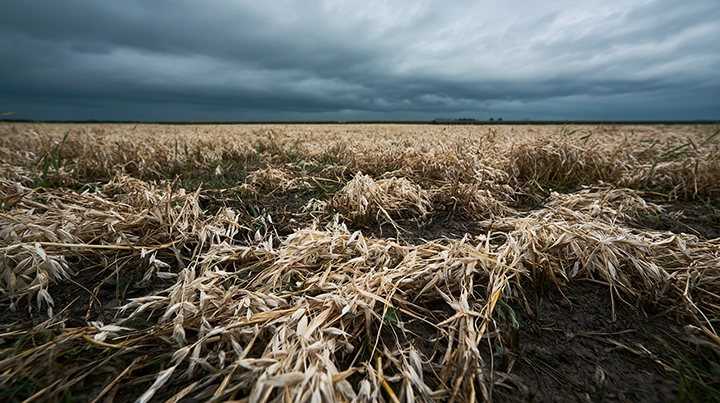
When farmers see a lodged oat field, the immediate concerns are usually practical: reduced yield, harvesting difficulties, and lower forage quality. Lodging occurs when plants bend, collapse, or fall toward the ground before harvest, often following heavy rain, strong winds, excessive nitrogen fertilization, or adverse weather conditions.
A 2026 study demonstrates that lodging creates a much deeper challenge. Beyond physical damage, lodging can fundamentally alter the microbial ecology of a crop and increase the risk of mycotoxin contamination during silage production.
Researchers investigated how lodging affected oat forage quality, silage fermentation, microbial succession, and mycotoxin accumulation. By comparing upright oats with lodged oats collected from different canopy layers and harvested at various intervals after lodging, the study traced how a field disturbance can influence feed safety long after harvest.
Mold risk does not begin inside the silo. Often, it begins in the field.
How Lodging Changes the Crop Environment
An upright oat crop creates a relatively favorable microenvironment. Air moves through the canopy, sunlight reaches lower leaves, and plant tissues remain relatively isolated from direct soil contact.
When a crop lodges, that structure collapses. Leaves overlap. Airflow decreases. Moisture becomes trapped for longer periods. Lower plant tissues press closer to the soil surface, where microbial populations are far more abundant.
The study explains that lodging reduces ventilation and light penetration while weakening photosynthetic activity. Plants accumulate fewer nutrients and experience greater stress. At the same time, the humid, poorly ventilated conditions favor colonization by fungal organisms, including species capable of producing mycotoxins.
Lodging is not simply mechanical damage. It changes the biological environment surrounding the crop — and that altered environment influences everything that follows.
The Crop Begins Losing Quality Before Fermentation Starts
One of the study’s most important findings is that lodging weakens the raw material long before ensiling begins.
Compared with upright oats, lodged forage showed significant reductions in dry matter and water-soluble carbohydrate content. As lodging duration increased, water-soluble carbohydrates and crude protein continued to decline while fiber content increased.
Successful silage fermentation depends heavily on the quality of the harvested forage. Water-soluble carbohydrates serve as the primary fuel source for lactic acid bacteria. These beneficial microbes rapidly produce lactic acid, lower pH, and preserve the forage by suppressing spoilage organisms.
When sugar levels decline, the fermentation system starts at a disadvantage. The longer a crop remains lodged, the greater the risk that its nutritional and microbial condition will deteriorate before harvest occurs.
The Most Important Finding: Mycotoxin Risk Increased

Credit: Korinna / Wikimedia Commons, CC BY 4.0
The most significant result involves feed safety. The study found that lodging increased mycotoxin infection risk, and aflatoxin concentrations exceeded European Union regulatory limits under the study conditions. Aflatoxins are among the most consequential mycotoxins affecting livestock health and agricultural production.
Mycotoxin levels varied according to both crop layer and lodging duration. Upper-layer silage harvested after seven days of lodging showed the lowest toxin levels among the lodged treatments, while lower layers generally faced greater exposure to moisture, soil contact, and unfavorable microbial conditions.
The finding requires careful interpretation. It does not mean that seven days of lodging is universally safe. Weather conditions, crop maturity, soil moisture, harvest timing, and fermentation management all influence risk.
What the study demonstrates clearly is that lodging duration matters. A delay in harvest can transform a physical crop problem into a microbial and toxin-management problem.
The Soil–Plant–Silage Connection
One of the most valuable aspects of the research is its recognition that silage does not exist independently from field ecology.
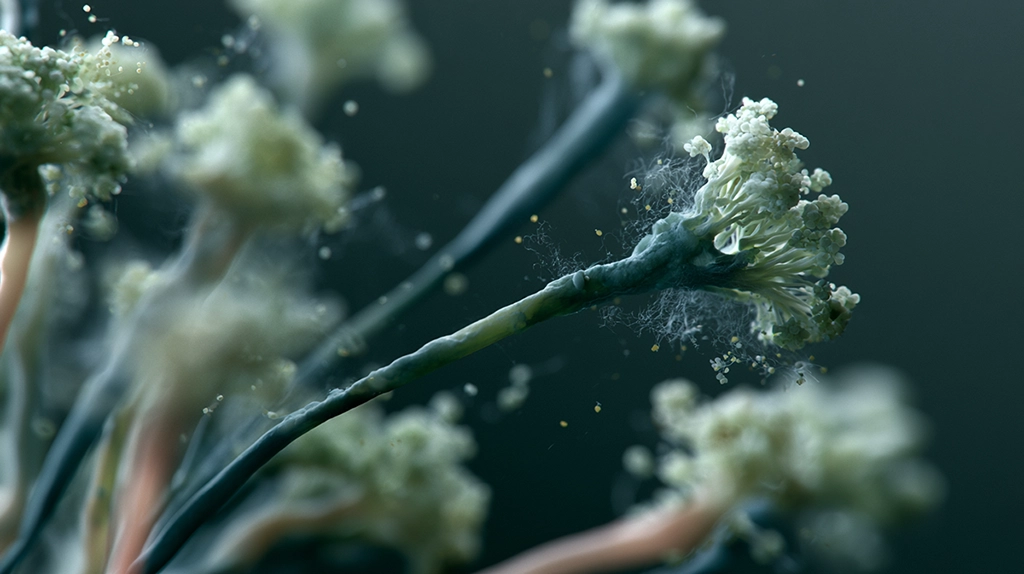
The study identified fungal groups associated with lodged oats, including Fusarium, Alternaria, Cladosporium, Plectosphaerella, and Botryotrichum. Many of these organisms are closely linked to soil environments or plant diseases.
When a crop remains upright, the separation between soil microbiota and harvestable forage is relatively strong. When plants collapse, that boundary weakens. Plant tissues become more exposed to soil moisture, soil particles, and soil-associated microorganisms. Microbes normally confined to the soil environment can gain access to stems, leaves, and harvested forage.
The harvested material then carries that microbial history into the silo. Silage safety begins in the field because silage inherits the microbial community present at harvest.
Silage Fermentation Is a Microbial Competition

Credit: Yelen / Wikimedia Commons, CC BY 4.0
Silage production is often described as a preservation process, but biologically it is a competition between microbial groups. The objective is for lactic acid bacteria to dominate quickly, acidify the forage, and create conditions unfavorable for spoilage organisms.
The study found that lodged oat silage remained dominated by Lactobacillus, while populations of Pseudomonasremained relatively low. Researchers also observed differences in fungal communities among treatments.
Lower fungal abundance may appear reassuring, but feed safety depends on more than total fungal quantity. The identity of the fungi matters. The toxins they can produce matter. And the conditions that allow them to survive matter.
A successful silage system depends on beneficial microbes winning the competition before undesirable organisms gain an advantage. Lodging changes the starting conditions of that competition by altering plant nutrition, microbial exposure, and moisture conditions before fermentation even begins.
Why Rapid Harvest Decisions Matter
One of the clearest practical messages from the study concerns timing.
Researchers evaluated oats harvested immediately after lodging and after 7, 25, and 45 days. Results consistently showed that prolonged lodging worsened forage quality and increased feed-safety concerns. As lodging duration increased, water-soluble carbohydrates declined, crude protein decreased, fiber content rose, and microbial conditions became less favorable.
This highlights the importance of rapid field assessment after lodging events. Once a crop falls, the key question is no longer only how much yield has been lost. Farmers must also evaluate how lodging affects moisture exposure, soil contact, microbial contamination, fermentation potential, and mycotoxin risk.
Timely harvesting may, in many situations, help preserve both nutritional quality and feed safety.
Climate Variability May Increase Lodging-Related Risks
The broader significance of the study extends beyond oats.
Lodging is influenced by weather patterns including strong winds, heavy rainfall, saturated soils, and storm events. As climate variability increases in many agricultural regions, lodging may become a more frequent challenge for forage producers.
The study was conducted in a subtropical humid monsoon climate, where moisture conditions already favor microbial activity. Similar weather-related pressures may become increasingly relevant in forage systems worldwide.
Future mycotoxin management may need to address not only storage and fermentation practices but also pre-harvest environmental stresses. Climate, crop structure, microbial ecology, and feed safety are becoming increasingly connected dimensions of agricultural risk.
The Silo Remembers the Field

Credit: W.carter / Wikimedia Commons, CC0 1.0
This research reveals an important truth about silage production: a silo does not begin its microbial story at harvest. It inherits the microbial history of the crop.
Lodging changes that history by altering plant quality, increasing exposure to soil-associated microorganisms, and creating conditions that may favor mycotoxin-producing fungi. The longer those conditions persist, the greater the potential consequences for feed quality and safety.
Mycotoxins do not appear suddenly inside storage systems. They emerge through a chain of events involving weather, plant stress, soil contact, microbial succession, moisture, fermentation, and time. Understanding that chain is essential for managing risk.
When oats fall before harvest, the feed system changes with them.
Mycotoxin-Producing Fungi Associated With Forage Crops
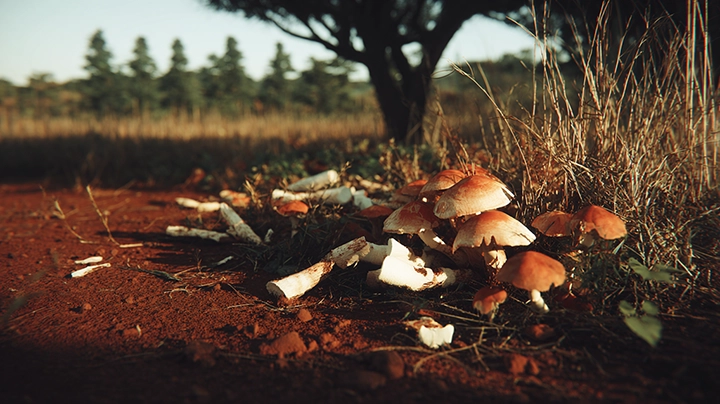
Fusarium graminearum, Fusarium verticillioides, Aspergillus flavus, Penicillium verrucosum, and Alternaria alternataare among the fungal species associated with mycotoxin contamination in forage crops and silage. Fusarium and Alternaria species were among the fungal communities observed in the lodged oat study.
FAQ: Lodged Oats and Silage Safety
What is lodging in oat crops?
Lodging occurs when oat plants bend, collapse, or fall before harvest, often due to wind, rain, excess nitrogen, or other environmental stresses.
Why does lodging affect silage quality?
Lodging can reduce water-soluble carbohydrates, lower dry matter content, increase fiber levels, and alter microbial communities before fermentation begins.
How does lodging increase mycotoxin risk?
Fallen plants remain closer to soil and moisture, increasing exposure to soil-associated fungi and conditions that may favor toxin contamination.
Which fungi are commonly associated with lodged oat silage?
Important groups identified in the study included Fusarium, Alternaria, Cladosporium, Plectosphaerella, and Botryotrichum.
What can farmers do after lodging occurs?
Rapid assessment, timely harvest, moisture management, proper ensiling practices, and mycotoxin monitoring can help reduce feed-safety risks.
References
- Lodging effects on oat silage quality and mycotoxin risk. Agronomy (2026). https://www.mdpi.com/2073-4395/16/2/209