The Invisible Challenge Inside Modern Buildings
Modern society has become an indoor species.
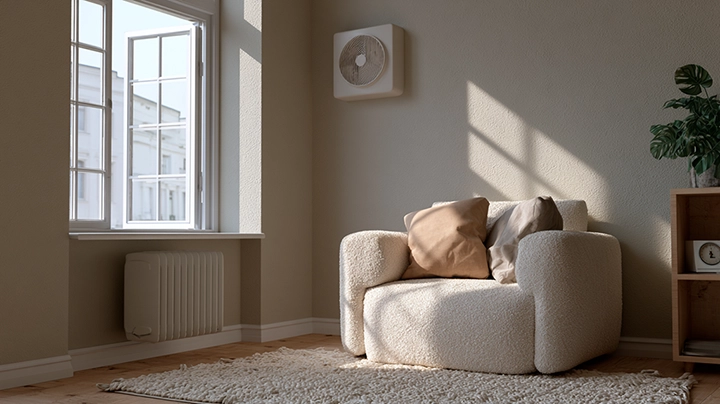
Whether at home, in schools, hospitals, offices, shopping centers, or public facilities, people now spend most of their lives inside enclosed environments. While buildings protect occupants from weather and outdoor pollution, they also create unique environmental challenges of their own.
Indoor air is far more complex than it appears. Suspended within it are microscopic particles, bacteria, fungal spores, organic compounds, and countless biological fragments generated by human activity and the built environment itself. These contaminants continuously move through indoor spaces, influencing comfort, respiratory health, and microbial exposure.
For decades, indoor air management has relied primarily on ventilation, filtration, and chemical disinfection. These approaches remain essential, but researchers continue searching for technologies capable of actively reducing airborne contaminants without introducing significant chemical residues or excessive energy demands.
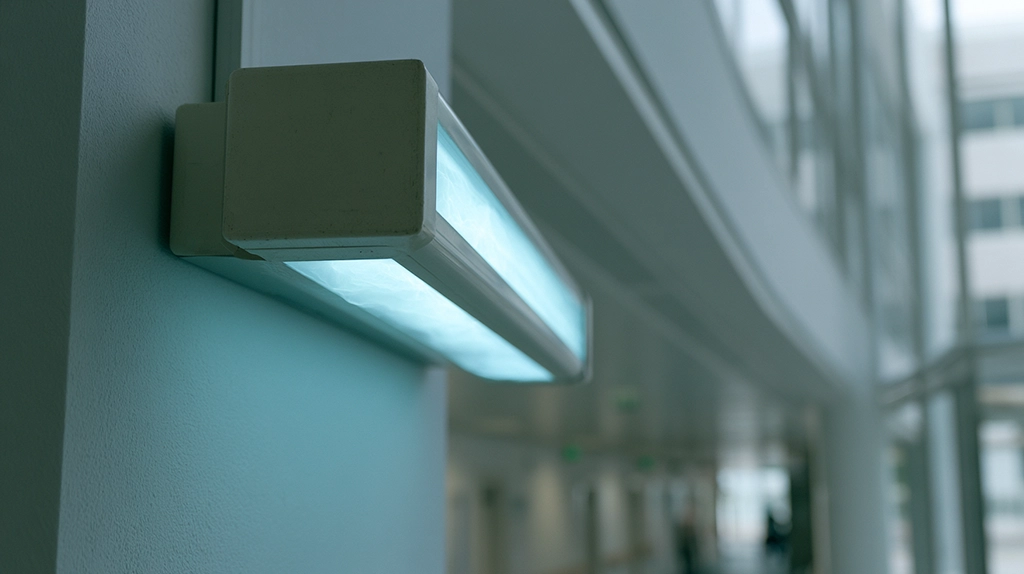
One technology attracting growing attention is non-thermal plasma (NTP). A recent study suggests that this emerging approach may significantly reduce both airborne microbial concentrations and fine particulate matter under real-world indoor conditions.

What Exactly Is Non-Thermal Plasma?
Plasma is often described as the fourth state of matter, existing alongside solids, liquids, and gases. While many people associate plasma with lightning, electrical arcs, or extremely high temperatures, non-thermal plasma operates under very different conditions.
NTP generates highly reactive molecules while keeping surrounding air temperatures relatively low. This allows it to function safely within occupied indoor environments.
These reactive species can interact with airborne contaminants in several ways. They may damage microbial cells, alter biological particles, break down certain organic compounds, and influence suspended particulate matter.
The concept is attractive because it offers something traditional filtration cannot always achieve. Instead of simply trapping contaminants, plasma-based systems actively transform or deactivate them while they remain airborne.
Testing Air Treatment Beyond the Laboratory
One of the most valuable aspects of the study is its practical design.
Many air-treatment technologies perform exceptionally well under laboratory conditions but struggle when exposed to the complexity of occupied buildings. Human behavior, changing airflow patterns, fluctuating occupancy levels, and environmental variability can dramatically influence performance.
To address this challenge, researchers evaluated NTP systems across multiple environments, including controlled chamber experiments, an unoccupied classroom, and an occupied pulmonary function clinic. This allowed them to compare ideal conditions with real-world scenarios where people continuously influence indoor air quality.
The results provide insight not only into what the technology can achieve under controlled conditions, but also how it behaves in spaces where air quality challenges occur every day.
A Powerful Effect on Fine Particulate Matter
One of the clearest outcomes involved fine particulate matter, particularly PM2.5.
These particles are small enough to penetrate deep into the respiratory system and have been linked to a range of health concerns, including respiratory and cardiovascular effects. Because of their size and persistence, PM2.5 concentrations are widely used as indicators of indoor air quality.
During chamber experiments, a 30-minute NTP treatment reduced PM2.5 levels by approximately 90 percent after accounting for natural particle decay.
Particles are more than dust. They often serve as carriers for biological material, allergens, and microbial fragments. Reducing airborne particle loads may therefore provide broader benefits that extend beyond visible cleanliness. The study suggests that non-thermal plasma can act as both a microbial management tool and a particulate-control technology.

Reducing Airborne Microbial Loads
The research also demonstrated meaningful reductions in airborne bacterial concentrations.
In the unoccupied classroom setting, bacterial levels declined significantly after extended plasma treatment. This indicates that reactive plasma-generated molecules can influence biological particles suspended within indoor air.
The study focused primarily on airborne bacteria rather than fungal spores. The findings remain highly relevant to indoor environmental management, however, because they demonstrate that biological contaminants can be actively influenced through air-treatment technologies rather than relying solely on passive removal methods.
Why People Remain the Largest Variable
One of the most interesting findings emerged from the occupied clinical environment.
Unlike laboratory chambers, real buildings contain people. Every movement generates particles. Walking disturbs settled dust. Clothing releases fibers. Conversations emit respiratory droplets. Doors opening and closing alter airflow patterns. Simply occupying a room changes its microbial environment.
The study confirmed that occupancy significantly increased both particulate matter and microbial concentrations. Yet even under these more demanding conditions, longer NTP treatment periods still produced measurable reductions in airborne contaminants.
This finding highlights an important lesson for building managers and environmental professionals. Technology alone does not determine indoor air quality. Human behavior remains one of the strongest drivers of indoor environmental conditions, and successful air-quality management must account for both technological performance and occupancy patterns.
A New Layer in Healthy Building Design
The potential applications of non-thermal plasma extend across a wide range of indoor environments. Schools, healthcare facilities, offices, public buildings, transportation hubs, and commercial spaces all face ongoing challenges related to occupant density, air circulation, and microbial exposure.
NTP may function as a valuable supplemental technology within broader indoor air-quality programs. The most likely future is one where plasma systems become part of layered strategies that combine high-efficiency filtration, ventilation, air-quality monitoring, and targeted air treatment, rather than replacing existing approaches outright.
This integrated approach aligns with the growing healthy-building movement, which increasingly treats indoor environments as dynamic ecosystems rather than static structures.
Understanding the Limits of Plasma Technology
Despite its promise, the technology has important limitations.
The study primarily examined airborne bacteria and particulate matter. It did not directly evaluate fungal spores, mold contamination, or active fungal growth within buildings.
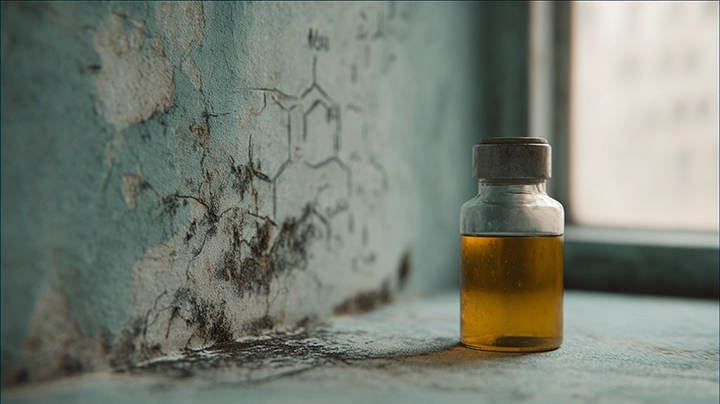
Air-treatment technologies address exposure pathways. They do not eliminate moisture intrusion, condensation problems, water damage, or mold reservoirs hidden within building materials. Even if airborne fungal particles are reduced, mold will continue to grow if moisture sources remain unresolved.
Non-thermal plasma should not be viewed as a substitute for moisture control or mold remediation. Source control remains the foundation of indoor environmental health. The most effective building strategies will continue to combine environmental management with air-treatment technologies rather than relying on either approach alone.
From Passive Filtration to Active Air Management
Traditional systems primarily focus on moving air or filtering contaminants. Technologies such as non-thermal plasma introduce the possibility of actively modifying airborne ecosystems in real time.
Future indoor air systems may integrate smart sensors, predictive monitoring, advanced filtration, ventilation controls, and plasma-based treatment technologies into coordinated networks capable of responding dynamically to changing conditions.
The objective is healthier air. As buildings become increasingly intelligent and environmental expectations continue to rise, technologies like non-thermal plasma may become important tools within the next generation of indoor environmental management systems.
FAQ: Non-Thermal Plasma and Indoor Air Quality
What is non-thermal plasma?
Non-thermal plasma is a low-temperature ionized gas that generates reactive molecules capable of interacting with airborne contaminants without significantly heating the surrounding air.
Can non-thermal plasma improve indoor air quality?
Research suggests that it can reduce airborne particulate matter and microbial concentrations, particularly under controlled and semi-controlled indoor conditions.
Does non-thermal plasma remove PM2.5 particles?
The study found substantial reductions in PM2.5 concentrations, indicating that plasma treatment may help lower fine-particle exposure indoors.
Can non-thermal plasma eliminate mold problems?
No. While it may influence airborne biological particles, it does not remove moisture sources, contaminated building materials, or active mold growth. Proper mold remediation and moisture control remain essential.
Where could this technology be used?
Potential applications include schools, hospitals, offices, public facilities, commercial buildings, and other indoor environments where air quality is a concern.
Will non-thermal plasma replace ventilation and filtration systems?
Probably not. Most experts view it as a complementary technology that may work alongside filtration, ventilation, and environmental monitoring systems.
References
Effects of non-thermal plasma on disinfection of indoor air and reduction of particulate matter. ResearchGate. https://www.researchgate.net/publication/404701913_Effects_of_non-thermal_plasma_on_disinfection_of_indoor_air_and_reduction_of_particulate_matter