I. Not Just Moldy Grains—But Molecular Sabotage
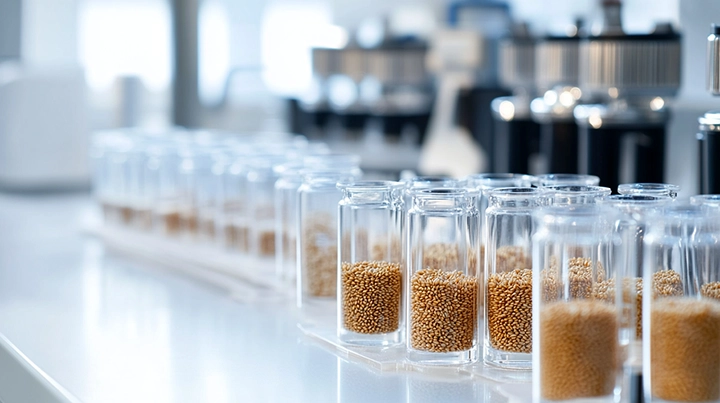
We’ve all heard the warnings: don’t eat moldy bread, toss out that suspicious cornmeal, watch for spoiled feed. For decades, mycotoxins — fungal byproducts that hitchhike on food crops — have been seen primarily as toxic threats to the liver or immune system.
Dangerous, yes. But mostly in large doses, mostly in livestock, and mostly preventable.
But now, science is uncovering something far more intimate.
It turns out that mycotoxins may be quietly undermining a fundamental pillar of life: reproductive hormone production. Specifically, they’re interfering with progesterone, the hormone that sustains pregnancy, stabilizes the uterus, and protects early fetal development.
This isn’t a matter of massive contamination or acute poisoning. According to a new study, it’s happening at low, barely noticeable levels — the kind that could be present in everyday food systems.
II. The Target: Progesterone’s Unsung Gatekeeper

At the heart of this discovery lies a single enzyme: 3β-hydroxysteroid dehydrogenase type 1 (3β-HSD1).
It lives in the placenta and plays a starring role in pregnancy — converting pregnenolone into progesterone (P4), the hormone responsible for preparing and maintaining the womb.
Researchers tested seven well-known mycotoxins on this enzyme’s activity:
- Cyclopiazonic acid (CPA)
- Deoxynivalenol (DON)
- Patulin (PAT)
- Zearalenone and its metabolites (α-ZEL, β-ZEL, β-ZAL)
The results? Six out of seven significantly blocked the enzyme’s activity.
When these toxins were applied to cultured human trophoblast cells — the kind that help form the placenta — the impact was immediate and measurable:
Progesterone production dropped significantly.
Even at just 10 μM, the cells stopped making enough of the hormone needed to maintain a healthy pregnancy.
III. This Isn’t Just About Humans
Here’s where things get even more unsettling: the same inhibitory effect was seen on the rat version of the enzyme (3β-HSD4). That’s a strong sign that the mechanism is conserved across species.
If true, this means the risks extend far beyond human pregnancy:
- Livestock exposed to contaminated feed may suffer from early pregnancy loss or reduced fertility — even without visible illness.
- Wildlife in contaminated ecosystems could experience population shifts linked to subtle hormonal dysfunction.
- And across mammals, entire generations may feel the echo of endocrine interference that no one saw coming.
In short: the gatekeeper enzyme doesn’t just serve humans — and the mycotoxins don’t discriminate.
IV. The Molecular Mechanism: A Complex Kind of Interference

This isn’t a blunt-force toxin story. The mycotoxins didn’t just clog the enzyme’s active site.
Using molecular docking simulations, the researchers found that these compounds interfered with NAD+ binding regions — indicating a mixed-type inhibition.
That means they disrupt both the active function and the structural co-factors the enzyme needs to work.
In simpler terms: the sabotage is smart. And that makes it harder to predict, detect, or neutralize.
The team also used structure–activity relationship (SAR) analysis and developed 3D pharmacophore models to identify molecular patterns that predict how likely a compound is to interfere with hormone synthesis.
Features like hydrophilicity and molecular density appeared linked to inhibition strength.
These tools could be game-changers: they allow us to screen hundreds of unknown compounds — not just for carcinogenicity or acute toxicity, but for their subtle, hormone-altering potential.
V. Why This Matters Now
Let’s be clear: we are not prepared for this.
✔️ Food safety regulations may be missing the mark.
CPA, the most potent inhibitor, is rarely the focus of regulatory frameworks compared to more infamous toxins like DON or zearalenone. Yet this study suggests it may have an even greater effect on pregnancy outcomes.
✔️ Our toxicology screens are outdated.
Most current tests focus on liver damage, cancer risk, or acute toxicity. But they often ignore endocrine effects, especially subtle hormonal shifts that can affect reproduction without causing immediate illness.
✔️ Pregnancy researchers need to look again.
This isn’t about rare poisoning events. It’s about chronic, low-dose exposure — the kind that could quietly influence fertility, implantation, and gestation at a population level.
✔️ Predictive toxicology is the way forward.
With SAR and docking models, scientists could one day screen all new food-contact chemicals, mycotoxins, or pollutants for endocrine-disrupting potential — before they end up in the food chain.
VI. Closing Thought: The Silent Saboteurs

For years, we’ve treated mycotoxins like distant threats — problems of grain storage, of cattle feed, of poorly regulated markets. But what this study reveals is something far more intimate, and far more urgent.
These aren’t just contaminants.
They’re hormone hackers — molecules capable of reaching into the most sacred biological systems and flicking off the switches that sustain life.
And because the enzyme they target is shared across mammals, their impact could ripple from womb to world. From birth rates to biodiversity. From human fertility to ecological health.
This isn’t alarmism. It’s a recalibration.
A reminder that in the microbial world, danger isn’t always loud.
Sometimes, it comes in whispers — in μM concentrations, in chemical mimicry, in enzymes quietly misfiring.
The question is: Are we listening yet?
References
- Schmutzler, C. et al. (2024). Mycotoxins inhibit human placental 3β-hydroxysteroid dehydrogenase and impair progesterone synthesis. Toxicological Sciences, 197(2), 432–445. DOI: 10.1093/toxsci/kfae073
- World Health Organization (WHO): Mycotoxin Fact Sheet
- European Food Safety Authority (EFSA): Deoxynivalenol and Zearalenone Assessment Reports
- PubChem entries: Cyclopiazonic acid, Patulin, Zearalenone