The Hidden Teamwork of Toxins
If you thought one mycotoxin in your food was bad, try mixing a few together. A new national surveillance study from South Korea just dropped a scientific truth bomb: our food isn’t just contaminated by individual toxins—they’re showing up in clusters. And that means trouble. Big trouble.
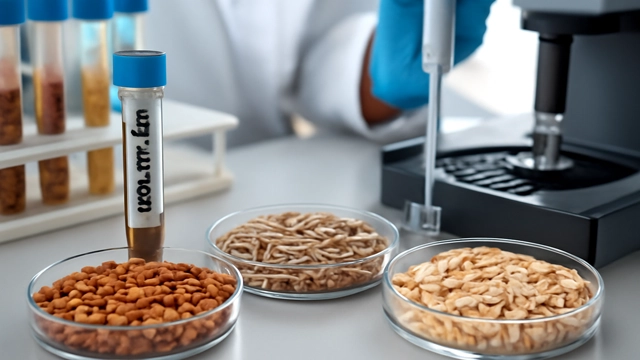
Scientists from the Ministry of Food and Drug Safety (MFDS) didn’t just look for a single bad actor. They screened 507 samples of cereal-based products sold in Korea for 13 different mycotoxins. The goal? Understand how often these toxins co-occur in foods we eat every day—like sorghum, brown rice, wheat flour, and Job’s tears (Coix lacryma-jobi). What they found should shake up how we think about food safety.

Co-Contamination Is Real (And It’s Quietly Common)
Let’s start with the headline stat: 4.4% of the samples contained more than one mycotoxin. That might seem small until you realize that traditional testing and regulation usually looks for only one toxin at a time. Imagine scanning for salmon but missing the sharks.
The most common combinations? Zearalenone (ZEA) with fumonisin B1 (FB1), and combinations involving deoxynivalenol (DON). These three aren’t just background noise in the fungal toxin world—they mess with reproductive hormones, gut linings, and immune responses. Separately, they’re toxic. Together? Potentially synergistic.
This is where toxicology hits a wall. Our safety limits assume exposure to one toxin. This study suggests real-world exposure could be more like an orchestra of poisons. Food toxicologists, time to rewrite the symphony.

Grains of Concern: Ancient, Healthy, and Infiltrated
Brown rice, wheat flour, sorghum, barley, corn grits, Job’s tears—they all sound wholesome. And they are. But they’re also proving to be cozy homes for mycotoxins, especially in humid or poorly stored conditions.
What stood out? Job’s tears and sorghum had disproportionately high levels of multi-toxin contamination. That matters because these grains are on the rise in health-conscious and gluten-free diets. In other words, the “clean eating” trend might be riding shotgun with an invisible risk.
For food brands sourcing these grains, especially from tropical or subtropical suppliers, this study should raise a flag. If you’re touting health claims but skipping multi-toxin testing, you’re flying blind.

The Method Behind the Mayhem: Korea’s Surveillance Superpower
This study didn’t just look good on paper. It validated a powerful analytical method that more countries should be copying. Using LC-MS/MS combined with solid-phase extraction (SPE), researchers could detect ultra-low levels of multiple mycotoxins with high precision and accuracy.
Here’s the kicker: this approach aligns with EU regulatory guidance on mycotoxins. That means it’s ready for prime time in international trade and public health labs. Countries in Southeast Asia and beyond can adopt this protocol almost plug-and-play. For regulatory science, that’s a game-changer.

Policy Lag vs. Mold Reality
Let’s talk regulation. Most food safety laws globally set individual limits for each toxin: x ppb of DON, y ppb of ZEA, etc. But what happens when you have three toxins, all below the legal limit, in the same bite of cereal? No one really knows. That’s the regulatory blind spot this paper exposes.
It’s time for multi-toxin exposure models. Risk assessments need to start considering the cocktail effect. This means updating food codes, revising tolerable daily intakes, and educating both manufacturers and consumers.
Because co-contamination isn’t rare. It’s just under-detected.

More Tests, Better Labels, Smarter Policy
This Korean surveillance study isn’t just data—it’s a blueprint. It tells us:
Mycotoxins like to hang out together, and they don’t play nice.
Grain-based foods, even trendy ones, are key hotspots.
Modern testing tech is ready to keep up—if regulators are.
If you’re a food company, it’s time to go beyond single-toxin screening. If you’re a policymaker, your exposure models are due for an update. And if you’re a health-conscious shopper, don’t panic—but do stay informed. Because in the world of mold, what you don’t see on the label might matter most.
As always, Nick from MoldNewsHub will be here sniffing out the hidden truths—one contaminated kernel at a time.

Key Takeaways
- Korean food safety surveillance has documented mycotoxin contamination in imported grain and food commodities that ‘travel packs’—retain their fungal contamination from origin through shipping and storage to consumer markets.
- Inspection at port of entry is insufficient to guarantee mycotoxin safety because contamination is heterogeneously distributed through commodity lots and sampling error at inspection is substantial.
- Korea’s Food Safety Ministry (MFDS) maintains one of Asia’s most rigorous mycotoxin monitoring programmes, regularly publishing surveillance reports that document contamination rates in imported and domestic food commodities.
- Temperature and humidity fluctuations during ocean shipping can promote additional mold growth and mycotoxin accumulation in grain that was below regulatory limits at export.
- Mycotoxin risk management in international grain trade requires systems-based control from field through processing, not point-of-entry testing alone.
Frequently Asked Questions
How does Korean food safety monitor mycotoxins in imported food?
South Korea’s Ministry of Food and Drug Safety (MFDS) operates one of the most comprehensive food safety monitoring systems in Asia, with systematic mycotoxin surveillance as a core component. Regulatory framework: Korea sets maximum levels (MLs) for major mycotoxins in food and feed aligned with international Codex Alimentarius standards and with reference to EU and US limits; these include MLs for aflatoxins, ochratoxin A, patulin, deoxynivalenol, zearalenone, fumonisins, and T-2/HT-2 toxins across relevant food categories. Import inspection: imported food commodities are inspected at port of entry according to risk-based sampling protocols; high-risk commodities (maize, peanuts, tree nuts, spices, dried fruits) from high-risk origin countries face more intensive inspection than lower-risk products. Domestic market surveillance: MFDS conducts annual nationwide food market monitoring programmes, purchasing samples from retail and wholesale markets for mycotoxin analysis; results are published in annual reports. Violation response: commodities exceeding Korean MLs at import are rejected and returned to country of origin or destroyed; domestic products exceeding MLs are subject to recall and withdrawal. The MFDS monitoring data is particularly valuable because Korea imports substantial grain volumes from multiple origins, providing a comprehensive view of mycotoxin prevalence in global commodity streams.
Can mycotoxin levels increase during shipping from one country to another?
Yes—mycotoxin levels can increase during ocean shipping under certain conditions, and this is a recognised food safety concern for international grain trade. Mechanisms of shipping-related mycotoxin increase: temperature-humidity cycling in ship holds: ocean shipping exposes grain to temperature cycles as vessels transit different climate zones; temperature gradients within the hold cause moisture migration and condensation on cooler grain surfaces; localised high moisture content supports mold growth and mycotoxin production even in grain that is properly dried overall. Poor ventilation of ship holds: inadequate ventilation during cargo storage allows moisture to accumulate from grain respiration; active ventilation management is required to prevent moisture build-up. Pre-existing mold growth: if grain contained viable mold spores at loading (even without mycotoxins above limits), these spores can germinate and produce toxins if moisture conditions are unfavourable during transit. High-humidity tropical route transit: grain shipped through equatorial regions faces more challenging humidity control than temperate route shipping. Evidence: multiple studies have compared mycotoxin levels in grain at loading and discharge ports and found statistically significant increases in some but not all situations, with larger increases under unfavourable shipping conditions (longer transit, warmer routes, poor ventilation). Practical implication: origin country certification or even origin port testing does not guarantee mycotoxin content at destination—risk-based testing at destination port is warranted for high-risk commodity-origin combinations.
Which foods most commonly fail Korean mycotoxin inspections?
Analysis of Korean MFDS import rejection data and surveillance results identifies consistent patterns in which commodities and origin combinations generate the most mycotoxin violations. High-risk commodities with recurring violations: groundnuts (peanuts) and peanut products—aflatoxin violation rates in peanut imports are consistently among the highest of any food category, particularly for products from certain Asian and African origins; dried spices (paprika, chilli, cumin, pepper)—aflatoxin and ochratoxin A violations in spice imports are routinely documented; corn and corn-based products—fumonisin, aflatoxin (in maize from hot, humid origins), and DON (in maize from temperate origins under wet conditions); tree nuts—aflatoxin in pistachios (from Iran and other Middle Eastern origins) and in almonds at lower frequency; dried figs and dates—ochratoxin A and aflatoxin in dried fruit from Mediterranean and Middle Eastern origins; specialty grains and cereals—DON in wheat imports, particularly from origins with wet harvest conditions. The MFDS publishes its annual violation statistics, providing a transparent basis for trade partners to understand Korean inspection priorities and manage their supply chains accordingly.
How does Korea’s mycotoxin regulation compare internationally?
Korea’s mycotoxin regulatory standards are generally well-aligned with international frameworks and among the more comprehensive in Asia, though specific limits differ from EU and US standards in ways relevant to exporters and importers. Comparison with Codex Alimentarius: Korean limits for major regulated mycotoxins (aflatoxin B1, total aflatoxins, OTA, DON, ZEN, fumonisins) are generally at or close to Codex ML; Korea actively participates in Codex Committee on Contaminants in Foods (CCCF) and aligns with evolving international standards. Comparison with EU: the EU has among the most stringent mycotoxin limits globally; Korean limits are generally less restrictive than EU MLs for most mycotoxins, accepting commodities that would be rejected by European buyers; this creates a potential for ‘regulatory arbitrage’ where commodities failing EU inspection are diverted to markets with higher limits. Comparison with US: US limits (primarily FDA action levels rather than mandatory limits for most mycotoxins) are generally comparable to or slightly higher than Korean limits for most toxins; the regulatory frameworks differ (Korea’s legally enforceable limits versus US action levels with compliance monitoring). Regional context: Korea’s mycotoxin surveillance capacity significantly exceeds that of most Southeast Asian countries; Korea is often more rigorous in mycotoxin management than major competitor markets in the region.
What can consumers in Korea do to reduce their mycotoxin exposure?
Korean consumers can take several practical steps to reduce dietary mycotoxin exposure while navigating a food system where most mycotoxin control happens upstream of retail. Core consumer strategies: dietary diversification—relying on a variety of grain and nut sources rather than large quantities of any single commodity reduces cumulative exposure from any single potentially contaminated source; choose quality-certified products—look for products from suppliers with documented mycotoxin testing programmes; premium brands with food safety certification (HACCP, ISO 22000) typically apply more rigorous mycotoxin controls than commodity products. Reduce high-risk products: minimise consumption of imported dried spices in large quantities; buy peanuts and peanut products from suppliers in regions with documented aflatoxin controls (USA, Australia); store nuts and dried fruits at home in cool, dry sealed conditions. Cooking and processing: cooking generally does not destroy mycotoxins; fumonisin levels are somewhat reduced by nixtamalisation (traditional lime treatment of maize); aflatoxin levels are reduced but not eliminated by roasting. Home storage: store cereals, nuts, and dried fruits in airtight containers in cool, dry conditions; inspect dried foods before use and discard any with visible mold. The most important exposure reduction comes from food system-level controls rather than individual consumer actions—advocating for robust supply chain mycotoxin management is ultimately more impactful than individual food choices.