When Fungi Become Food-System Engineers
Fungi are regularly introduced as organisms that spoil food, contaminate crops, or appear wherever moisture and organic matter go unmanaged. Under controlled conditions, however, fungal growth becomes something entirely different: a precision manufacturing tool.
A recent study explored how edible fungal mycelium can convert carrot-processing side streams into a protein-rich ingredient for vegan and vegetarian foods. Researchers screened 106 fungal strains for their ability to ferment two liquid carrot side streams. Among all candidates, Pleurotus djamor—the pink oyster mushroom—emerged as a particularly promising performer.
The significance extends beyond a single ingredient. In this context, mycelium is not a food safety problem. It is a biological production system capable of transforming underused residues into measurable nutritional value.

Modern food systems generate large volumes of organic side streams. Fungal fermentation offers a pathway to convert these residues into nutritional value. Credit: OpenIDUser2, via Wikimedia Commons, GNU Free Documentation LicenseThe Hidden Value of Food Side Streams
Modern food manufacturing generates enormous volumes of side streams: peels, pulps, press liquids, trimmings, fibers, and nutrient-rich residues left behind after processing. Some of these materials are redirected as animal feed, compost, or energy inputs. Many remain underutilized.
Carrot processing provides a clear example. Orange and black carrot side streams may not appear attractive as final consumer products, yet they still contain nutrients that microorganisms can use efficiently. In this study, researchers treated those liquid side streams not as waste, but as fermentation media capable of supporting edible fungal growth.
This is where fungal fermentation becomes important. Fungi are naturally skilled at transforming complex organic substrates. In a circular food system, that ability can be redirected away from decomposition and toward production. Waste becomes substrate. Substrate becomes mycelium. Mycelium becomes food protein.
Why Pleurotus djamor Stood Out
Among the 106 strains tested, Pleurotus djamor demonstrated particularly strong performance—producing high biomass yields alongside meaningful protein content when cultivated in optimized carrot side-stream media.
Those results matter because alternative protein innovation cannot depend on novelty alone. A commercially useful ingredient must grow efficiently, deliver nutritional value, and perform reliably in food applications.
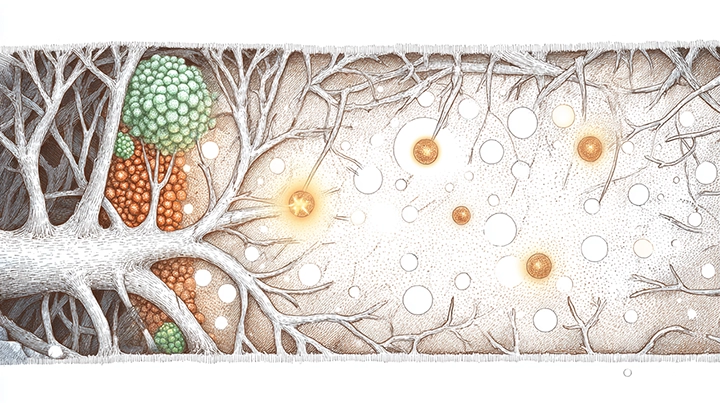
Pleurotus djamor already carries an important practical advantage: it is an edible fungus with established culinary use. Its mycelium—the root-like filament network responsible for fungal growth—can form dense biomass suitable for ingredient development.
The deeper significance of the study is not simply that carrot waste can feed fungi. It is that controlled fungal fermentation may help upgrade low-value food-processing residues into higher-value nutritional ingredients.

Pleurotus djamor, commonly known as the pink oyster mushroom, demonstrated strong biomass and protein yields when cultivated on carrot-processing side streams. Credit: Gerly123 / Ak ccm, via Wikimedia Commons, CC BY-SA 3.0From Fermentation Tanks to Vegan Patties and Sausages
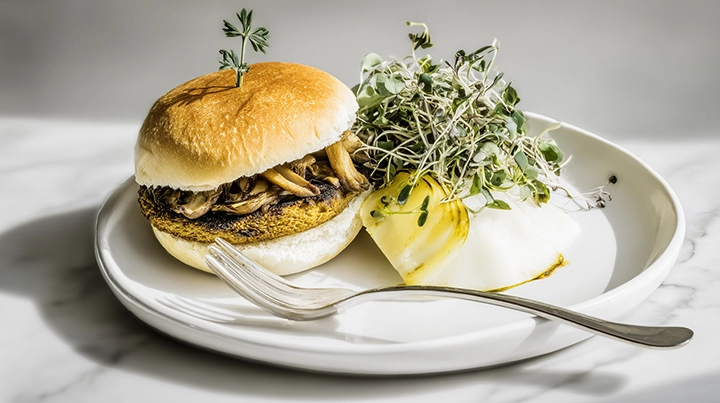
The researchers did not stop at producing fungal biomass alone. They also evaluated whether the ingredient could function within recognizable consumer foods, including vegan burger patties and sausage analogs.
That step matters because sustainability alone does not guarantee market success. Consumers still respond to flavor, texture, aroma, cooking behavior, and familiarity. Products containing fungal protein were rated as tastier than comparable foods made with conventional plant-based proteins.
This speaks to one of the persistent challenges within alternative-protein development. Many plant proteins require heavy processing or formulation adjustments to manage bitterness, dryness, beany flavors, or texture limitations. Fungal mycelium may offer a different sensory pathway—combining naturally savory qualities with fibrous structural properties useful for meat analogs.
The findings do not suggest fungal protein will displace soy, pea, wheat, or other protein systems. They do demonstrate that mycelium grown on food side streams can move beyond laboratory fermentation and into consumer-relevant food formats.

Fungal mycelium protein may offer food manufacturers a new ingredient pathway for vegan burgers and other plant-based meat analogs. Credit:Jennifer from Vancouver, via Wikimedia Commons, CC BY 2.0Why Fungal Protein Fits the Future Food Conversation
Global protein demand continues rising as populations grow and dietary patterns shift. Food systems simultaneously face pressure to reduce waste, emissions, land use, water consumption, and dependence on resource-intensive production models.
Fungal mycelium sits directly at this intersection. It can be cultivated through fermentation, can utilize underused side streams as feedstock, and can generate protein-rich biomass without relying on livestock production.
For manufacturers, the concept combines sustainability with ingredient functionality. For processors and agricultural industries, it suggests that byproducts may hold additional economic value. For consumers, it introduces another pathway toward protein diversification.
The broader message is consistent across all of these perspectives: fungi are not only organisms that threaten food quality. Under controlled conditions, they may also help build the next generation of food ingredients.
The Scaling Challenge Still Matters
The promise of mycelium protein is real, but it should not be overstated.
To become a widely used commercial ingredient, fungal protein produced from carrot side streams would still need to satisfy demanding requirements: food safety validation, regulatory approval, allergen assessment, sensory consistency, shelf-life stability, industrial scalability, and compatibility with existing manufacturing systems.
The side streams themselves introduce additional complexity. Their composition may vary according to carrot variety, season, processing method, sugar content, acidity, nutrient profile, and microbial load. Industrial fermentation systems would require disciplined process control to maintain consistent biomass quality under changing raw-material conditions.
This is the difference between a promising research result and a mature supply chain. The study demonstrates feasibility and strong consumer potential, but commercialization requires careful engineering, quality assurance, and sustained market development.
A responsible reading remains optimistic while grounded: this is not a complete solution to global protein demand, but it is a compelling demonstration of how fungal fermentation can convert food-processing residues into useful nutrition.

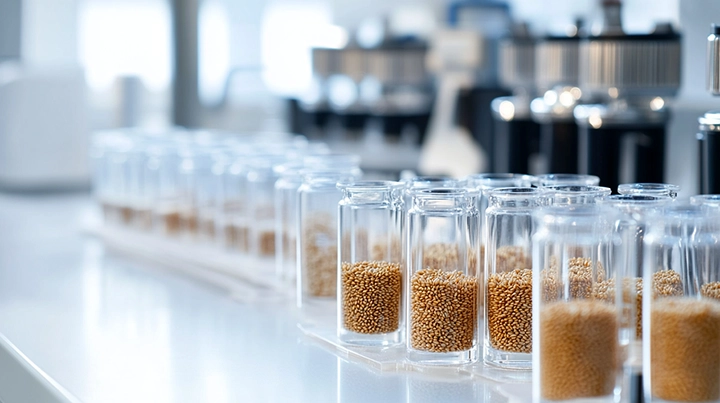
Controlled fungal cultivation in laboratory conditions forms the foundation of mycelium-based ingredient development. Credit: Luis Fernando Flores LAB, via Wikimedia Commons, CC BY 4.0Controlled Fermentation Is Not Accidental Mold
The article also clarifies one of the most important misunderstandings surrounding fungi and food systems.
Food safety education correctly teaches people to avoid uncontrolled mold growth. Unwanted fungi can spoil food, produce toxins, and create health risks. Controlled fungal fermentation is fundamentally different.
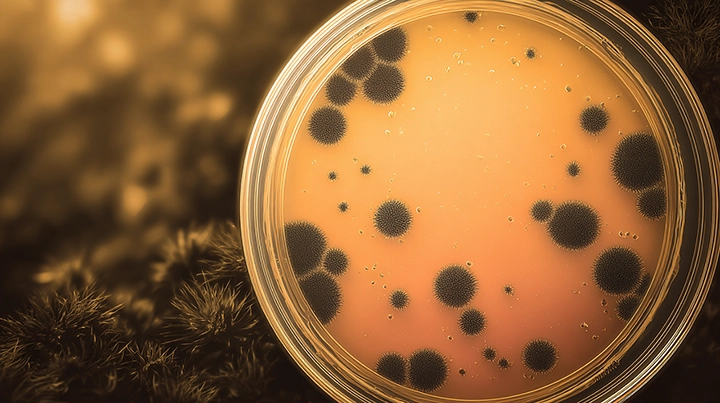
In fermentation systems, selected fungal strains are cultivated intentionally under monitored conditions, using specific substrates for defined production goals. Growth parameters are managed, biomass is evaluated for safety, and the resulting product is handled as part of a designed manufacturing process.
The same biological abilities that allow fungi to decompose organic matter can therefore be redirected toward useful industrial production when the environment is carefully controlled. This distinction matters for how the public understands fungal biology. Fungi are not simply “good” or “bad.” Their risk or value depends on species, substrate, environment, control, and intended use.
In this study, fungal biology is not the problem. It is the engine.
The Future of Food May Include Fungal Infrastructure
The study strengthens a growing realization within biotechnology and sustainable manufacturing: fungi may become part of future food infrastructure rather than remaining confined to spoilage narratives or niche fermentation industries.
By demonstrating that edible mycelium can transform carrot-processing side streams into nutritionally useful biomass with strong sensory potential, the research expands how food production itself can be imagined.
The future of sustainable protein may not depend on a single solution. Instead, it may emerge through interconnected systems where waste becomes feedstock, fermentation becomes manufacturing, and fungi become biological production partners operating inside circular food economies.
FAQ — Fungal Mycelium Protein and Food Upcycling
What is fungal mycelium protein? Fungal mycelium protein is protein-rich biomass produced from the filament-like growth network of edible fungi. When cultivated on suitable substrates under controlled conditions, mycelium can accumulate significant protein content alongside fiber and other nutrients.
How can carrot side streams become food protein? Through controlled fermentation, edible fungi convert nutrient-rich carrot-processing residues into mycelial biomass. That biomass can then be harvested, processed, and formulated as a functional food ingredient.
Why did Pleurotus djamor perform well in this study? It demonstrated strong biomass production and useful protein levels when cultivated on carrot side-stream media, and it carries practical advantages as an established edible fungus with recognized culinary use.
Is fungal protein the same as plant protein? No. Fungal protein comes from fungal biomass rather than plant seeds or legumes, and may offer different textural and flavor characteristics that make it useful in specific food applications such as meat analogs.
Can mycelium protein help reduce food waste? Potentially yes. Controlled fungal fermentation may help upcycle food-processing residues into higher-value edible ingredients, contributing to more circular food production models.
References
Researchers. (2025). Edible fungal mycelium from carrot side streams as sustainable protein ingredient. Journal of Agricultural and Food Chemistry. https://pubs.acs.org/doi/10.1021/acs.jafc.5c11223