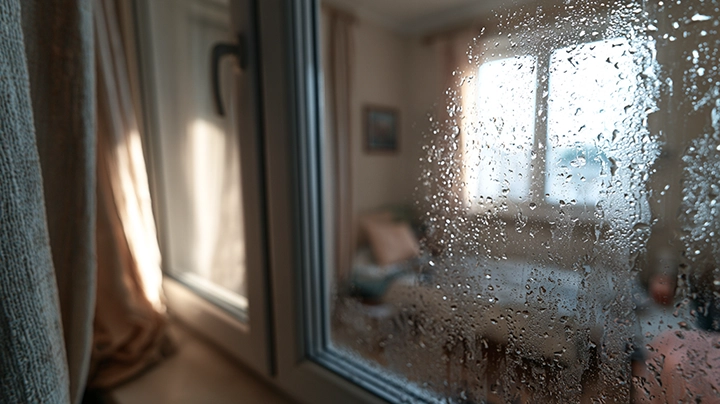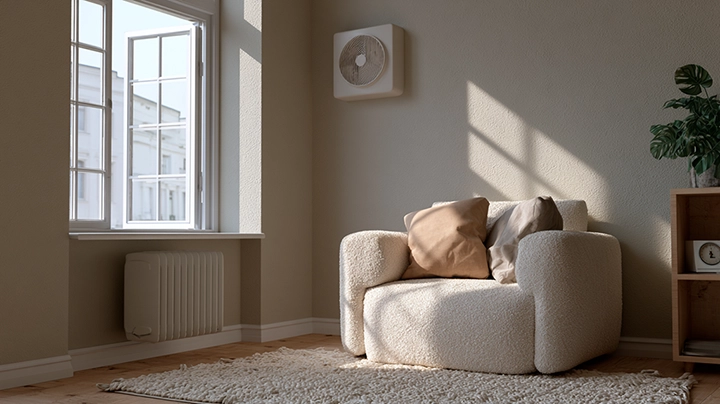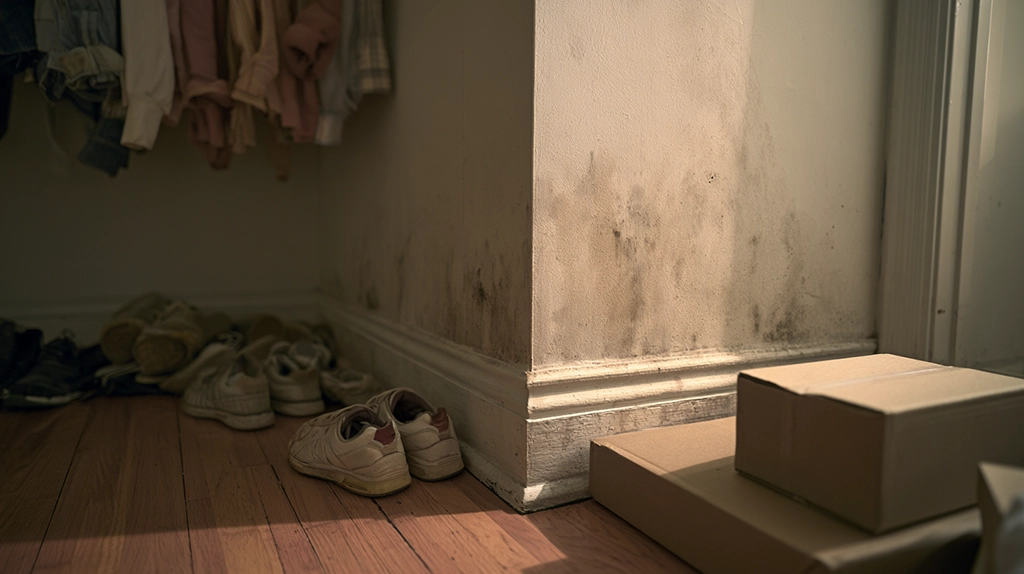
Have you ever spent a whole day in the office and ended up with a headache, dry eyes, a stuffy nose, or unusual fatigue? Many people assume it’s because of air conditioning. But the truth may be more hidden—the real culprit could be mold. This is what we call Sick Building Syndrome (SBS), and mold plays a major role in it.
Where Mold Hides: Air Conditioners and Damp Corners
Mold needs moisture, dust, and organic material to grow. Modern building air conditioning systems often provide the perfect conditions. Stagnant water in condensate pans, clogged drains, dusty filters, and damp ducts become mold’s “VIP suites.” Common species include Aspergillus, Penicillium, Cladosporium, and Rhizopus. Once spores enter indoor air through the AC system, the entire office becomes a mold distribution site.
How Mold Affects You
Mold affects human health in three main ways.
First, spores and microbial volatile organic compounds (MVOCs) irritate the eyes, nose, and throat. This leads to congestion, coughing, or eye irritation—classic SBS symptoms.
Second, people with weaker immune systems, such as premature babies, organ transplant patients, or those on long-term immunosuppressants, face higher risks. For them, mold can cause not just allergies but also severe infections like pneumonia, abscesses, or even systemic infections.
Third, some mold metabolites affect the nervous system and skin, leading to fatigue and poor concentration. These effects make SBS even harder to ignore.
Data Shows SBS Is Not an Illusion
The World Health Organization reported that in the 1970s and 1980s, about 10% to 30% of newly built office buildings had SBS cases. A survey in China showed that dampness and mold in homes significantly increased the chance of SBS symptoms, with a clear dose–response relationship. The study also found that simple actions such as opening windows, airing bedding, and regular cleaning could reduce symptoms. Another epidemiological analysis showed that visible mold or dampness indoors increased the risk of respiratory problems by 30% to 50%. Together, these findings confirm that mold is a major driver behind SBS.
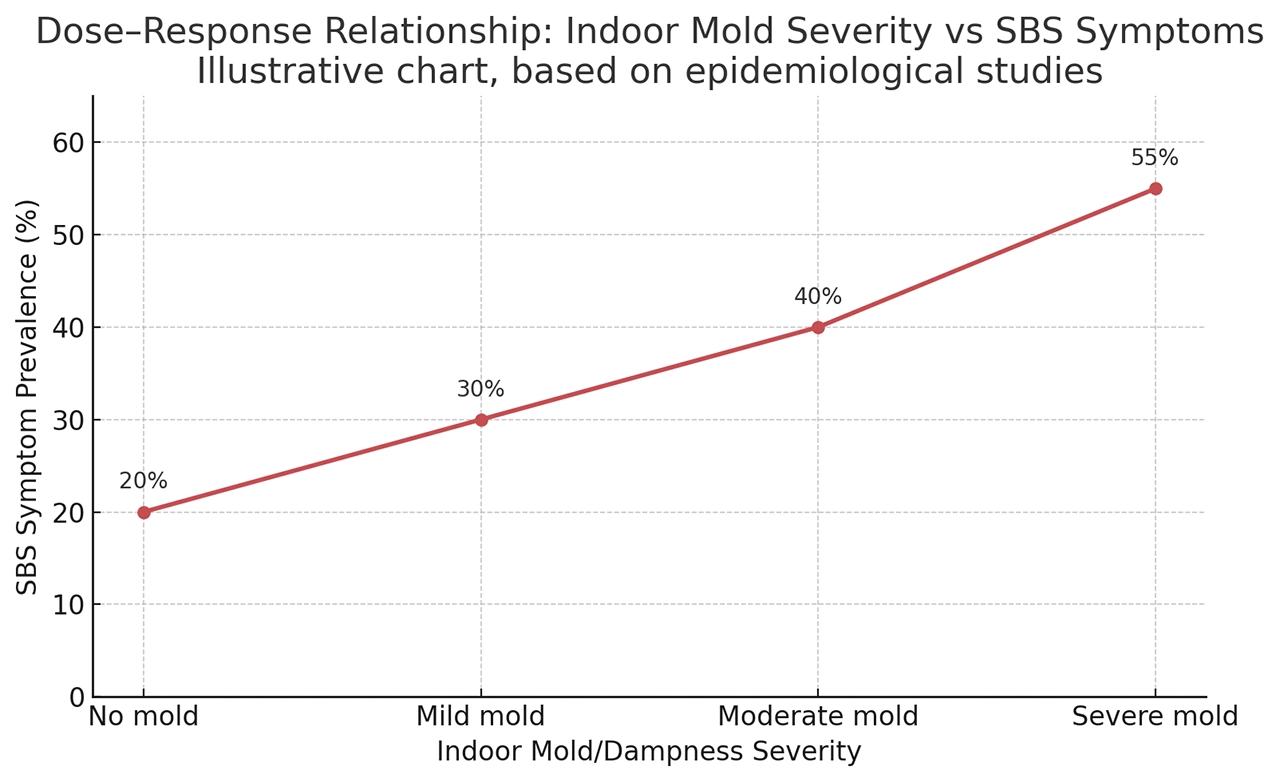
(No visible mold = baseline; Visible mold/damp = +30–50% risk)
Real Cases: Mold Is Not a Small Problem
In 2023, a study in India followed 200 office workers using air conditioning and 200 without AC. The results showed that the AC group experienced SBS symptoms more often, had lower lung function, and took more sick leave. These findings suggest that the issue is not air conditioning itself but mold and pollutants accumulating in the system.
In the UK, a young child died after living in a damp, mold-infested apartment for a long period. This tragedy led to the creation of Awaab’s Law, which requires social housing landlords to fix mold problems quickly once reported. These cases prove mold is not a minor nuisance—it is a serious public health issue.

Why Air Conditioning and Humidity Help Mold Thrive
Air conditioning connects closely to mold for more than one reason. Poorly maintained systems—dirty filters, wet pans, or clogged drains—become breeding grounds for spores that circulate throughout the building. On the other hand, over-drying by AC damages the protective lining of the nose and throat, making it easier for mold to invade. Modern buildings add another problem: windows that cannot open and poorly ventilated corners. This allows mold to accumulate in enclosed spaces.
How to Stop Buildings From Getting “Sick”
Preventing SBS is not a mystery. The key is reducing opportunities for mold to grow.
- Clean and maintain air conditioning regularly, including condensate pans, drains, and filters.
- Keep indoor humidity between 40% and 60%. Too much moisture feeds mold, while too little weakens natural defenses.
- Increase fresh air exchange by opening windows or using mechanical ventilation.
- Use high-efficiency filters or UV-C devices to block or kill spores.
- For people with allergies or weak immunity, placing an air purifier near their desk or bedroom offers direct protection.
Conclusion: Bringing Buildings Back to Health
Sick Building Syndrome is not just an illusion of “spending too long under the AC.” It is a real intersection of environment and health. Mold is a hidden enemy in this story, quietly affecting our respiratory system, immunity, and even concentration.
To keep buildings from becoming “sick,” we need more than comfortable air conditioning. We need awareness, regular maintenance, humidity control, and proper ventilation. When we take these steps, health will no longer feel like a luxury, but part of everyday life.
References
- CDC. Mold. CDC.gov
- PubMed. Residential dampness and SBS symptoms in China. PubMed
- EPA. Mold Course. EPA.gov
- EPA. What is a HEPA Filter. EPA.gov
- Wikipedia. Aspergillus, Penicillium, Cladosporium, Rhizopus, Air purifier, Air conditioning
Key Takeaways
- The concept of ‘sick building syndrome’ has evolved toward a more precise understanding: most problematic buildings have identifiable moisture, ventilation, or chemical emission issues—they are not mysteriously ill but specifically deficient.
- Buildings make people sick primarily through three mechanisms: biological contamination (mold, bacteria, dust mites), chemical pollution (VOCs from building materials and furnishings), and inadequate fresh air ventilation.
- Modern airtight energy-efficient buildings—constructed without adequate mechanical ventilation—can produce worse indoor air quality than draughty older buildings because they trap pollutants and moisture.
- Office buildings make occupants sick at higher rates than residential buildings partly because of shared HVAC systems that can distribute contamination from a single mold source throughout an entire building.
- Indoor air quality assessments using particle counters, CO₂ monitors, humidity sensors, and VOC analysers can identify the specific causes of building-related illness without relying on subjective symptom reports.
Frequently Asked Questions
What is sick building syndrome and how is it diagnosed?
Sick building syndrome (SBS) is a clinical term describing a pattern of non-specific symptoms—headaches, fatigue, eye and throat irritation, difficulty concentrating, and nasal congestion—that occur predominantly or exclusively when occupants are inside a specific building and resolve when they leave. The term was most prominently used from the 1970s through 1990s to describe outbreaks of symptoms in newly constructed office buildings. Diagnostic criteria: SBS is a diagnosis of exclusion and pattern recognition rather than a specific disease with lab tests; key diagnostic features are that symptoms are building-specific (not present at home, resolve during weekends), affect a high proportion of building occupants, and lack other explanation. NIOSH investigations of SBS outbreaks consistently find attributable causes in the majority of investigated buildings: inadequate ventilation (most common), biological contamination (mold, bacteria in HVAC systems), chemical emissions from new building materials, and poor thermal comfort. Modern understanding: most building physicians and indoor environmental professionals prefer the term ‘building-related illness’ with identified causes over ‘sick building syndrome,’ which carries a connotation of unknown aetiology; identifying and correcting the specific cause is the definitive diagnostic and treatment approach.
How does poor ventilation make buildings unhealthy?
Ventilation dilutes and removes indoor air pollutants generated by occupant activities and building materials; insufficient ventilation allows these pollutants to accumulate to health-affecting concentrations. Key pollutants that accumulate without adequate ventilation: CO₂—exhaled air contains approximately 4% CO₂; office buildings with insufficient outdoor air supply show CO₂ concentrations rising throughout the day; ASHRAE and NIOSH research shows performance degradation begins at around 1,000 ppm CO₂ (normal outdoor air is approximately 415 ppm); at 2,000+ ppm, cognitive performance impairment is documented. VOCs (volatile organic compounds)—emitted by furniture, carpeting, adhesives, cleaning products, personal care products, and building materials; off-gassing is highest in newer buildings or after renovation; inadequate ventilation allows accumulation. Moisture—occupant activities generate 3–20 litres of water vapour per household per day; in airtight buildings without ventilation, indoor RH rises above mold-growth thresholds. Particulate matter—resuspended dust from surfaces, cooking particles, and outdoor infiltration accumulate without adequate air exchange. ASHRAE Standard 62.1 specifies minimum outdoor air ventilation rates for commercial buildings (typically 7.5–10 litres per second per person for office occupancy); compliance with these standards is associated with significantly lower rates of building-related illness.
Are new energy-efficient buildings more likely to cause health problems?
Highly energy-efficient buildings can produce worse indoor air quality than older, less efficient buildings if energy efficiency measures (air sealing, insulation) are not paired with adequate mechanical ventilation—a problem sometimes called the ‘airtightness paradox.’ The issue: energy efficiency improvements primarily involve reducing air infiltration (draughts) through the building envelope and reducing heat loss through insulation; these measures reduce the uncontrolled air exchange that provided some dilution ventilation in leaky older buildings; without mechanical replacement of this natural dilution, indoor pollutant concentrations increase. Evidence: studies of air quality before and after energy efficiency retrofits (weatherisation programmes) have documented increases in indoor VOC, radon, and humidity concentrations following air sealing without simultaneous ventilation enhancement. The standard solution: energy-efficient building standards (Passivhaus, UK Building Regulations Part F, ASHRAE 62.2 for residential buildings) require mechanical ventilation as an integral component of air-tight construction; heat recovery ventilators (HRV) and energy recovery ventilators (ERV) recover 70–90% of the heat from exhaust air while introducing fresh outdoor air, maintaining air quality without energy penalty. Properly implemented energy-efficient construction with HRV/ERV systems provides better indoor air quality than conventional construction, not worse.
What is the best way to test indoor air quality at home?
Indoor air quality testing ranges from simple consumer-level monitoring to comprehensive professional assessment, with different approaches appropriate for different questions. Consumer monitoring devices: CO₂ monitors—real-time CO₂ measurement is the most practical proxy for ventilation adequacy; a CO₂ meter (available for $50–200) placed in occupied rooms indicates whether ventilation is sufficient; sustained CO₂ above 1,000 ppm indicates inadequate ventilation. Humidity monitors—digital hygrometers measure RH; sustained readings above 60% RH indicate mold risk; below 30% may cause discomfort and material damage. Radon test kits—long-term radon exposure is the second leading cause of lung cancer; passive test kits (charcoal canisters left in lowest occupied space for 90 days) are the most accurate consumer approach. Indoor air quality monitors—consumer devices combining sensors for PM2.5, VOCs, CO₂, temperature, and humidity provide multi-parameter monitoring; accuracy varies significantly by product. Professional assessment: where health symptoms are occurring, a certified industrial hygienist (CIH) or indoor environmental professional (IEP) performs comprehensive assessment including: air sampling for mold spores (Anderson impactor or similar); VOC air sampling; mold surface sampling (tape or swab); moisture measurements in building materials; and HVAC system inspection.
Can a single mold source make an entire office building sick?
Yes—and this has been documented in numerous NIOSH Health Hazard Evaluations (HHEs) and building investigations. The mechanism by which a single mold source can contaminate an entire building involves the HVAC (Heating, Ventilating, and Air Conditioning) system, which recirculates and distributes air throughout the building. Single-source amplification events: if mold grows in the air handling unit—particularly on the cooling coil, in the condensate drain pan, or in the humidifier section—every cycle of the air handler distributes spores to all spaces served by that unit. If mold grows in a return air plenum (the ceiling or wall cavity through which exhaust air flows back to the air handler), contaminated air from that plenum is mixed with supply air for the entire building. Ductwork mold, while less efficient at spore distribution than direct HVAC contamination, can release spores from supply grilles into multiple rooms. Documented outbreak investigations: NIOSH investigations of building-related illness outbreaks regularly identify single HVAC contamination sources responsible for symptom patterns across floors and wings; a classic example is the Legionella outbreaks that established how HVAC water systems can distribute waterborne pathogens to entire buildings—the same principle applies to mold spore distribution.