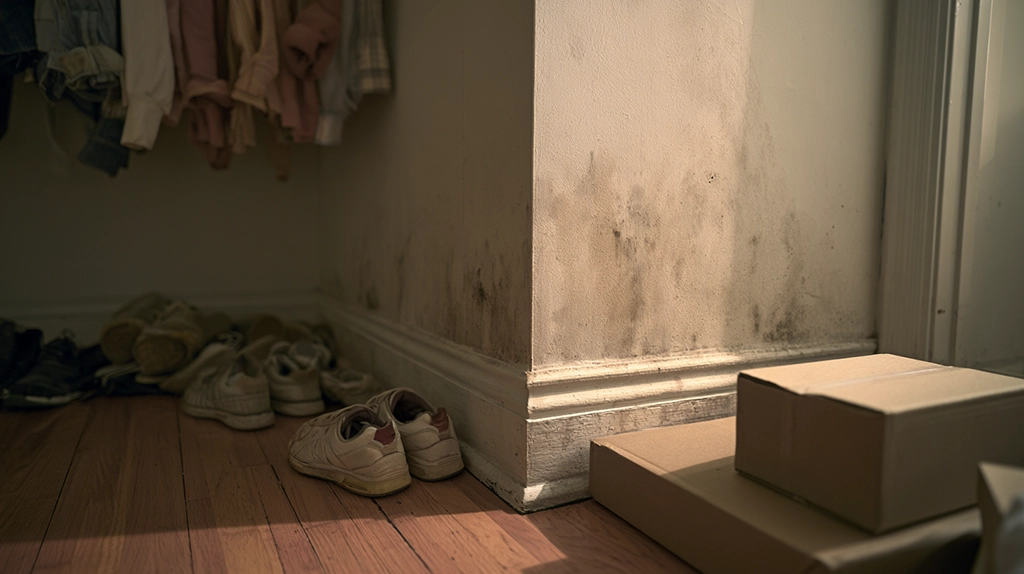
In daily life, mold is almost everywhere. These fungi reproduce through tiny spores that can float in the air for long periods and spread with the wind, waiting for suitable environments to burst into growth. For most people, the threat of mold is not just the black spots in the corners of walls, but the health risks they pose: molds can trigger allergies, asthma, and even cause prolonged nasal congestion or coughing in sensitive individuals. Therefore, learning to identify mold early is the first step to protecting your family’s health.
How to Recognize Mold in Your Home
Identifying mold is not only about spotting black stains. While black is the most common, mold actually comes in many colors, from green and gray to white and orange, depending on spore density and species characteristics. Different molds also prefer different environments:
- Aspergillus: Often found in poorly ventilated, dusty places such as air conditioner filters and wall corners. Typically appears as green or gray-black spots.
- Cladosporium: Easily attaches to wood, fabrics, or curtains, usually showing dark green to black patches.
- Stachybotrys chartarum (black mold): The infamous “toxic black mold,” which thrives in persistently damp materials like drywall, wallpaper, or paper products, appearing deep black and with a slimy texture.
Beyond color and distribution, other hidden clues should not be ignored: peeling wallpaper, flaking paint, or a musty odor behind furniture often indicate mold growth. Musty air blowing from an AC unit is another common sign that spores have colonized the machine. A subtler clue comes from health symptoms—if family members frequently experience unexplained nasal congestion, sneezing, or nighttime coughing, especially in a particular room, it may be a warning sign of mold presence.

The growth rate of mold is astonishing. Any place soaked by water or exposed to leaks can become moldy if not thoroughly dried within 48 hours. Quick action and timely drying are therefore the keys to preventing hidden mold from spreading.
How to Remove Mold at Home
To truly remove mold, you cannot just treat the surface. Once spores settle on porous materials such as wood, drywall, or fabric, they grow fine hyphae that penetrate deep inside while releasing enzymes to break down organic matter as nutrients. This explains why mold often returns even after surfaces look clean—because the root problem remains inside the material.
Many people’s first instinct is to reach for bleach. While it can quickly whiten surfaces, its action is limited to the outermost layer and cannot penetrate fibers. Worse, bleach evaporates quickly, limiting its contact time, and releases chlorine gas that irritates the respiratory tract. It may be fine for temporary use, but it is not a long-term solution. In comparison, hydrogen peroxide and vinegar are safer and more effective for household use. Hydrogen peroxide decomposes into water and oxygen; the oxygen disrupts mold cell membranes and leaves almost no residue. Vinegar, being acidic, inhibits mold enzyme activity, making it harder for them to keep growing.

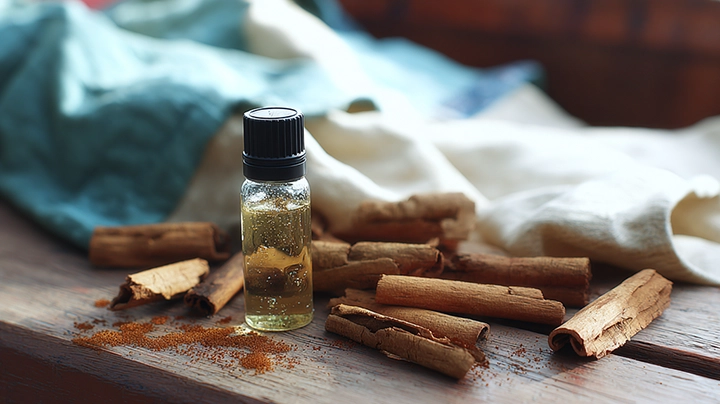
For small or mild mold spots, natural cleaning methods can also help. Vinegar, lemon juice, baking soda, or tea tree oil may not be as powerful as specialized cleaners, but they can alter local pH or interfere with mold metabolism, at least slowing growth. These are suitable for routine upkeep.
One major risk of cleaning mold is secondary contamination. Scrubbing or scraping dry releases large amounts of spores into the air, increasing inhalation risks. Safer practices include wiping with a damp cloth or using a HEPA-filter vacuum, which reduces spore spread. Always wear gloves and a mask, since spores contain allergens and β-glucans that can irritate the skin and respiratory system.

Some people recommend steam cleaning, but this is a misconception. Mold spores are highly heat-tolerant, and the temperature of most household steam cleaners is insufficient to kill them. Worse, condensed steam increases surface moisture, creating an even better environment for mold growth.
Finally, remember that when mold covers more than one square meter, or when it spreads inside air conditioners and ducts, it can no longer be solved by household cleaning alone. Especially in the case of black mold (Stachybotrys chartarum), which produces a group of toxins called trichothecenes, including satratoxins. These substances interfere with protein synthesis in human cells. When inhaled, they can cause headaches, fatigue, respiratory inflammation, and even immune suppression. Such cases must be handled by professionals following strict safety protocols.
Preventing Mold from Returning
To stop mold from coming back, you must address the conditions it needs to grow. Mold requires three factors: moisture, organic material, and suitable temperature. In the home, temperatures are often between 20–30°C, which is ideal for mold, and organic materials such as wood, fabrics, and cardboard are common in furniture and décor. Compared to these, moisture is the factor we can most directly control, making humidity management the core of mold prevention.

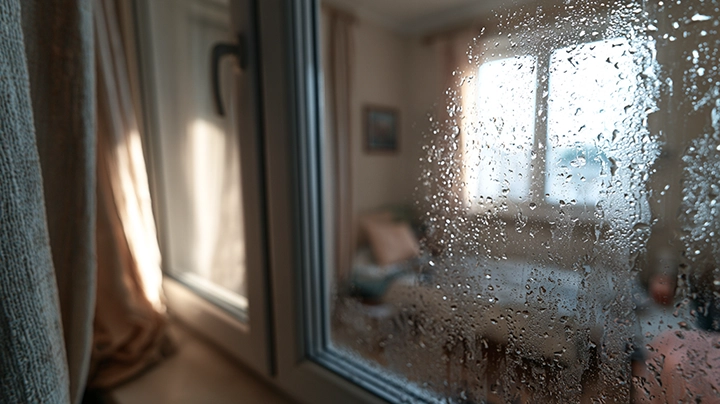
Moisture doesn’t need to be obvious to be a problem. Even tiny droplets of condensation can give mold a foothold. That’s why window edges, wall corners, and AC vents are frequent hotspots—the temperature difference creates condensation, forming hidden sources of dampness. If left unchecked, mold can grow quietly even when the rest of the room feels dry.
The “golden 48 hours rule” is also critical: if damp areas are not fully dried within two days, mold spores will begin to germinate.
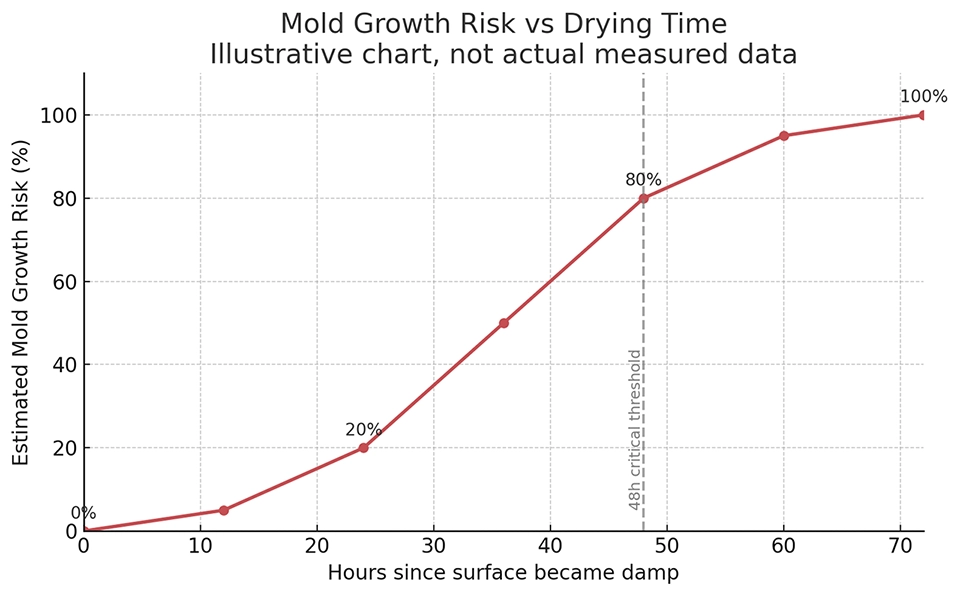
Illustrative chart, not actual measured data
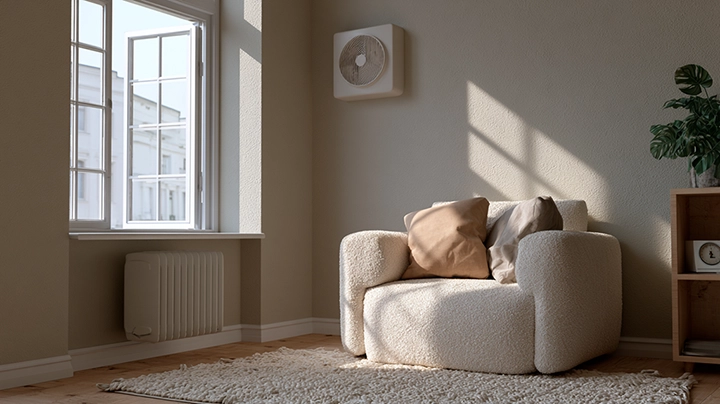
Some materials act like sponges, holding both moisture and the organic matter mold needs. Wood, fabrics, and paper are classic examples. Once they become damp, they provide both “food and water,” allowing mold to thrive rapidly. This is why bathroom mats, stacked cardboard boxes, or damp closets often turn into mold breeding grounds. Reducing the time these materials stay wet, combined with good ventilation, is the most effective way to prevent recurrence.
A Mold-Free Home Is a Daily Habit
Keeping a home mold-free is not a one-time task but an ongoing practice. From daily humidity control and timely drying to choosing the right cleaning methods, every step matters in protecting health. And when the situation becomes severe, don’t hesitate to call in professionals.
By understanding the biological nature of mold, we realize that prevention is not a mystery but a scientific routine. If we follow the three principles—stay dry, clean promptly, and seek help when needed—we can keep our homes free from mold threats. A truly healthy home is not only clean and tidy but also one where every family member can breathe with peace of mind.
References
- CDC. Mold Basics. CDC.gov
- WHO. Asthma Fact Sheet. WHO.int
- EPA. Mold Cleanup in Your Home. EPA.gov
- PubMed. Hydrogen peroxide as antifungal. PubMed
- PubMed. Trichothecene mycotoxins review. PubMed
- Wikipedia. Aspergillus, Cladosporium, Stachybotrys chartarum, Fungal spore, Hypha, Vinegar, Chlorine gas
Key Takeaways
- Achieving and maintaining a mold-free home requires applying building science principles consistently—controlling moisture sources, maintaining adequate ventilation, and monitoring for problems before they become serious.
- The EPA’s moisture control guidance identifies three fundamental principles: eliminate water sources, control humidity, and ventilate—all three must be addressed simultaneously for effective mold prevention.
- Scientific evidence consistently shows that relative humidity is the most important variable—keeping indoor RH consistently below 50% prevents mold growth on virtually all building surfaces.
- Air purifiers with HEPA filtration reduce airborne mold spore concentrations but do not eliminate mold growth on surfaces; they address exposure but not the source.
- Regular inspection of the highest-risk areas (bathrooms, kitchen, basement/crawl space, roof penetrations, window frames) on a quarterly schedule enables early detection before mold colonies become extensive.
Frequently Asked Questions
What do scientists say is the most effective approach to a mold-free home?
Building science research converges on moisture management as the definitive foundation of mold prevention—not cleaning products, not air filtration, not antimicrobial coatings, but control of the moisture conditions that enable mold growth. The scientific framework: the EPA’s Indoor Air Quality guidance identifies the hierarchy of mold prevention as: (1) eliminate water intrusion from exterior sources (roof, walls, foundation); (2) control interior moisture generation (ventilation of kitchens and bathrooms, clothes dryer venting, control of other moisture sources); (3) maintain indoor relative humidity below 50%; (4) ensure adequate air circulation to prevent local humidity accumulation in stagnant areas; and (5) respond immediately to any water incident to dry affected materials within 48 hours before mold can establish. This framework is supported by the consistent finding across residential mold studies that visible mold growth is nearly always associated with a specific moisture source—either water intrusion or condensation from insufficient ventilation. Homes without moisture problems do not develop significant mold regardless of airborne spore loads.
What is the best home humidity level to prevent mold?
The scientific consensus on indoor relative humidity for mold prevention is clear: maintain indoor RH below 50% year-round, with 30–50% representing the recommended range that balances mold prevention with occupant comfort and material preservation. The 50% threshold is based on: minimum growth requirements of most common indoor mold species (which generally require surface water activity above 0.80–0.85 Aw, corresponding to equilibrium RH of 80–85%); the recognition that RH measured in room air may be lower than the surface RH at cold spots (corners, exterior walls, windows) where condensation can raise local moisture levels; and the practical finding that homes maintained at 40–50% RH consistently have lower mold prevalence than homes at 60%+ RH. Achieving 50% or below: in humid climates (coastal areas, southeast USA, monsoon climates), maintaining 50% RH year-round requires active dehumidification in addition to ventilation; dehumidifiers sized appropriately for the conditioned space (in litres per day capacity) are effective when properly maintained (drain pan emptied or continuously drained). In dry climates, indoor RH tends to be naturally low and humidification may be needed to prevent overly dry conditions.
Do air purifiers help prevent mold growth?
Air purifiers with HEPA filtration effectively reduce airborne mold spore concentrations, providing a useful exposure reduction benefit—but they do not prevent mold growth on surfaces and should not be substituted for moisture control as the primary mold prevention strategy. How HEPA filtration helps with mold: HEPA filters capture particles 0.3 μm and larger at ≥99.97% efficiency; most mold spores are 2–10 μm in diameter, well within the effective capture range; reducing airborne spore concentration reduces the dose of spores settling onto surfaces where they could potentially germinate (if moisture conditions are favourable) and reduces direct inhalation exposure. Limitations: HEPA purifiers process the room air volume they are rated for; they do not extract spores from heavily contaminated surfaces or from air inside wall cavities where mold is growing; they do not reduce the germination rate of spores that do settle on damp surfaces. Evidence: air purifiers reduce measured airborne mold counts in treated rooms; they do not reduce surface mold growth or remediate established mold colonies. Appropriate use: HEPA air purifiers are a useful component of comprehensive mold management in homes that have successfully eliminated moisture problems and completed surface mold remediation—as an exposure reduction tool for sensitive occupants.
What home inspection schedule best catches mold problems early?
A structured home inspection schedule designed around the highest-risk areas and seasonal vulnerability periods enables early detection of moisture and mold problems before they become extensive or expensive. Recommended quarterly inspection schedule: spring (post-winter): inspect roof for winter damage (displaced shingles, cracked flashing); check attic for signs of ice dam water intrusion (staining, damp insulation); inspect foundation and basement for spring groundwater infiltration; check window frames for condensation staining. Summer: inspect all HVAC components (air handler, condensate pan, ductwork accessible areas) for mold; ensure whole-house humidity management is adequate before summer humidity peaks; check bathroom caulk and grout for early mold establishment. Autumn (pre-winter): clean gutters and ensure downspout extension adequate; caulk any cracked exterior joints before winter rain season; inspect crawl space before winter for moisture issues. Winter: check windows for condensation patterns indicating humidity too high; inspect bathroom exhaust fans for function; verify crawl space vapour barrier is intact. Annual deeper inspection: hire a professional home inspector or indoor environmental professional for a complete annual moisture assessment if you live in a high-humidity or flood-prone region or have an older home.
What are the most effective cleaning products for mold?
Mold cleaning product choice should be guided by evidence rather than marketing—many products marketed for mold control have limited efficacy data, and the most heavily promoted products are not necessarily the most effective. Evidence-based cleaning approaches: diluted white vinegar (undiluted, at approximately pH 2.4): effective against many mold species on non-porous surfaces; the acidic environment denatures mold proteins and disrupts cell membrane function; best for surface mold on hard, non-porous materials; 60% effectiveness against Aspergillus and other common indoor molds in published comparisons. Hydrogen peroxide (3%): oxidising mechanism kills mold cells; safe for many surface types; used in healthcare for surface disinfection; effective against common indoor mold species. Diluted bleach (sodium hypochlorite): highly effective on non-porous surfaces; less effective on porous materials (wood, grout) where hypochlorite cannot penetrate; fumes require good ventilation; corrosive—damages many surfaces. Commercial antifungal products: quaternary ammonium compounds, borate compounds, and other antifungal ingredients have documented efficacy; follow manufacturer directions for contact time. What not to use: ‘mold-killing’ products that do not penetrate porous substrates; tea tree oil and similar natural products have limited evidence of efficacy against indoor mold species in real-world applications.