How Soaring Temperatures and Extreme Weather Are Fueling a Hidden Mold Crisis
Mold has always lurked in damp basements and poorly ventilated spaces, but climate change is making indoor mold infestations more common—and more dangerous—than ever before. As global temperatures climb and extreme weather events increase, rising humidity, heavy rainfall, and frequent flooding are turning homes, workplaces, and public buildings into prime breeding grounds for mold. What was once an occasional household nuisance is now becoming a widespread health crisis and economic burden.
Experts warn that without proactive measures to reduce moisture and improve ventilation, mold will continue to thrive indoors—posing serious risks to both human health and building infrastructure.
Why Is Climate Change Making Indoor Mold Growth Worse?
The connection is undeniable: higher temperatures, excess moisture, and extreme weather create the perfect conditions for mold to spread indoors. Warmer indoor air holds more moisture, leading to persistent dampness on walls, ceilings, and furniture—exactly what mold needs to grow. More frequent flooding from hurricanes, heavy rainfall, and rising sea levels is leaving behind water-damaged homes, creating moist environments where mold can flourish within just 24 to 48 hours.
Longer warm seasons mean that humidity lingers for months longer than in previous decades, giving mold more time to colonize homes. The role of wildfires and poor air quality is another overlooked factor. Smoke and airborne pollutants weaken indoor air quality, allowing mold spores to remain airborne longer and settle on damp surfaces, further increasing contamination risks. As climate patterns shift, mold is no longer just a seasonal problem—it’s becoming a year-round threat.

Flooded home interior – Wikimedia Commons (CC BY-SA 4.0)
The Growing Health Risks of Indoor Mold Exposure
Mold isn’t just an eyesore or a musty smell—it’s a direct threat to human health. As climate change increases mold growth, more people are being exposed to airborne mold spores daily. When inhaled, mold spores can trigger asthma attacks, allergic reactions, and chronic lung infections.
Those most at risk include children, whose developing lungs make them more vulnerable to mold-related respiratory issues, seniors, whose aging immune systems struggle to fight off mold-related illnesses, and people with asthma or weakened immune systems, for whom mold exposure can worsen symptoms, leading to long-term health complications.
According to the CDC and WHO, prolonged exposure to mold has been linked to chronic lung inflammation, fatigue, and even neurological effects in severe cases. With extreme weather events displacing families into water-damaged homes, more people are being forced to live in mold-infested conditions, increasing their risk of illness. If climate change continues at its current pace, indoor mold exposure could become one of the most significant health threats of our time.

Child using inhaler (asthma) – Wikimedia Commons (CC BY-SA 4.0)
The Economic Cost: How Mold is Draining Homeowners & Businesses
Beyond health risks, mold infestations are becoming a massive financial burden. Homeowners are facing skyrocketing costs for mold remediation, home repairs, and insurance claims, with many policies failing to cover mold damage, leaving families with costly out-of-pocket expenses.
Businesses and schools are also being affected. Mold-related building closures are on the rise, forcing workplaces to pause operations and leading to financial losses. Schools and government buildings are struggling to keep up with the rising costs of mold remediation.
Public infrastructure is also feeling the strain. Hospitals, transit systems, and government buildings face increasing mold removal costs, stretching already tight budgets. As climate change worsens, mold-related costs will only continue to grow, impacting both homeowners and industries.

Closed school building due to mold – Wikimedia Commons (CC BY-SA 3.0)
What Can Homeowners & Renters Do to Prevent Mold in a Changing Climate?
While mold thrives in changing weather conditions, proactive measures can help prevent infestations.
- Improving ventilation by opening windows when possible, using exhaust fans, and installing air purifiers can help reduce moisture buildup.
- Addressing water damage quickly is crucial—fixing leaks immediately and drying wet surfaces within 48 hours can prevent mold from spreading.
- Investing in dehumidifiers in high-humidity areas can help keep indoor moisture levels below 50%, making it harder for mold to take hold.
- Monitoring indoor air quality with sensors and mold detection kits can help homeowners catch problems before they escalate.
- Choosing mold-resistant materials such as drywall, insulation, and paints when renovating can provide long-term protection against mold.
Preventing mold is not just about cleaning—it requires adapting our homes and buildings to withstand the effects of climate change.

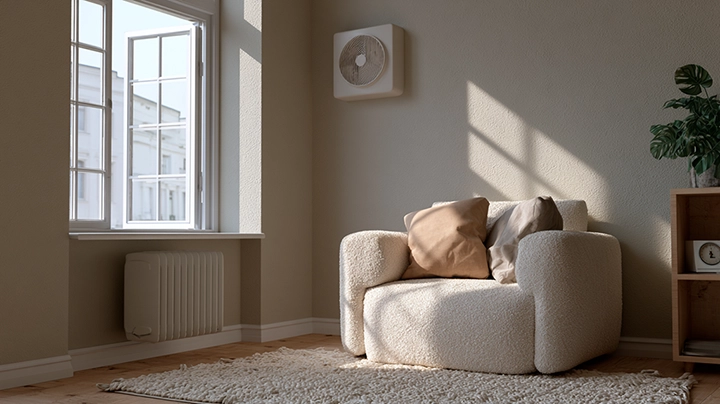
Ventilation fan system – Wikimedia Commons (CC BY-SA 3.0)
Government & Industry Action: Are We Doing Enough?
With the undeniable link between climate change and mold growth, governments and industries are being forced to take action. The EPA and FEMA are working to update building codes, ensuring homes are built with moisture-resistant materials and better ventilation systems. Some states are introducing stricter mold remediation laws for landlords and public buildings to protect renters and employees from prolonged mold exposure.
The mold prevention industry is expanding rapidly, with growing demand for climate-adaptive HVAC systems, mold-resistant construction materials, and smart air filtration technologies.
Despite these efforts, more action is needed. Without stronger regulations, better public awareness, and sustainable adaptation strategies, indoor mold will continue to be a growing crisis.

FEMA disaster recovery center – Wikimedia Commons (Public Domain)
Final Thoughts: A Changing Climate Means a Changing Mold Problem
Climate change isn’t just reshaping the outdoors—it’s fundamentally altering how mold behaves inside our homes. Rising temperatures, increasing humidity, and extreme weather events are turning mold into a persistent, year-round issue.
If we don’t take action, the health risks, financial burdens, and structural damage caused by mold will only escalate. Governments, industries, and individuals must work together to prevent mold from becoming a permanent consequence of climate change.
The time to act is now—before the mold crisis gets even worse.
References
Official & Regulatory Sources
- CDC – Mold: About
- CDC – Asthma
- EPA – Mold and Moisture
- EPA – Ventilation and Indoor Air Quality
- FEMA – Federal Emergency Management Agency
- WHO – Indoor Air Pollution
- IPCC – Intergovernmental Panel on Climate Change
Scientific & Educational Sources
- Mold – Wikipedia
- Climate Change – IPCC
- Hurricane – Wikipedia
- Rising Sea Levels – IPCC AR6 Report
- Wildfire – Wikipedia
- Mold Remediation – Wikipedia
- Dehumidifier – Wikipedia
- HVAC – Wikipedia
- Indoor Air Quality – EPA
Image Sources (CC Licensed / Public Domain)
- Hurricane Harvey Flooded Home – Wikimedia Commons (CC BY-SA 4.0)
- Child with Inhaler Asthma – Wikimedia Commons (CC BY-SA 4.0)
- Closed School Mold – Wikimedia Commons (CC BY-SA 3.0)
- Ventilation Fan – Wikimedia Commons (CC BY-SA 3.0)
- FEMA Disaster Recovery Center – Wikimedia Commons (Public Domain)
Key Takeaways
- Climate change is creating conditions that favour mold growth inside homes by increasing the frequency of extreme rainfall, flooding, humidity events, and temperature fluctuations that stress building envelopes.
- Warmer winters in temperate regions are reducing the cold-period that traditionally limits mold growth, extending the effective mold season and enabling colonisation that previously could not persist through winter.
- Increased atmospheric CO₂ concentrations benefit mold directly—CO₂ serves as a carbon source for some fungal metabolic processes—and indirectly, by promoting plant growth that increases organic substrate availability.
- The pattern of more intense but less frequent precipitation events creates cycles of wetting and partial drying that are particularly conducive to mold establishment on building materials.
- The mold-climate crisis is already underway in the form of increased insurance claims for water damage, rising numbers of mold-related medical visits, and growing demand for remediation services in climate-vulnerable regions.
Frequently Asked Questions
How is climate change worsening mold problems in homes?
Climate change affects indoor mold risk through multiple interconnected mechanisms that operate at the scales of both individual buildings and regional climate patterns. Extreme precipitation: climate change is increasing the intensity of rainfall events even in regions where total annual precipitation is stable or declining; intense rainfall events overwhelm building drainage, penetrate waterproofing at rates exceeding design specifications, and flood basements and lower floors more frequently. Flooding: riverine and coastal flooding is becoming more frequent and severe; flooded buildings sustain mold growth within 24–48 hours of water ingress; inadequate restoration after flooding events—common in communities with limited resources—leaves sustained moisture problems. Winter warming: traditional building design assumed that winter cold would limit indoor humidity and interrupt mold growing seasons; as winters warm in temperate regions, the cold-season limiting effect on mold is reduced, extending mold growth risk year-round. Building envelope stress: temperature swings of increasing amplitude stress weatherproofing materials—caulks crack, flashing shifts, building materials cycle repeatedly through moisture states—accelerating weatherproofing failure and moisture intrusion.
Which regions are seeing the biggest increases in mold problems due to climate?
The regions experiencing the most pronounced increases in climate-driven mold problems reflect the geographic specifics of climate change effects. Coastal low-lying regions (global): sea level rise and increased storm surge frequency increase flooding risk and groundwater infiltration into basement structures; cities including Miami, New Orleans, Jakarta, and Bangladesh’s coastal communities face increasing mold burden from flooding. UK, Ireland, and Northwestern Europe: the combination of existing high humidity, relatively mild temperatures, and increasing autumn and winter precipitation extremes creates a high-risk environment for mold in older housing stock, particularly social housing. Australian and North American Pacific coasts: atmospheric river events generating extreme precipitation are becoming more frequent and intense; 2021–2023 atmospheric river events caused unprecedented flooding and water damage in British Columbia and California. Southeast and south Asia: monsoon intensification driven by warming is associated with more extreme rainfall events, increasing household water damage and mold burden in low-income housing without adequate weatherproofing. Caribbean and Gulf Coast USA: increasingly intense hurricane seasons produce devastating flooding with multi-year mold consequences in affected communities.
Will buildings need to be redesigned to cope with climate-driven mold risk?
Yes—building design standards, practices, and codes are progressively being updated to address climate-driven increases in moisture risk, though the pace of code revision varies significantly between jurisdictions. Design changes being incorporated: higher design return periods for extreme precipitation—historically, buildings were designed to manage 1-in-10 or 1-in-50 year rainfall events; in climate-vulnerable regions, return periods are being extended to 1-in-100 or 1-in-200 year events in current standards. Enhanced waterproofing for foundations and below-grade construction: continuous waterproofing membranes rather than dampproofing for basement and foundation construction. Improved building envelope airtightness combined with mechanical ventilation. Elevated first floor levels in flood-prone areas. Climate-resilient material specifications: materials that can withstand wetting and drying cycles without catastrophic mold or rot failure. Passivhaus and similar standards: energy-efficient airtight construction with controlled ventilation provides inherently better mold resistance than conventional construction. Retrofit challenges: the existing building stock—hundreds of millions of homes built to obsolete standards—cannot be rapidly redesigned; targeted retrofits of the most climate-vulnerable building elements (roofs, windows, foundations) are the practical approach.
Is the mold problem from climate change already costing money?
Climate change-related mold costs are already substantial and growing, reflected in insurance claim data, healthcare system utilisation, and property value impacts. Insurance sector data: flooding events consistently generate large-scale mold claims; US National Flood Insurance Program payouts have grown dramatically; private property insurers in high-risk coastal areas are withdrawing coverage or increasing premiums substantially. Healthcare costs: mold-related respiratory disease costs are difficult to attribute specifically to climate change versus other factors, but increasing mold exposure burden from climate impacts will translate to increased healthcare costs—the US EPA already estimated mold-related respiratory illness costs at billions of dollars annually without climate adjustment. Property values: homes with documented mold histories sell at significant discounts; in flood-vulnerable areas, this discount is growing as buyers and their mortgage lenders increasingly factor flood and mold risk into valuations. Remediation industry: mold remediation is a growing industry sector; industry analyses consistently document year-on-year growth correlated with weather events.
What can homeowners do now to climate-proof against future mold risk?
Climate-proofing a home against increasing mold risk requires addressing the most likely future moisture pathways specific to the home’s location and climate trajectory. Priority actions for flood-vulnerable locations: install flood barriers or check valves on sewer connections (prevents sewage backflow during flooding); elevate mechanical systems (HVAC, water heater) above expected flood levels; waterproof basement walls with exterior-applied waterproofing rather than interior sealants; install sump pump with battery backup. For high-humidity or high-precipitation environments: invest in a high-capacity whole-house dehumidifier for basements and crawl spaces; ensure roof drainage directs water at least 2m from the foundation; inspect and replace roof waterproofing before it fails rather than waiting for leaks. For all locations: improve building envelope monitoring (install temperature and humidity sensors in at-risk areas: crawl space, basement, attic); create a maintenance schedule for the building elements most climate-stressed (roof, windows, exterior caulking, foundation drainage); ensure home insurance covers water damage and mold remediation and understand the claim process before a crisis occurs. Know your local climate projections: NOAA, UK Met Office, and equivalent national agencies produce local climate projections that enable targeted risk assessment.