The Quietest Plants Hold the Loudest Secrets
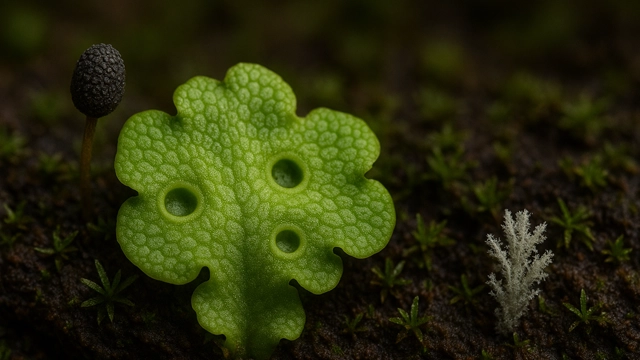
Walk through any forest and your eyes are drawn upward — to trunks, branches, the sway of leaves. But the real story, the intimate one, is happening much closer to the forest floor. That’s where the liverworts lie: thin, flat, and quietly ancient. And inside these humble bryophytes, researchers have now uncovered a microbiome so vibrant it feels like opening a treasure chest disguised as a houseplant.
In the tissues of Plagiochasma appendiculatum, a small liverwort native to India, scientists found 17 endophytic fungal species tucked away like secrets. One of them, astonishingly, has never before been recorded as an endophyte in any plant known to science.
Small plant.
Tiny leaves.
Huge microbial personality.

A Forest of Fungi Inside a Single Leaf
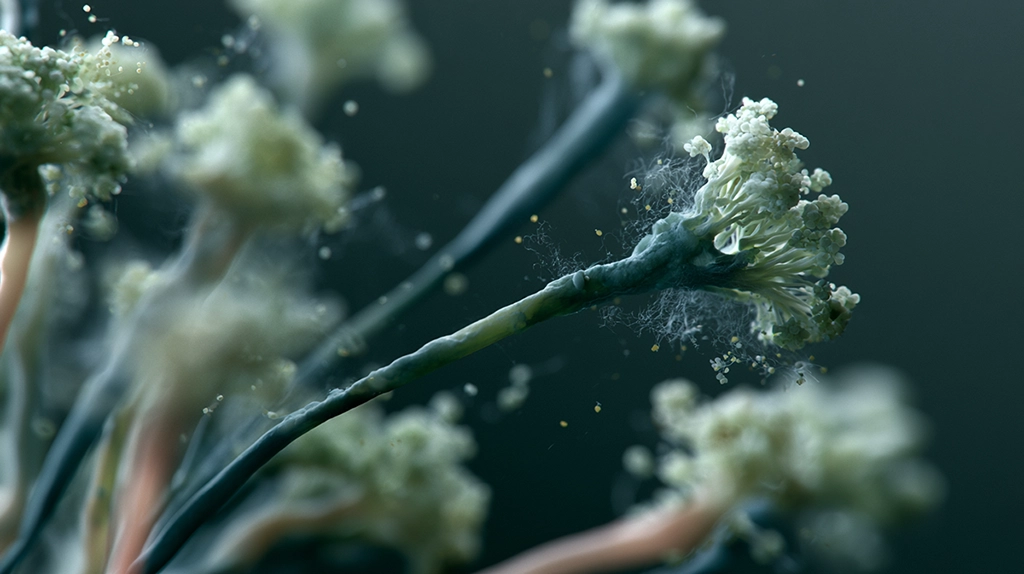
Endophytes — fungi that live inside plants without harming them — are like quiet houseguests who improve the home simply by being there.
In this study, some familiar fungal “regulars” appeared, including Aspergillus niger, Fusarium oxysporum, and Trichoderma asperellum. These are species well known for their skills in industry, agriculture, and environmental work.
But the most enchanting part wasn’t the familiar faces. It was the newcomer — a species that made its scientific debut as if stepping onto a stage with no warning, yet ready for the spotlight.

Meet the Unexpected Guest: Pyrenopolyporus tonngachangensis
This fungus, belonging to the order Xylariales, emerged as the liverwort’s dominant resident. But dominance wasn’t its only surprise.
When researchers tested its antibacterial potential, the results were nothing short of remarkable. This newcomer proved capable of stopping both Gram-positive and Gram-negative bacteria, suggesting chemical abilities as refined as any top-tier antibiotic candidate.
It’s rare for a fungus to make such a dramatic entrance into science — rarer still for its first impression to say, “Oh, by the way, I can fight pathogens better than some of your current drugs.”
That’s not just novelty. That’s a mic-drop moment.

Enzymes That Could Power Industries
The team didn’t stop at cataloging species. They evaluated what these fungi could do — and darling, that’s where the liverwort’s inner world began to glow.
Some endophytes, especially Aspergillus niger and Daldinia korfii, produced a sophisticated collection of extracellular enzymes. These included:
- amylases (break down starches)
- cellulases (digest plant fibers)
- lipases (break down fats)
- L-asparaginase (used in leukemia treatment)
- lignin-degrading enzymes important for biofuel production
In other words, inside a single moss-like plant, researchers found fungi that could revolutionize food processing, bioenergy, pharmaceutical development, and even environmental cleanup.
The liverwort wasn’t just hosting microbes — it was nurturing a miniature industrial ecosystem.

The Antibacterial Arsenal: Stronger Than Expected
What truly elevates this study into the realm of “remember this in 10 years” is the antibacterial testing.
When fungal extracts were placed against pathogens like Staphylococcus aureus, E. coli, Listeria monocytogenes, and Pseudomonas aeruginosa, the inhibition zones were wide, clean, and deeply impressive.
Some species, like T. koningiospis, produced zones reaching 34 millimeters — the kind of result that makes microbiologists raise their eyebrows and lean in closer.
Not to be overshadowed, P. tonngachangensis and Aspergillus piperis also demonstrated potent antimicrobial effects, often surpassing conventional antibiotics in laboratory conditions.
And many of these antibacterial properties had never been described before. Entirely new biochemical signatures, hiding inside a patch of moss.
It’s the scientific equivalent of discovering a jazz prodigy living in your basement.

The Moss Beneath Our Feet May Be a Biotech Frontier
There’s something tender about liverworts. They’re among the oldest land plants on Earth — small, shy, unassuming. And yet, inside their modest tissues lies a pharmacological universe humming with possibility.
These fungi aren’t freeloaders. They seem to offer their host protection, resilience, and biochemical resources in exchange for a home.
This partnership matters today more than ever:
- We’re searching for new antibiotics as resistance rises.
- We’re shifting toward greener, enzyme-based industrial processes.
- We’re hunting for new bioactive molecules.
And here, in the quiet corners of a forest, the answers may already be growing.
These liverwort-associated fungi hold promise not just as curiosities, but as future tools for medicine, agriculture, and biotechnology.
And that promise is rooted not in extravagance, but in subtlety — reminding us that innovation often sprouts in overlooked places.
Why This Matters: A Donna-Style Reality Check
Every time science digs into something small — a soil grain, a flea, a fern, a fungus — we discover how wildly we’ve underestimated the natural world.
Liverworts have been around for millions of years. They’ve lived through five mass extinctions. They’ve endured droughts, floods, shifts in atmosphere, shifts in light.
Is it any wonder they keep powerful allies close?
These fungi evolved alongside their liverwort hosts, refining enzymes, developing antibacterial strategies, and honing their biochemical toolkits generation after generation.
Their abilities aren’t accidents. They’re evolutionary poems, written slowly and intentionally across millennia.
And now we have the privilege of reading them.
“Mossy roots, mighty molecules.”
This study reminds us that we’re still in the opening chapters of understanding fungal diversity.
The next big breakthrough — the new antibiotic, the new enzyme, the new bioindustrial solution — may come not from far-off expeditions or futuristic labs, but from a green, slippery patch of liverwort sitting quietly on a stone.
Sometimes the smallest organisms don’t just survive. They innovate.
References
Academic
- Singh, H. et al. (2024). “Endophytic fungal diversity in Plagiochasma appendiculatum and bioactive potential.” Mycological Progress. DOI: 10.1007/s11557-024-01999
- Strobel, G. (2018). “Endophytic fungi: a source of novel antibiotics.” Journal of Industrial Microbiology & Biotechnology. DOI: 10.1007/s10295-018-2102
- Hyde, K. D. et al. (2020). “Xylariales: biodiversity, taxonomy, and bioprospecting value.” Fungal Diversity. DOI: 10.1007/s13225-020-00443
Official Sources
- CDC — Staphylococcus aureus: https://www.cdc.gov/staphylococcus
- CDC — E. coli: https://www.cdc.gov/ecoli
- CDC — Listeria: https://www.cdc.gov/listeria
- CDC — Pseudomonas: https://www.cdc.gov/pseudomonas
Key Takeaways
- Liverworts—among the oldest land plant lineages—host rich internal fungal communities (endophytes) whose biotechnological potential is largely unexplored.
- Liverwort-associated fungi produce novel bioactive compounds including antibiotics, antifungals, and anti-cancer agents not found in fungi from other plant hosts.
- The ancient evolutionary relationship between liverworts and their fungal partners (over 400 million years) has produced highly co-evolved biochemical interactions with potential pharmacological relevance.
- Liverworts form arbuscular mycorrhizal-like associations with Mucoromycotina fungi that are thought to represent the ancestral form of plant-fungal symbiosis predating vascular plant evolution.
- Bioprospecting the liverwort mycobiome is an emerging research frontier in natural product discovery, with several groups reporting novel compounds from liverwort endophytes in preliminary studies.
Frequently Asked Questions
What makes liverworts interesting for fungal research?
Liverworts (division Marchantiophyta) are non-vascular land plants that diverged from the common ancestor of all land plants approximately 470 million years ago—they are among the most ancient surviving land plant lineages and are thought to represent a close approximation of the earliest land colonisers. Their interest for fungal research stems from several properties. Ancient plant-fungal symbiosis: liverworts form associations with fungi in the subphylum Mucoromycotina (distinct from the Glomeromycota that form arbuscular mycorrhizae with vascular plants) that are thought to be the ancestral form of plant-fungal symbiosis; studying these associations in liverworts provides a window into how the earliest land plants interacted with fungi when land was first colonised. Unique secondary chemistry: liverwort secondary metabolites are biochemically distinct from those of vascular plants, having evolved independently for hundreds of millions of years; endophytic fungi in liverworts are exposed to these unique chemical environments and may have evolved unique biotransformation capacities. Underexplored mycobiome: compared to the mycobiomes of crop plants, trees, and well-studied medicinal plants, the liverwort mycobiome is barely characterised—every study discovers new species.
What novel compounds have been found in liverwort-associated fungi?
Research into liverwort endophytic fungi is in its early stages but has already documented several bioactive compounds of pharmacological interest. Antifungal compounds: several research groups have isolated novel antifungal secondary metabolites from fungi isolated from liverwort tissues, including compounds with activity against drug-resistant Candida and Aspergillus species; the chemical classes include terpenoids, polyketides, and mixed biosynthetic pathway products not previously described from other sources. Antibacterial compounds: endophytic fungi from liverworts collected in pristine environments (old-growth forests, tropical montane forests) have yielded compounds with activity against gram-positive pathogens including methicillin-resistant Staphylococcus aureus (MRSA). Anti-cancer compounds: some liverwort endophytic fungal isolates produce compounds with cytotoxic activity against cancer cell lines in vitro, though in vitro cytotoxicity is a very preliminary finding that rarely translates directly to clinical utility. Most research in this area consists of preliminary screening studies rather than full compound characterisation and mechanism studies—it is a promising field at an early discovery stage.
What is the role of fungi in liverwort biology?
Fungi play multiple roles in liverwort biology across different association types. Mucoromycotina associations: species from Endogone and related genera within Mucoromycotina have been found associated with liverwort thalli (the liverwort body), with anatomical evidence of hyphal penetration into liverwort cells resembling arbuscular mycorrhizal colonisation in structure; these associations are thought to improve phosphorus and possibly water acquisition in liverworts, as mycorrhizal associations do in vascular plants. Endophytic fungi: diverse fungi colonise liverwort tissues without causing visible disease—these endophytes likely have complex, poorly characterised effects on liverwort physiology, secondary chemistry, and stress tolerance (as in vascular plant endophytes). Saprotrophic fungi: liverworts in natural habitats are associated with the broader decomposer fungal community operating on the substrate (soil, bark, rock) on which they grow—these interactions affect the availability of nutrients from decomposing organic matter. Pathogenic fungi: some fungi infect and damage liverworts; these interactions are poorly studied but likely shape liverwort population dynamics in natural settings.
How are scientists accessing liverwort fungi for biotech research?
Accessing liverwort-associated fungi for biotechnological research involves methodological approaches both classical and contemporary. Classical culture-based isolation: liverwort tissue is surface sterilised to remove external microorganisms, then plated on selective media; emerging colonies represent endophytic fungi that were growing inside the plant tissue; colonies are isolated in pure culture and screened for bioactive compound production. Advantages: provides fungal strains in pure culture that can be grown and re-grown for compound production. Limitations: the majority of environmental fungi cannot be cultured on standard media (‘the great plate count anomaly’), potentially missing the most interesting associations. Metagenomics/metatranscriptomics: extracting DNA or RNA directly from liverwort tissue and performing next-generation sequencing of the entire community; provides comprehensive information on which fungi are present (DNA) or metabolically active (RNA). Genome mining: whole genome sequencing of cultured liverwort endophytes followed by computational identification of biosynthetic gene clusters (BGCs)—the genetic modules that encode natural product biosynthesis; BGCs can be expressed heterologously even if the native compound is not produced under standard culture conditions.
Could liverwort fungi lead to new medicines?
The liverwort mycobiome represents a legitimate frontier in natural product discovery, and new medicines from this source are scientifically plausible, though the path from initial discovery to clinical medicine is long and uncertain. The scientific rationale is strong: ancient, evolutionarily distinct plant hosts often harbour fungal partners with correspondingly unusual secondary chemistry—the most successful natural product drug sources (soil actinomycetes, marine fungi, endophytes of tropical plants) share the characteristic of being evolutionarily distinct from previously mined sources. The drug development pathway from initial discovery to clinical approval takes 10–20 years and costs hundreds of millions to billions of dollars, with attrition rates above 90% at each transition between research phases. The realistic near-term contribution of liverwort mycobiome research is at the lead compound discovery and structural characterisation stage—providing novel molecular scaffolds for medicinal chemistry optimisation rather than direct drug candidates. Several academic groups in Germany, China, Japan, and Brazil are actively pursuing liverwort mycobiome natural product discovery, and the field will likely produce notable findings in coming years as more systematic surveys are conducted.