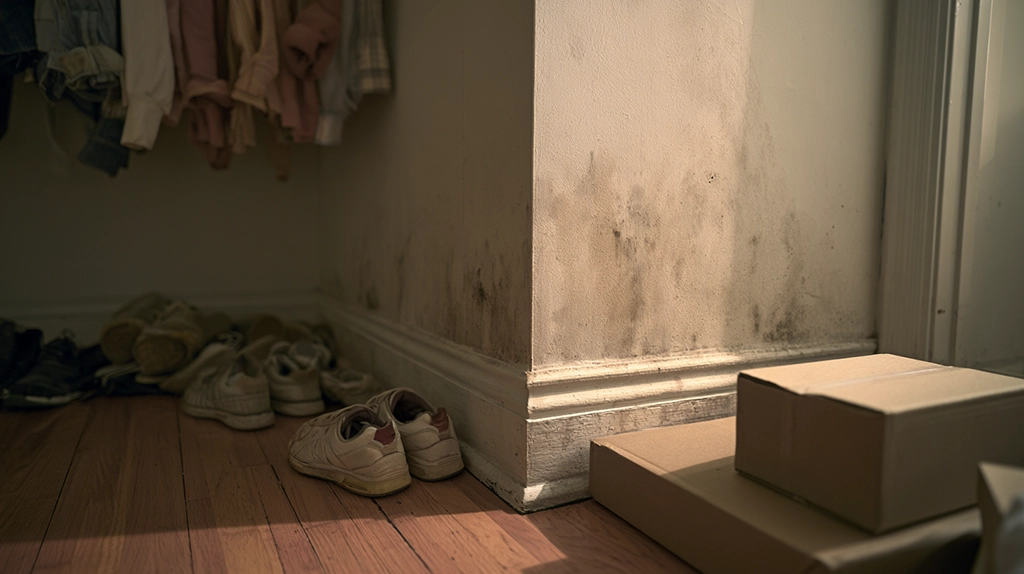
When we think about mold prevention, a handful of familiar methods usually come to mind: running the dehumidifier around the clock, keeping air circulation to avoid damp corners, regular cleaning, or applying antimicrobial coatings on furniture and walls. These are all effective strategies, because mold thrives in environments with high humidity and poor airflow. Yet one question remains: beyond humidity, ventilation, and cleaning, are there other factors we may have overlooked that could influence mold growth?
In 2025, an intriguing new answer emerged—light.
Light Spectrum and Mold: Insights from an Experimental Study
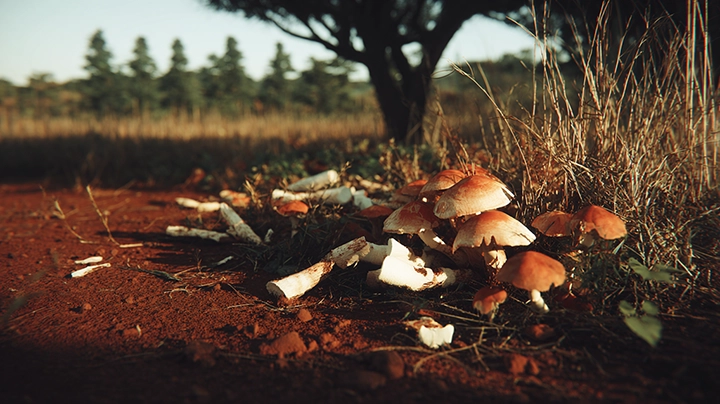
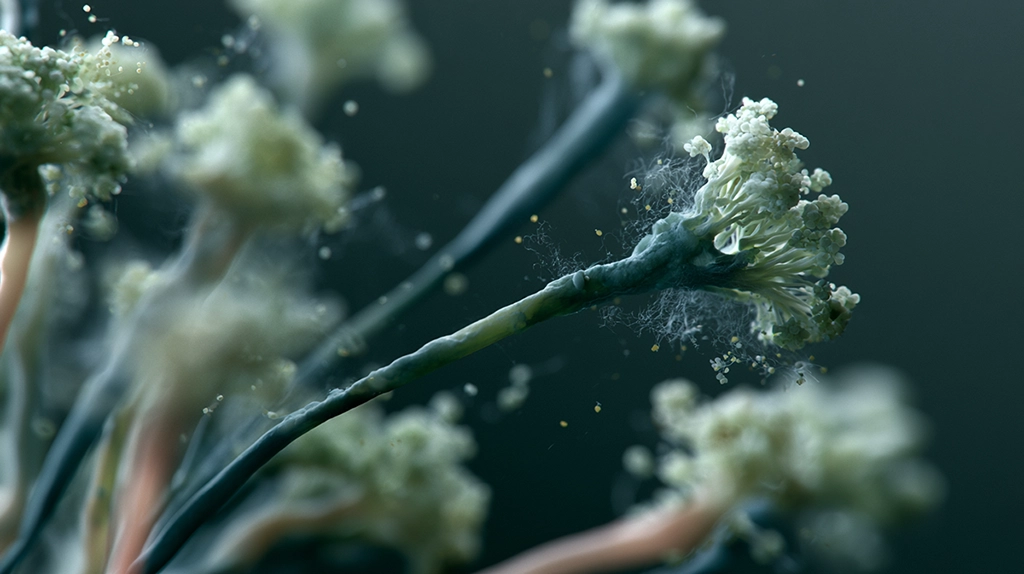
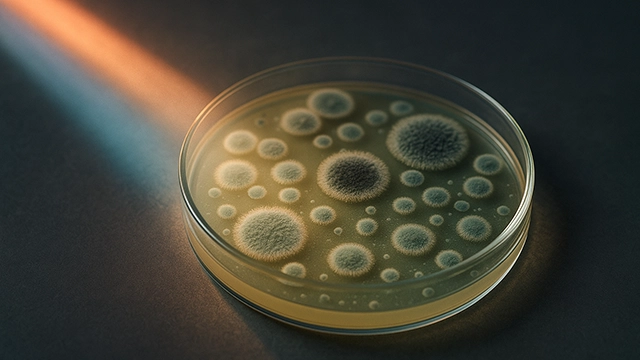
A 2025 experimental study (Izmir Tunahan et al.) investigated two common indoor fungal species, Aspergillus niger and Cladosporium sphaerospermum, under controlled conditions. The researchers tested different water activity levels (aw 0.95 vs. aw 0.91) and exposed the fungi to various light treatments: red light (650–700 nm), blue light (435–465 nm), and a dark control. They measured colony diameter, dry biomass, and conidia (spore) counts.
Key findings included:
- Under red light, A. niger at high water activity (aw 0.95) grew colonies about 30–40% larger in diameter compared to dark or blue light conditions. Even at lower water activity (aw 0.91), red light still promoted growth more than darkness. Spore production was lowest under blue light.
- For Cladosporium sphaerospermum, spore numbers also increased significantly under red light. However, in lower water activity conditions, the difference in colony diameter and biomass between red light and darkness was less dramatic than at higher water activity.
These numbers demonstrate that different wavelengths of light can alter fungal growth rates and spore production. Red light appeared to accelerate growth and sporulation, while blue light had a suppressive effect in certain scenarios. More importantly, this finding reminds us that beyond humidity and temperature, fungal ecology is shaped by many environmental factors. Light—something we take for granted every day—could one day become part of mold prevention strategies.

Rethinking Prevention: From Illumination to Environmental Management
If light spectra can indeed influence mold, the potential applications are wide-ranging. Imagine:
- In home lighting design, could “anti-mold spectra” make living spaces less prone to fungal growth?
- In museums or libraries, could specific light wavelengths help delay mold on paper and canvas?
- In food storage, medical facilities, or warehouses, could engineered illumination reduce mold-related risks?
These ideas may sound bold, but they are compelling, because they suggest that mold prevention could move beyond a cycle of “dehumidifying and cleaning” toward smarter, technology-driven solutions.

That said, this line of research is still in its infancy. Mold is highly diverse, and species respond differently to light spectra. Even the same species may behave differently under varying humidity and temperature. For now, “light-based mold prevention” remains a laboratory concept, far from being ready for real-world deployment.
Scientific Reality Check: Environmental Control Is Still the Foundation
While spectral research is inspiring, we cannot lose sight of the fundamentals: humidity control remains the golden rule of mold prevention. When relative humidity stays above 60% for prolonged periods, mold will grow quickly regardless of light. Good ventilation, avoiding water accumulation, and regular cleaning remain the most reliable defenses today.
Spectral interventions may become useful auxiliary tools in the future, but in the short term, they will not replace traditional methods. Rather than a ready-to-use technology, this study should be seen as a reminder—fungal ecology is still full of mysteries, and unlocking them could open new doors for application.

Exploring Mold Opens New Possibilities
This study on light spectra and mold carries an important message: mold is not something we can only control through conventional means. Its behavior and interaction with the environment are shaped by variables we are only beginning to uncover. The next breakthrough may be hidden in the everyday details we usually overlook.
Mold should not be dismissed as a household nuisance, but embraced as a subject of scientific discovery. It might inspire new antifungal technologies, such as far-UVC irradiation, and even cross-disciplinary innovations. Other research has shown how fungal melanin mediates wavelength-dependent UV tolerance, reminding us that fungal adaptation to light is more complex than we think.
Mold prevention is not only about fighting against fungi—it is also a dialogue with the laws of nature.
And this exploration of light is only the beginning. To truly understand mold, we must keep exploring. This is not just the responsibility of specialists—it can be a journey of curiosity and discovery that invites everyone to take part.

References
Academic
- Izmir Tunahan et al. (2025). Light spectrum effects on indoor fungal growth. Journal of Environmental Mycology. Publisher page
- Braga, G. U. L. et al. (2015). Fungal responses to UV radiation: survival, DNA repair, and melanin.Photochemistry and Photobiology. Full text
The question is: what’s happening in your space right now?
Scan your space
Key Takeaways
- Research has found that visible light—particularly violet and UV-A wavelengths—can inhibit mold growth on surfaces, with implications for the design of mold-resistant indoor environments.
- Broad-spectrum LED lighting systems with antimicrobial violet light components are being explored for food storage areas, hospitals, and other settings where mold and bacterial contamination is a concern.
- The mold-inhibiting effect of light is both direct (photodamage to mold DNA and membranes) and indirect (drying of surfaces through light energy promoting evaporation).
- Mold is strongly associated with dark, enclosed spaces—not only because of higher humidity in dark areas but because darkness removes the photodamaging effect of light that limits mold growth outdoors.
- Practical applications of light for mold control include: UV-C air and surface sterilisation systems, violet LED antimicrobial lighting, and architectural design that maximises natural daylight penetration.
Frequently Asked Questions
Can light really prevent mold from growing?
Yes—light, particularly at shorter visible and ultraviolet wavelengths, has documented mold-inhibiting effects through several mechanisms, though it is not a standalone substitute for moisture control. The primary anti-mold mechanisms of light: UV-C radiation (100–280 nm wavelength): directly damages DNA and critical cellular proteins in mold (and other microorganisms) through the formation of thymine dimers and other photoproducts; UV-C is effectively fungicidal and has been used in germicidal applications since the 1930s; it is generated by specialised UV-C lamps (mercury vapour) and newer UV-C LEDs. UV-A (315–400 nm) and violet visible light (400–450 nm): increasingly studied for antimicrobial properties; violet LED systems (405 nm) generate reactive oxygen species (ROS) within microbial cells that cause oxidative damage; 405 nm systems have received regulatory attention for healthcare settings. Direct sunlight contains both UV-A and UV-B (280–315 nm) components that contribute to the dramatically lower mold counts found on regularly sunlit surfaces outdoors compared to shaded surfaces.
What is UV-C disinfection and is it effective against mold?
UV-C (germicidal ultraviolet) disinfection uses 100–280 nm wavelength radiation to inactivate microorganisms including mold through direct nucleic acid and protein photodamage. Mechanism: UV-C radiation at the peak fungicidal wavelength (approximately 253.7 nm from mercury vapour lamps) is absorbed by DNA and RNA bases, creating thymine dimers that prevent accurate DNA replication and transcription; at sufficient dose, the organism cannot replicate and effectively dies. Efficacy against mold: UV-C has demonstrated efficacy against mold spores and hyphae in research studies, though mold spores generally require higher UV-C doses for inactivation than bacteria due to protective pigments in spore walls (particularly in dark-spored species like Aspergillus niger). Applications: UV-C room disinfection devices (often called ‘germicidal UV’ or ‘UVC room purifiers’) are used in healthcare settings to reduce surface contamination between patient occupancies; UV-C air purification systems pass air through UV-C exposure chambers in HVAC systems or standalone devices; UV-C in food processing facilities is used for surface and air treatment. Important safety note: UV-C is harmful to human skin and eyes—direct exposure must be strictly avoided; UV-C systems designed for occupied rooms must be designed to prevent human exposure during operation.
Does natural sunlight prevent mold growth in homes?
Natural daylight penetrating into indoor spaces does inhibit mold growth through its UV-A component and by raising surface temperatures (accelerating moisture evaporation), but the effect is significantly weaker than direct outdoor sunlight due to window glass filtration. Window glass filtration: standard float glass effectively blocks essentially all UV-C (below 280 nm) and most UV-B (80–95% of 280–315 nm); UV-A transmission varies by glass type but is typically 60–80% for standard clear glass; this means the most potent mold-inhibiting wavelengths are largely removed from indoor daylight. Residual effect: the UV-A and violet component of indoor daylight still provides modest antimicrobial effect on surfaces in direct sunlight; consistently sunny rooms show measurably lower surface mold counts than persistently dim rooms in studies of residential mold distribution. Practical application: maximising natural light penetration is a useful component of an overall mold prevention strategy—rooms receiving regular direct sunlight through windows maintain lower ambient humidity (sunlight raises surface temperatures, promoting evaporation) and have reduced mold growth compared to north-facing or chronically shaded rooms in the northern hemisphere.
Are antimicrobial LED lights effective for home mold control?
Antimicrobial violet LED systems (primarily at 405 nm wavelength) have demonstrated broad-spectrum antimicrobial activity in research settings, with peer-reviewed studies documenting significant reduction of bacterial and fungal contamination on surfaces under continuous illumination. The mechanism involves photosensitisation of endogenous porphyrins within microbial cells, generating reactive oxygen species that damage cellular components. Current status for home applications: 405 nm antimicrobial LED lighting is marketed for healthcare, food service, and some residential applications; some products claim to reduce surface contamination while being safe for human occupancy (405 nm is within the visible violet spectrum and does not share UV-C’s direct nucleic acid damage mechanism or safety hazards). Evidence assessment: the research basis is generally positive but most studies have been conducted in controlled environments with known contamination levels; real-world home effectiveness data is more limited. For home mold prevention specifically, moisture control remains the primary and essential intervention—antimicrobial lighting can be a useful complement but cannot compensate for humidity above mold-growth thresholds.
Why is mold more common in dark rooms and closets?
The concentration of mold in dark interior spaces reflects the convergence of multiple favourable mold growth conditions that dark spaces share. Humidity: dark interior rooms (north-facing rooms in the northern hemisphere, interior closets, basement spaces) receive less solar heat gain that would drive evaporation; they tend to maintain higher relative humidity than sunlit spaces in the same building. Reduced photoinhibition: as discussed, light—particularly at UV and violet wavelengths—has direct inhibitory effects on mold growth; dark spaces lose this light-mediated growth control. Reduced human activity: closets and unused rooms are inspected and cleaned less frequently, allowing mold to establish and spread before detection. Poor air circulation: closets and small enclosed spaces often have poor air circulation; air stagnation allows local humidity to rise (from moisture diffusing from stored clothing, shoes, and other materials) without dilution by drier ambient air. Temperature stratification: unheated or poorly heated dark spaces may develop cold spot temperatures on exterior-facing surfaces (particularly corners and exterior walls) where condensation forms at lower ambient humidity than warmer surfaces.