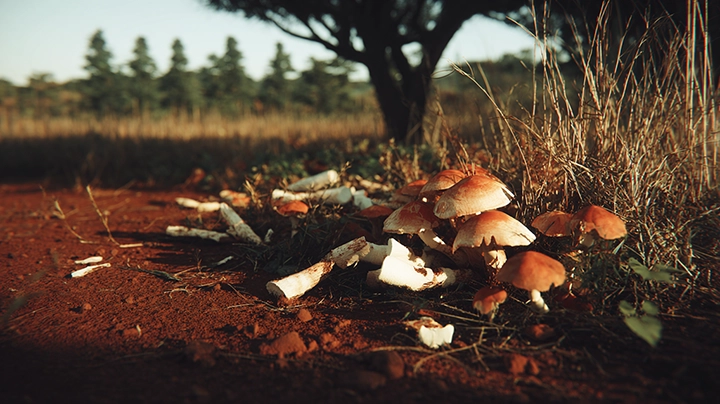
We tend to regard mold as a trivial nuisance in daily life: black stains on the wall, spots on bread, or the musty smell in the bathroom. Yet in medicine, fungi present a very different face—they can be deadly. On April 1, 2025, the World Health Organization (WHO) released its first reports dedicated to the global “diagnosis and treatment gaps” for fungal infections. These are not just academic papers but a wake-up call: the danger of fungal diseases does not lie in fungi suddenly becoming stronger, but in our long-term neglect.
Global Imbalance: The Dual Gap in Drugs and Diagnosis
WHO’s data are alarming. Over the past decade, only four new antifungal drugs have been approved worldwide, according to its analysis of antifungal agents in clinical and preclinical development. Meanwhile, just nine candidates remain in the clinical pipeline, with only three reaching Phase III trials. Compared to the rapid progress in antibiotics and cancer drugs, fungal treatments are virtually stagnant.
The diagnostic gap is equally stark. In many low- and middle-income countries, laboratories and personnel for fungal testing are nearly absent, leaving patients unable to receive timely diagnoses and treatment. Even in well-resourced healthcare systems, diagnostics are often delayed due to lengthy procedures. These delays are not abstract—they translate directly into mortality. For some pathogens on WHO’s fungal priority pathogens list, fatality rates can reach as high as 88%.
This is not merely a shortage of technology, but a reflection of global resource imbalance—we have chosen to invest too little in the field of fungi.
Diagnostic Challenges: When “Similarity” Becomes a Fatal Difference
The difficulty of fungal diagnosis is not simply a matter of having or lacking tests. A deeper challenge lies in the fact that many species look extremely similar in appearance and growth features, often requiring days or even weeks to differentiate. Yet different species demand entirely different treatments.
For example, Candida albicans and Candida glabrata may appear alike in clinical samples, but the treatment varies drastically. The former is usually susceptible to fluconazole, while the latter is often resistant, requiring alternative drugs. If identification is delayed or mistaken, patients may deteriorate rapidly under the wrong therapy.
Similarly, Aspergillus fumigatus and Aspergillus terreus can be tricky to distinguish in culture, but their treatment profiles differ sharply: A. fumigatus responds to amphotericin B, whereas A. terreus is intrinsically resistant and requires other antifungal options.
Traditional workflows—culture, morphology, biochemical testing, and susceptibility assays—are time-consuming. Physicians often resort to broad-spectrum antifungals as a stopgap, but such treatments may be ineffective and can accelerate resistance. While new technologies such as MALDI-TOF, molecular diagnostics, and AI-based imaging are shortening diagnostic times, they remain costly and require skilled personnel, limiting their global adoption.
In fungal infections, slow diagnosis means asking patients to wait with their lives on the line.

The Numbers Behind the Global Fungal Burden
Every year, more than 1.5 million people die from severe fungal infections, a toll comparable to tuberculosis (TB), which claims roughly 1.25–1.6 million lives annually. Yet the research and treatment landscapes of the two diseases could not be more different.
According to the Global Tuberculosis Report 2024, 29 novel chemical entities for TB treatment were in Phase I–III clinical trials. Other reviews, such as Insights from the 2024 WHO Global Tuberculosis Report, show how TB benefits from strong pipelines and innovation. By contrast, WHO’s 2025 analysis of antifungal drug development revealed that in the past decade only about four new antifungal drugs had gained major regulatory approval, with just a handful currently in Phase III.
Meanwhile, the reality of fungal infections around the world is stark:
- Europe & North America: Aspergillus fumigatus infections in ICU patients can exceed a 50% mortality rate.
- Asia: outbreaks of multidrug-resistant Candida auris have struck hospitals in multiple countries.
- Africa & Latin America: fungal meningitis remains tightly linked with HIV/AIDS, forming a persistent, under-recognized epidemic.
In short, fungal diseases are not localized problems—they expose vulnerabilities shared across the global healthcare system.

From Hospitals to Everyday Life: Fungi Are No Small Matter
Fungi are not merely a cleanliness issue; they blur the line between the environment and the clinic. Inhaling spores may be harmless for healthy individuals, but for the immunocompromised it can be deadly. This means the mold in our daily surroundings and the pathogens in hospitals are part of the same continuum.
WHO’s reports stress three urgent priorities:
- Invest in rapid diagnostics —cutting waiting times from days to hours.
- Strengthen laboratory networks —so frontline hospitals can access timely support.
- Advance drug development —breaking the pharmaceutical industry’s long neglect of fungi.
But the most crucial step is changing our collective attitude. The threat of fungal diseases has never been about fungi suddenly turning aggressive, but about us failing to take them seriously. The public must rethink fungi, researchers must intensify their efforts, and policymakers must recognize the urgency.
Fungi are not small matters. They represent the underestimated next global health crisis. And the first step toward change is to start taking the fungi around us seriously—today.
References
Academic
- Arastehfar, A. et al. (2020). Candida auris: epidemiology, antifungal resistance, and treatment. Journal of Fungi. Full text
- Brown, G. D. et al. (2012). Hidden killers: human fungal infections. Science Translational Medicine. Full text
Official
Key Takeaways
- Invasive fungal infections are estimated to kill over 1.5 million people annually worldwide—a death toll comparable to tuberculosis or malaria—yet receive a fraction of the research funding and clinical attention.
- Major gaps in global fungal diagnosis include: lack of validated diagnostics for many pathogenic fungi, diagnostic kits that are unavailable or unaffordable in low-resource settings, and widespread physician unfamiliarity with fungal disease.
- The WHO Fungal Priority Pathogens List (2022)—the first of its kind—identified 19 fungi of greatest concern, with Cryptococcus neoformans, Candida auris, and Aspergillus fumigatus in the critical category.
- First-line antifungal treatments (particularly amphotericin B deoxycholate, despite high toxicity) remain standard of care in many low-income countries because safer alternatives are unaffordable.
- Expanding access to rapid fungal diagnostics—particularly lateral flow assays for cryptococcal antigen—has demonstrated significant mortality reduction and represents a high-value global health intervention.
Frequently Asked Questions
Why are fungal infections so underestimated as a global health problem?
The underestimation of invasive fungal infections (IFI) as a global health problem has multiple causes that compound each other. Death certificate attribution: when patients die of underlying conditions (HIV/AIDS, haematological malignancy, solid organ transplant complications) with concomitant invasive fungal infection, the IFI may not be listed as a cause of death, systematically underestimating fungal mortality. Diagnostic failure: in settings without microbiological confirmation, fungal meningitis, pneumonia, or bloodstream infection may be attributed to bacterial causes; where no diagnosis is established, deaths go undercounted in any cause-specific mortality analysis. Research funding asymmetry: despite comparable mortality, invasive fungal infections receive approximately 1/20th the research funding of HIV/AIDS and 1/10th that of tuberculosis, resulting in less advocacy infrastructure, fewer prevention programmes, and more limited awareness among clinicians and public health officials. Vulnerable population concentration: the vast majority of IFI mortality occurs in immunocompromised patients (HIV/AIDS, transplant, haematological malignancy) and therefore in patients already counted in other disease burden estimates.
What are the biggest gaps in global fungal diagnosis?
Fungal diagnostic gaps operate at multiple levels in the global health system. Availability of diagnostics: many validated fungal diagnostic tools—culture media, molecular assays (PCR, MALDI-TOF), antigen detection assays—are simply not physically available in laboratories in low-income countries where IFI burden is highest. Affordability: diagnostics that are available may be priced for high-income country markets and unaffordable for routine use in resource-limited settings; lateral flow assay for cryptococcal antigen, at under $1–2 per test, is the model for affordable point-of-care fungal diagnostics but is not yet available for most fungal pathogens. Physician awareness and training: IFI diagnosis depends on physicians considering the possibility—in areas where fungal disease was historically considered rare, physician training may not emphasise fungal diagnostic workup, leading to missed diagnoses even when diagnostic tools are technically available. Laboratory capacity: invasive fungal culture requires biosafety level 2 containment, incubators, and trained laboratory personnel that may not exist in primary or district-level health facilities.
What is the WHO Fungal Priority Pathogens List and why does it matter?
The WHO Fungal Priority Pathogens List (FPPL), published in October 2022, represents the first global systematic evidence assessment of which fungal pathogens pose the greatest public health threat—directly analogous to the WHO Bacterial Priority Pathogens List that drove antibiotic resistance research and policy priorities since 2017. The FPPL prioritises 19 fungal species or groups into three categories based on evidence for mortality, antifungal resistance, tractability of interventions, and annual incidence: Critical priority: Cryptococcus neoformans and C. gattii (cause of cryptococcal meningitis), Aspergillus fumigatus (major opportunistic mold pathogen), Candida auris (emerging multidrug-resistant pathogen), Candida albicans. High priority: Nakaseomyces glabrata (formerly C. glabrata), Histoplasma spp., Eumycetoma pathogens, Mucorales, Fusarium spp., Coccidioides spp., Candida tropicalis, Candida parapsilosis. Medium priority: additional Candida species, Cryptococcus gattii, Talaromyces marneffei, Pneumocystis jirovecii, Paracoccidioides spp. The list is intended to drive research funding, diagnostic development, antifungal access, and surveillance priorities globally.
Why is amphotericin B still used despite its toxicity?
Amphotericin B deoxycholate—the original formulation of this antifungal, introduced in 1958—is highly nephrotoxic and can cause severe infusion reactions, kidney failure, electrolyte disturbances, and anaemia. Liposomal amphotericin B (L-AmB, e.g., AmBisome) achieves equivalent antifungal efficacy with dramatically reduced nephrotoxicity and infusion reactions; it is the standard of care for severe invasive fungal infections in high-income countries. The reason amphotericin B deoxycholate (‘conventional AmB’) persists as standard of care in low-income countries is purely economic: conventional AmB costs approximately $0.50–2 per vial, while L-AmB costs $50–100 per vial (potentially $5,000–10,000 for a treatment course). For health systems spending $10–50 per patient per year on medications, L-AmB is simply unaffordable for routine use. Advocacy efforts by global health organisations are working to reduce L-AmB pricing for low-income country markets; WHO prequalification of L-AmB and tiered pricing agreements have reduced costs somewhat, but the price gap remains enormous. Newer antifungals (azoles, echinocandins) are alternatives to amphotericin B for some indications but are not effective for all pathogens.
What simple interventions could most reduce fungal infection deaths globally?
Global health analyses have identified several interventions with high evidence of efficacy and favourable cost-effectiveness for reducing IFI mortality. Cryptococcal antigen (CrAg) screening: lateral flow assay screening of people living with HIV with CD4 counts below 100 cells/μL (the group at highest risk of cryptococcal meningitis) followed by pre-emptive fluconazole treatment for those testing positive has been shown in multiple African studies to reduce cryptococcal meningitis incidence and mortality; the CrAg lateral flow assay costs under $2; the intervention is cost-effective even in very resource-limited settings. Fluconazole access: fluconazole, which is off-patent and cheap in generic form, is the treatment for non-severe cryptococcal meningitis, oropharyngeal candidiasis, and prevention of endemic mycoses in at-risk populations; ensuring adequate supply and distribution in health systems serving high-risk populations is a high-value intervention. Fungal diagnostic laboratory capacity building: national reference laboratory capacity for fungal culture and antigen testing enables case detection, surveillance, and treatment monitoring. Early HIV diagnosis and treatment: ART (antiretroviral therapy) restores immune function and dramatically reduces susceptibility to IFI; advancing HIV testing and treatment access is the highest-leverage upstream intervention for fungal disease prevention.