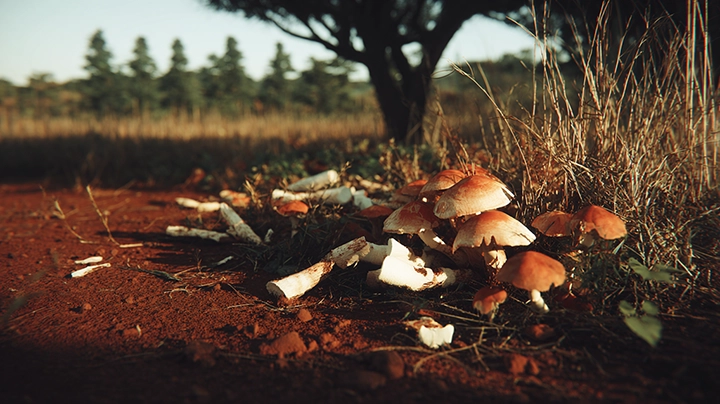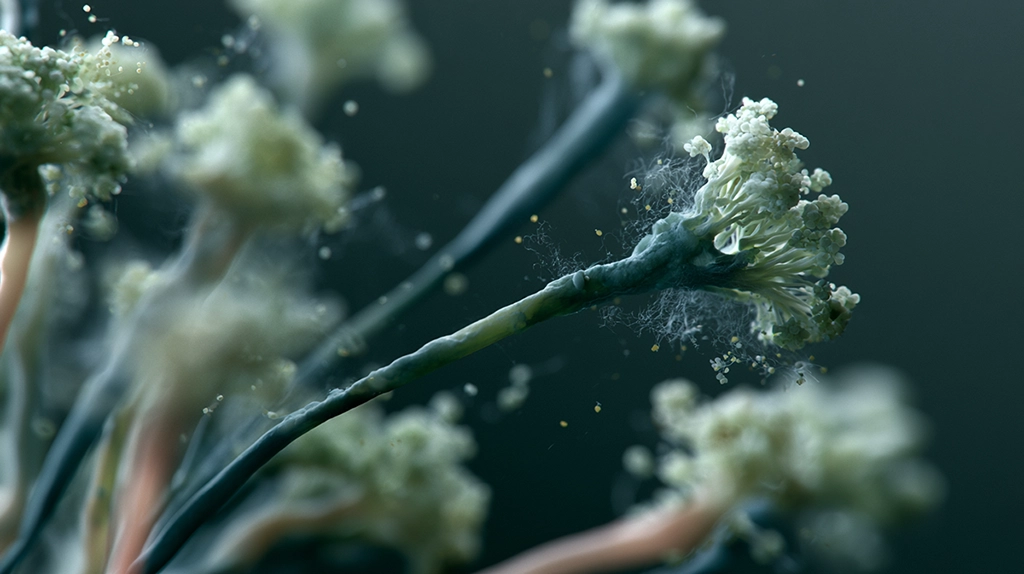
When most people think of mold, they picture spoiled bread or black patches on a damp wall. These images make fungi synonymous with dirt and decay. But the fungal world is far more complex, strange, and even theatrical. Inside the bodies of insects, there exists a group of fungi that hunt, infect, and sometimes even manipulate their hosts. They are called entomopathogenic fungi (EPF), and they are among nature’s most dramatic “scriptwriters.”
Who Are These Fungal Hunters?
Entomopathogenic fungi (EPF) are not a single species but a broad group scattered across multiple fungal lineages. They live in soil, leaf litter, forests, and even urban green spaces, silently waiting for their next insect victim. Famous members include Beauveria bassiana, Metarhizium anisopliae, and the notorious Ophiocordyceps unilateralis, which turns ants into “zombies.”
These fungi are not obscure curiosities. They play essential roles as regulators of insect populations, indirectly shaping plant health, agricultural productivity, and even aspects of human life.

The Infection Script: A Precise Assassination
The drama begins with a single spore. When a spore lands on an insect’s exoskeleton, it clings tightly like an invisible time bomb. Soon it releases enzymes that dissolve the tough outer shell, carving a microscopic doorway into the host. Once inside the hemocoel, the fungus takes over. Hyphae spread quickly, draining nutrients and releasing toxins that cripple the insect’s immune system. The host weakens, falters, and eventually dies.
Death is not the end. The fungus bursts outward, sprouting hyphae or fruiting bodies from the carcass. Fresh spores are released into the environment, ready to seek new hosts. This cold, efficient cycle shows fungal design at its most astonishing.

The Real-Life Theater of Zombie Ants
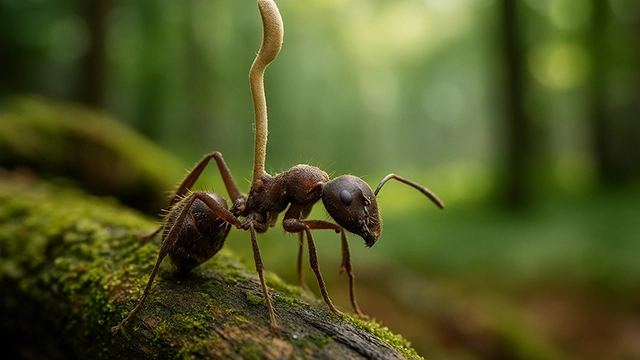
The most spectacular case is the “zombie ant.” When Ophiocordyceps infects an ant, the host loses control of its behavior. Instead of following colony trails, the ant wanders off into humid forest niches. At the right moment, it climbs a leaf or branch, bites down firmly, and dies locked in place. Days later, a slender stalk erupts from its head, raining spores onto the forest floor below.
This is not a horror movie—it is everyday reality in tropical ecosystems. For the fungus, manipulating host behavior is an ingenious strategy to maximize spore dispersal. For us, it is a striking reminder of how biology often surpasses imagination.

Biological Pest Control
Entomopathogenic fungi are not just nature’s oddities—they are allies in agriculture. Insects like locusts, aphids, and whiteflies cause devastating losses to crops. Chemical pesticides have long been the standard defense, but they bring serious downsides: toxic residues, environmental pollution, and pesticide resistance.
Fungi offer an alternative. Species like Beauveria bassiana and Metarhizium anisopliae have already been developed into commercial biopesticides. They specifically target pests, are safe for humans and animals, and are environmentally friendly. This means fewer chemicals sprayed in the fields, reduced health risks for farmers, and safer food for consumers. In a quiet but profound way, these fungi are protecting the food on our tables.
A New Frontier in Disease Control
Beyond farms, fungi may soon help in public health. Mosquitoes are vectors of diseases like dengue, malaria, and yellow fever. Conventional mosquito control relies heavily on insecticides, but these chemicals breed resistance and pose risks to people.
Research has shown that certain EPF can infect and kill mosquitoes, lowering their survival and reproduction rates (Nature Microbiology, 2019). Imagine releasing these fungi in targeted environments: mosquito populations would drop, and disease transmission could decline. While still in experimental stages, this strategy offers a natural, chemical-free addition to global health efforts. Entomopathogenic fungi may one day become tools against some of humanity’s most persistent diseases.
Ecological Significance: Mold as Nature’s Balancer
Without these fungi, ecosystems would look very different. Insect populations could explode, stripping forests bare and devastating farms. Pollination, soil health, and plant diversity would all be at risk. EPF act as invisible regulators, keeping insects in check and maintaining ecological balance. In turn, they indirectly safeguard the environments and resources humans depend on.
Rethinking Mold
From spoiled bread to zombie ants, fungi reveal astonishing diversity. They are decomposers, hunters, pest controllers, and potential public health allies. Entomopathogenic fungi, in particular, remind us that mold is not merely a symbol of decay but a dynamic force shaping life on Earth.
Next time you notice mold, pause for a moment. Somewhere out there, fungi may be silently orchestrating battles inside insect bodies—battles that ripple outward to affect our crops, our health, and our shared environment.
References
Academic / Official Sources
- Frontiers in Microbiology – Entomopathogenic fungi as biocontrol agents
- Nature Microbiology – Fungal control of mosquitoes
Key Takeaways
- Insects host a remarkable diversity of internal and associated fungi, from obligate mutualists that supplement nutritionally incomplete diets to specialised pathogens that have evolved extraordinary behavioural manipulation abilities.
- Entomopathogenic fungi—fungi that infect and kill insects—represent a major, largely untapped source of biocontrol agents for agricultural pests and insect-vectored diseases.
- Endosymbiotic fungi living inside insect cells can confer dramatic advantages including vitamin supplementation (in aphids and beetles with nutrient-poor phloem or wood diets), toxin detoxification, and thermal tolerance.
- The genus Ophiocordyceps contains the ‘zombie-ant’ fungi—species that infect carpenter ants, manipulate their behaviour to position them at optimal heights for spore dispersal, and then kill them.
- Insect-fungal mutualism has evolved dozens of independent times, including elaborate examples like fungus gardens cultivated by leafcutter ants and ambrosia beetles that actively farm fungal species within their galleries.
Frequently Asked Questions
What is the diversity of fungi living inside insects?
The insect-associated mycobiome (fungal community) is extraordinarily diverse, encompassing an enormous range of ecological relationships from mutualistic (beneficial to the insect) to parasitic (harmful) to commensal (neutral). Major categories of insect-associated fungi include: endosymbiotic fungi living within insect cells—exemplified by Entomophthorales and yeast-like symbionts in the fat bodies of sap-sucking insects, providing essential nutrients absent from phloem sap; gut-associated yeasts, particularly common in wood-boring and dung-feeding insects where they assist in digestion of cellulose, hemicelluloses, and complex plant polymers; ectoparasitic and endoparasitic entomopathogenic fungi including Metarhizium, Beauveria, and the Cordycipitaceae, which infect and kill insects; and cultivated fungi maintained by fungus-farming insects (leafcutter ants, termites, ambrosia beetles) as a primary food source.
How do entomopathogenic fungi infect and kill insects?
Entomopathogenic fungi infect insects through a distinctive process fundamentally different from bacterial or viral pathogens, which typically require ingestion: fungi directly penetrate the insect’s cuticle (exoskeleton) through a process of adhesion, germination, and mechanical and enzymatic penetration. This cuticle penetration is the key adaptive advantage of fungal insect pathogens—they bypass the gut immune barriers that protect insects from most other pathogens. After penetrating the cuticle, hyphae enter the insect’s haemocoel (body cavity) and produce yeast-like cells that circulate in the haemolymph (insect blood), evading immune responses. Eventually the fungus overwhelms the insect’s immune system, colonises all tissues, and kills the host. Post-mortem, hyphae erupt through the cuticle and produce spores externally on the cadaver, which disperse to infect new hosts. The entire infection cycle from spore contact to death typically takes 3–14 days depending on fungal species, insect host, and environmental conditions.
Can entomopathogenic fungi control crop pests?
Entomopathogenic fungi are commercially available and approved for use as biopesticides in many countries, though their field efficacy relative to chemical insecticides is variable and context-dependent. Beauveria bassiana and Metarhizium anisopliae are the most widely used commercial mycoinsecticides. They are available in various formulations (wettable powder, granules, oil dispersions) and have demonstrated efficacy against specific pest complexes including soil-dwelling larvae (wireworms, grubs), thrips, whiteflies, and certain beetle species in controlled studies. Field performance is often lower than laboratory studies due to: UV sensitivity (sunlight degrades spore viability); humidity dependence (germination requires high relative humidity); temperature sensitivity; and the 3–14 day time-to-kill, which is too slow for situations requiring rapid knockdown. Combination with other integrated pest management strategies (other biocontrol agents, selective chemistry) typically improves outcomes.
What is zombie-ant fungus and how does it work?
‘Zombie-ant fungi’ refer to species in the genus Ophiocordyceps (previously Cordyceps) that infect carpenter ants of the genus Camponotus and manipulate their behaviour before killing them. The infected ant, as it nears death, exhibits a stereotyped sequence of behaviours radically different from normal: it leaves its colony (which usually expels dying members), climbs vegetation, navigates to a specific microhabitat (typically the north side of a plant at a precise height above the forest floor, between 25–30 cm, where temperature and humidity are optimal for spore dispersal), and bites into leaf tissue with a death grip. The fungus then kills the ant, erupts a spore-bearing stalk from the back of the dead ant’s head, and releases spores that land on foraging ants below, propagating the infection. The precise mechanism of behavioural manipulation is being actively investigated; research has identified that the fungus colonises the ant’s muscles and possibly secretes compounds that affect neurons—remarkably, brain tissue is largely spared while muscle tissues are extensively colonised.
How do leafcutter ants farm fungi, and why is it significant?
Leafcutter ants (Atta and Acromyrmex species) of the Americas have maintained a mutualistic farming relationship with fungi in the tribe Leucoagariceae for approximately 50–60 million years—one of the most complex and ancient insect-fungal mutualisms known. Worker ants cut fresh leaf, flower, and seed material and carry it to underground chambers where it is chewed into a substrate for fungal growth. The garden fungus (primarily Leucoagaricus gongylophorus) breaks down the plant substrate and produces nutrient-rich swollen hyphal tips (gongylidia) that are the primary food source for the ant colony. The ants are exquisitely adapted cultivators: they weed out competing fungi (applying antibiotic-producing bacteria from specialised skin glands); control temperature and humidity in garden chambers; and when founding new colonies, queens carry a small pellet of fungal culture in a specialised mouth pouch. This system is considered one of the most sophisticated examples of non-human agriculture, and the fungal cultivar has been completely separated from any free-living existence through 50 million years of co-evolution with its ant farmers.