Spring Is Here—And So Is the Hidden Water Crisis
Spring showers bring fresh flowers—but they also bring a hidden threat to homes everywhere. The real water disaster isn’t loud, fast, or obvious.
It’s slow, creeping, and invisible—silently rotting buildings, homes, and entire cities from the inside out. By the time you see the signs, it’s already too late.
As temperatures rise, so does the risk of mold and water damage. But governments aren’t regulating it properly, and homeowners aren’t prepared for it.
And the cost of ignoring it? Billions in preventable damage—and an entire generation of homes that may not even be safe to live in.
This isn’t just a matter of checking for leaks and running dehumidifiers. There are external factors at play—government policies, outdated building codes, and neglected public infrastructure—that put all of us at risk.
Spring dampness isn’t just an inconvenience—it’s a growing disaster that no one is talking about.

Source: Wikimedia Commons, CC BY-SA 4.0
Invisible Water Damage Is a Slow-Motion Disaster
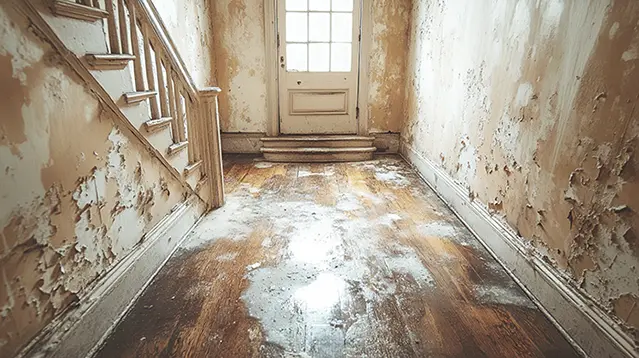
The real enemy is the moisture that sneaks in with spring humidity, settling in places you don’t even think to check.
- A cracked pipe might drip, unnoticed, for years.
- A roof could let in just enough moisture to rot the wood.
- Humidity trapped in walls can turn insulation into a mold breeding ground.
By the time you notice the first stain, the musty smell, or the warped wood, the damage has already been done. Nearly 98% of basements in North America will experience water damage at some point. The U.S. alone spends over $13 billion annually on water damage repairs.
Worse, mold can start growing within 24–48 hours of moisture exposure, making early detection critical. This isn’t just a homeowner problem—it’s a global infrastructure crisis.

Source: Wikimedia Commons, CC BY-SA 3.0
Your Home Is Already at Risk
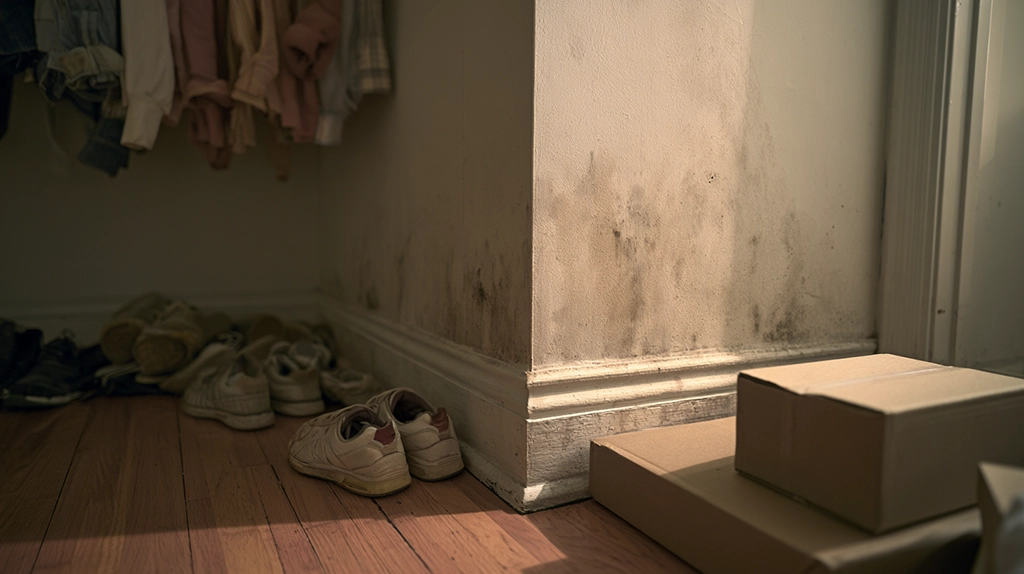
Water damage isn’t just structural—it’s biological. When moisture seeps into a building, it doesn’t just weaken walls and floors—it feeds mold.
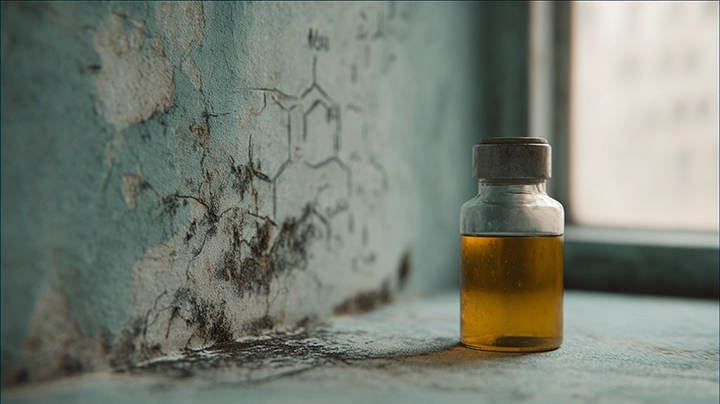
Mold spores are already in your home, lingering in the air, on walls, and in your HVAC system. They don’t become a problem until water gives them a reason to grow, and when they do, they spread rapidly.
Once mold takes hold in wood, drywall, or insulation, it’s nearly impossible to remove completely. It affects air quality, spreading through ventilation and turning your home into an invisible health hazard.
Chronic exposure to mold can lead to asthma, brain fog, fatigue, and long-term respiratory disease.
The worst part? Springtime humidity makes this process happen even faster. Most people don’t even realize their home is making them sick—until it’s too late.

Source: Wikimedia Commons, CC BY-SA 3.0
The Bigger Disaster: Entire Cities Are Decaying From the Inside
This isn’t just about homeowners. Cities are facing the same slow-moving catastrophe, with old infrastructure crumbling from within.
- Roads, bridges, and tunnels not designed for modern humidity are deteriorating faster than we can repair them.
- Schools, hospitals, and office buildings—places where people spend most of their time—are quietly filling with hidden mold problems.
Governments only react when disaster strikes. They ignore leaks until they become floods. They ignore humidity until it becomes rot. They ignore structural decay until buildings collapse.
By the time they acknowledge the problem, it’s already too late.
This is not just individual responsibility—it’s a larger policy failure. Without updated building codes, better drainage systems, and stricter inspections, water damage will continue to erode our homes and public spaces.
What You Can Do Before It’s Too Late
Every water damage crisis follows the same pattern:
- The problem is ignored.
- Small signs appear, but action is delayed.
- By the time action is taken, the cost has tripled.
Ignoring hidden water damage today will lead to billions in preventable repairs tomorrow. Neglecting building maintenance now will result in uninhabitable homes in the future. Allowing this to continue unchecked will create a massive public health crisis, fueled by mold, air pollution, and structural failures.
We don’t need more awareness—we need action.
- Check your home for leaks, condensation, or signs of water damage before they become expensive problems.
- Use a dehumidifier in moisture-prone areas, especially during humid seasons like spring.
- Advocate for updated building codes and stricter regulations to prevent future water damage crises.
- Support policies that invest in public infrastructure repair—if cities don’t act now, the damage will only get worse.
This isn’t just about protecting our homes—it’s about protecting our communities, health, and future.

Source: Wikimedia Commons, CC BY-SA 3.0
References
- Mold – Wikipedia
- Water Damage – Wikipedia
- EPA – Mold Resources
- Building Code – Wikipedia
- Infrastructure – Wikipedia
- NCBI – Respiratory Disease and Mold
- Wikimedia Commons images:
- Flood damaged home (CC BY-SA 4.0)
- Leaking pipe (CC BY-SA 3.0)
- Mold on wall (CC BY-SA 3.0)
- Dehumidifier (CC BY-SA 3.0)
Key Takeaways
- Hidden water intrusion—from roof leaks, plumbing failures, foundation moisture, or condensation—is the most underappreciated cause of structural building decay because damage is often advanced before surface signs appear.
- Wood rot caused by brown-rot and white-rot fungi can reduce structural timber strength by up to 80% before visible surface deterioration is apparent, creating significant invisible structural risk.
- Moisture meters that measure wood moisture content (available for under $30) allow homeowners to detect elevated moisture in structural members through wall surfaces without destructive investigation.
- The most vulnerable areas of residential structures for hidden water damage include: the roof deck at penetrations (chimneys, skylights, vents), exterior wall-window interfaces, floor structures adjacent to bathrooms, and wood in contact with concrete foundations.
- Addressing identified moisture sources promptly is substantially less expensive than structural repair after wood rot has progressed—repair costs for advanced rot damage can exceed 10–50× the cost of addressing the moisture source.
Frequently Asked Questions
How can my home be rotting without me knowing?
Structural wood decay in residential buildings is typically hidden within the building envelope—inside walls, floors, and roof structures where normal visual inspection cannot reach. The process begins with a moisture source: a failed roof flashing, a cracked caulk joint around a window, a slow drip from a supply line fitting inside a wall, or persistent condensation on cold surfaces within a wall cavity. Over time, this moisture saturates structural wood members, raising wood moisture content above 19–28%—the threshold at which wood-rotting fungi can establish. Once established, brown-rot and white-rot fungi gradually break down the wood’s structural components (cellulose and lignin respectively). This process may continue for years before surface indicators appear, during which timber strength is progressively compromised.
What are the early signs of hidden structural water damage?
Early signs of hidden structural moisture problems are subtle and require actively looking for them rather than expecting obvious symptoms. Interior signs include: small watermarks or staining on walls or ceilings, particularly after rain; paint bubbling, cracking, or peeling without obvious cause; drywall that sounds hollow or feels soft when pressed; floor areas that feel springy underfoot (particularly in bathrooms); doors or windows that have begun to stick or operate differently than when installed; visible efflorescence (white mineral deposits) on basement or crawl space walls; and musty odour in specific areas. Exterior signs include: missing, cracked, or displaced flashing at roof penetrations and wall openings; caulk joints around windows and doors that are cracked, shrinking, or absent; damaged or missing siding that exposes underlying weather barriers; and gutters that are detached or have gaps where water overflows near the building.
What is the difference between dry rot and wet rot?
‘Dry rot’ and ‘wet rot’ are common construction industry terms that describe different types of fungal wood decay, though the name ‘dry rot’ is somewhat misleading. Wet rot (caused primarily by Coniophora puteana and related species) occurs in persistently wet wood above about 50% moisture content and remains confined to the area of active moisture. When the moisture source is eliminated and wood dries, wet rot typically stops progressing. ‘Dry rot’ refers specifically to Serpula lacrymans, a particularly destructive fungus that can: grow through masonry and non-timber materials to spread from a wet source to distant dry wood; generate its own moisture through wood digestion; and establish in wood at lower moisture content than wet rot species. Dry rot can therefore spread extensively from a localised moisture source. Dry rot identification: white or grey mycelial ‘sheets’, distinctive orange/red spore dust, and characteristic cuboidal cracking of affected wood. Treatment requires eliminating the moisture source plus removing and replacing all affected timber and treating surrounding materials.
How do moisture meters work for detecting home water damage?
Pin-type moisture meters insert two electrically conductive pins into the wood surface and measure electrical resistance between them—the lower the electrical resistance, the higher the moisture content (water conducts electricity better than dry wood). This resistance measurement is converted to a percentage wood moisture content reading. Pin-type meters measure moisture at pin penetration depth (typically 5–7mm for standard pins; deeper probe pins are available). Pinless meters use radio frequency electromagnetic fields that penetrate into the material surface (typically 20–40mm depth) and detect moisture without surface damage. For structural assessment: readings above 20% in structural wood indicate elevated moisture requiring investigation; readings above 28% indicate active decay risk. Limitations: moisture meters measure only at the tested location and can miss moisture in areas not tested; in walls, readings may reflect moisture in the drywall surface rather than the structural timber behind it.
What is the most cost-effective approach to preventing hidden water damage?
Preventive maintenance focused on the building envelope is substantially more cost-effective than addressing advanced decay damage. Key preventive priorities in order of impact: annual roof inspection (check flashing at chimneys, skylights, pipe penetrations, valleys, and eaves; replace cracked or missing shingles; clear gutters and ensure downspouts direct water away from the foundation)—roof failures are the most common cause of hidden structural damage; maintaining exterior sealant joints (caulking around all window and door perimeters, at wall penetrations, and at material transitions)—caulk life expectancy is typically 5–10 years and should be replaced on schedule; maintaining positive drainage away from the foundation (grading should slope away from the building at minimum 5% for the first 3 metres); inspecting and replacing plumbing supply line hoses (the braided hose connections to washing machines, toilets, and under-sink supply valves fail over time—replacement every 5–8 years with stainless braided hoses is recommended); and maintaining bath and kitchen waterproofing (re-caulk tub/shower surrounds and tile grout before they crack or shrink).