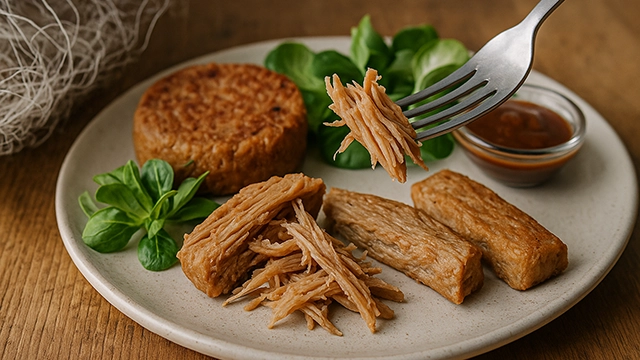
When we think of mold, what usually comes to mind is spoiled bread, dark stains on the wall, or a cleaning nightmare. But what if I told you that these “unwanted microbes” are now being transformed into heroes tackling both food security and environmental crises? In a world where meat demand keeps rising and resources are shrinking, fungi are stepping into the spotlight through a new role—fungal meat—and challenging our imagination of the future of food.
The Secret of Mycelium: Nature’s Hidden Web
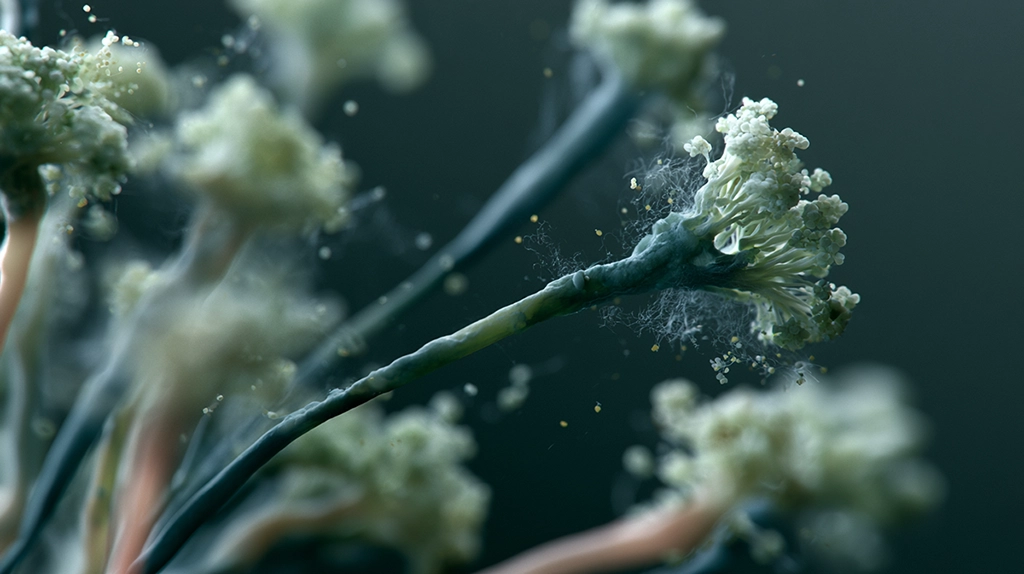
Molds, like mushrooms, belong to the fungal kingdom. Unlike mushrooms, however, they don’t grow fancy caps. Instead, their body is made of mycelium—a network of thread-like tubes called hyphae. These filaments weave together into a dense web. Their cell walls are built from chitin and beta-glucans, making them both sturdy and flexible. This fibrous structure is what gives fungal meat its surprisingly meat-like texture.
Mycelium also has a superpower: adaptability. It can thrive in many environments and grows quickly when provided with sugar, water, and nitrogen. In bioreactors, this means fungi can churn out large amounts of protein in a matter of hours or days—a process far more efficient than raising cattle or pigs for months.

The Star Species on the Menu
The first fungus to make it into mainstream food products was Fusarium venenatum. Discovered in soil, this mold produces mycelium that closely resembles chicken fibers in texture. It became the foundation of Quorn, the world’s first commercial mycoprotein brand.
Other fungi are now being tested. Neurospora intermedia, traditionally used in Indonesian fermented rice, shows promise. Aspergillus oryzae, famous for brewing sake and soy sauce in Japan, has a long record of safe use. Scientists hope these familiar fungi can offer new flavors and nutritional profiles for fungal meat.
Emerging candidates include Fusarium compactum and Rhizopus oryzae, both showing strong protein content and promising textures. For example, Fusarium compactum MM-135 has recently been characterized for safe and efficient mycoprotein production. Some teams are even using genetic engineering to enhance fungi like Aspergillus niger, tweaking growth patterns so their mycelium mimics animal muscle fibers more closely, such as in a cell wall engineering study on Fusarium venenatum. The field is moving fast, and fungal meat is no longer tied to a single brand or species—it’s becoming a diverse, experimental frontier.

From Fermenter to Plate: The Sustainable Edge
The production of fungal meat centers on large fermenters. The process resembles brewing beer or making yogurt, but instead of alcohol or lactic acid, the main product is the fungal biomass itself. Once harvested, the mycelium is processed into fibers, patties, or chunks ready to be seasoned and cooked.
The sustainability advantage is striking. Fungal cultivation requires no farmland for grazing and little irrigation. A global environmental study shows that replacing part of beef with mycoprotein could sharply reduce greenhouse gas emissions and land use. Compared to traditional animal farming, fungal meat produces far lower greenhouse gas emissions and water use, making it one of the most resource-efficient protein sources on the planet.
Eating Healthy, Eating Safe
From a nutrition perspective, fungal meat has strong appeal. It is high in protein, low in fat, and cholesterol-free—good news for heart health. Mycelium is also rich in beta-glucans, dietary fibers linked to better blood sugar control and immune support, as reviewed in a systematic nutrition study.
But it’s not perfect. Some people may have allergic reactions to fungal proteins. The chitin in fungal cell walls can reduce digestibility. And because fungi naturally contain higher levels of nucleic acids, processing steps are required to lower these levels and prevent excess uric acid in the body. In short, fungal meat is promising, but it needs careful processing and more nutritional studies before it can fully replace animal meat.
Future Possibilities and Challenges
The road ahead is exciting but not without obstacles. Cost remains an issue. While fungi grow quickly, industrial-scale fermenters and downstream processing are expensive. Flavor and consumer perception are another challenge. Many people still associate “mold” with spoilage and disease. Overcoming that psychological barrier is as important as solving the technical hurdles.
Still, fungi offer a unique middle path. Unlike cultured meat, they don’t need animal cells or costly growth serum. Unlike plant-based proteins, they don’t depend on vast fields of soy or peas. Fungi represent a third way—a microscopic ally with the potential to reshape our global diet.

Rethinking Mold as an Ally
For centuries, mold has been a symbol of decay, contamination, and allergy. But under the lens of sustainability, its image transforms. Through fungal meat, molds and mycelium are stepping up as sources of nutrition and as allies in reducing deforestation and carbon emissions.
The next time you see a fungal-based burger in a store, remember: what you’re about to eat comes from an invisible web of mycelium. Those delicate threads may hold the power to weave a more sustainable future for us all.
References
- Quorn official site: Quorn.co.uk
- PubMed. (2020). Beta-glucans and health benefits. PubMed
Key Takeaways
- Fungal proteins—including those derived from Fusarium venenatum (Quorn), Aspergillus oryzae, and novel precision fermentation strains—offer a middle path between plant protein limitations and conventional livestock’s environmental impact.
- Fungal mycoprotein contains all essential amino acids at a protein quality score (DIAAS) comparable to animal proteins, and outperforms most plant proteins in this key nutritional metric.
- The ‘invisible enemy’ aspect of fungal protein is the challenge of consumer perception: while mushrooms are familiar, ‘fungal protein’ or ‘mycoprotein’ can evoke unfamiliar or unappealing associations for some consumers.
- Fermentation-based fungal protein production can use agricultural waste streams (wheat straw, corn steep liquor) as carbon sources, creating value from waste while avoiding competition with food crops for land.
- Several next-generation fungal protein companies (Meati Foods, Nature’s Fynd, Enough) have received >$100M in venture investment, signalling investor confidence in the sector’s growth trajectory.
Frequently Asked Questions
What is mycoprotein and how is it different from mushrooms?
Mycoprotein is the protein-rich biomass produced from filamentous fungi grown in fermentation bioreactors—it is the mycelium (vegetative body) of the fungus, not the fruiting body (mushroom) that we recognise above ground. The most commercially established mycoprotein is Quorn, produced from Fusarium venenatum grown in continuous fermenter systems. The mycelium is harvested, heated to deactivate the cells, and processed into texturised fibres that mimic the texture of meat. Unlike mushroom-based products (where you’re eating the fruiting body), mycoprotein is produced from pure mycelium that never forms mushrooms—it grows continuously in liquid culture and produces a consistent, high-protein biomass with a neutral flavour that can be texturised and flavoured for various food applications.
How does fungal protein compare nutritionally to meat and plant proteins?
Mycoprotein compares favourably to animal proteins and outperforms most plant proteins on key nutritional measures. Protein quality (DIAAS): Quorn mycoprotein scores 0.96 on the DIAAS scale (1.0 is maximum), comparable to egg (1.2) and significantly higher than soy (0.9) and most legumes (0.6–0.7). Essential amino acid profile: mycoprotein contains all nine essential amino acids in proportions adequate for adult needs. Fibre content: uniquely among protein foods, mycoprotein contains significant dietary fibre from its fungal cell wall components (beta-glucans and chitin), which provides additional health benefits including satiety and blood sugar regulation. Saturated fat: very low, comparable to plant proteins and much lower than most animal proteins.
What is the environmental footprint of mycoprotein production?
Life cycle analysis of Quorn mycoprotein production shows substantially lower environmental impact compared to animal proteins. Greenhouse gas emissions: approximately 90% lower than beef, 50% lower than chicken. Land use: approximately 90% lower than beef, 80% lower than chicken. Water use: significantly lower than cattle (which require enormous water inputs for feed crops and processing). Fermentation-based production can also use agricultural waste streams as carbon sources rather than purpose-grown crops, further reducing land use and improving waste valorisation. The primary environmental inputs are the carbon source for fermentation (typically glucose from starch) and energy for bioreactor operation—shifting to renewable energy sources can further reduce the carbon footprint.
Why do some consumers have negative perceptions of fungal protein?
Consumer acceptance of fungal protein faces a challenge described in food psychology as ‘cognitive contamination’—the fact that fungi include both valued species (culinary mushrooms, yeasts) and feared or disgusting species (pathogenic molds, decay organisms) means that ‘fungal’ associations can trigger negative affect even when the specific product is a culinary, safe food. Research on consumer acceptance of novel protein sources finds that information about environmental benefits improves acceptance, while information about the production process (fermentation, bioreactors) has mixed effects—perceived as high-tech and safe by some consumers, and as ‘unnatural’ by others. Branding that emphasises ‘mushroom’ (familiar, positive) over ‘fungal’ (unfamiliar, potentially negative) tends to improve acceptance scores.
Which companies are leading the next generation of fungal protein development?
The fungal protein sector has attracted substantial investment since 2019. Established leaders include Quorn (Fusarium venenatum, 40+ years commercial, global distribution). Emerging companies include Meati Foods (US, using Neurospora crassa mycelium to produce whole-cut meat analogues); Nature’s Fynd (US, using Fusarium flavolapis from Yellowstone thermal springs, novel protein texture); Enough (formerly 3F BIO, UK, producing ABUNDA mycoprotein for food manufacturer B2B); MyForest Foods (US, Ganoderma tsugae for whole-cut bacon analogue); and Remilk (Israel, yeast-based precision fermentation for dairy proteins). Total venture investment in the sector exceeded $500M by 2023, reflecting significant commercial optimism.