The Quiet Lives Beneath Our Feet

Source: Wikimedia Commons (Abisko National Park birch forest) — CC BY-SA 3.0
Nature keeps secrets. No matter how many studies we publish or forests we walk through, there’s always more waiting beneath our feet—quiet, hidden lives shaping the world in ways we rarely see.
Scientists at Uppsala University just reminded us of that, uncovering five new species of Piloderma fungi. For years, Piloderma was thought to be a small, predictable genus—humble soil companions, quietly supporting northern forests with little fanfare.
Turns out, we underestimated them. Dramatically.
This discovery doesn’t just expand our fungal family tree—it tells a deeper story about what we miss when we assume we already know it all. When we walk too quickly past the mossy logs and tangled roots, there are entire worlds whispering beneath our feet, waiting for us to listen.
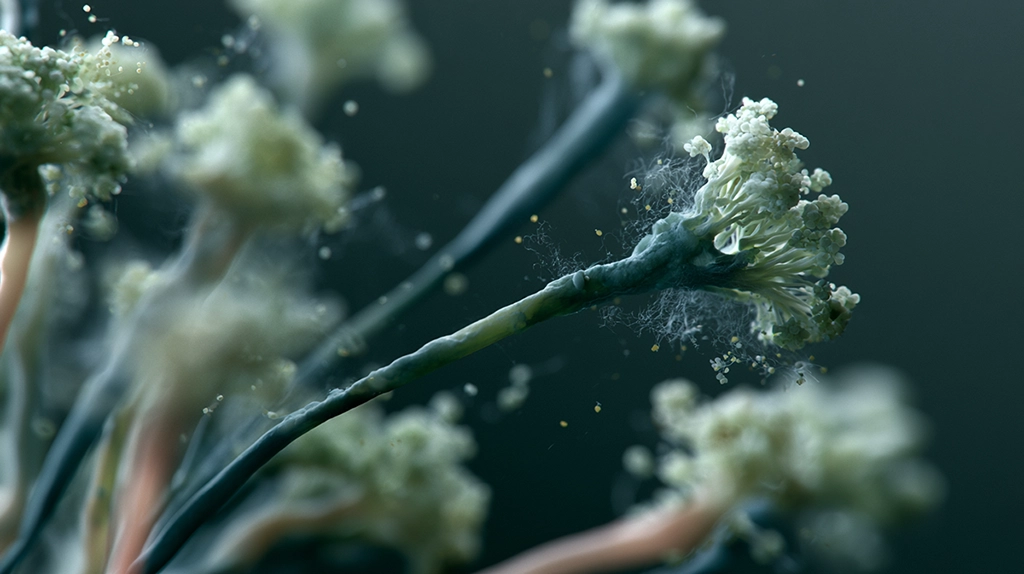
Hidden beneath leaf litter, wrapped around tree roots in gossamer networks of mycelium, fungi like Piloderma grow patiently. These mycelial networks are not just short threads—they can stretch for meters, sometimes kilometers, creating underground lifelines between plants. Some networks in old-growth forests have been found to cover several hectares, making them some of the largest living organisms on the planet.

Source: Wikimedia Commons — CC BY-SA 3.0
Revealing Piloderma: A Story of Soil and Survival
Wherever moisture, warmth, and life collide, fungi will follow. Across the planet, from the damp corners of your basement to the rich soils of ancient forests, fungal life is thriving in shadows. Mold in homes, mushrooms in woodlands—both are signs of nature’s relentless hunger to break down and build up life. The unseen world beneath our feet is not just active, it’s essential.
The forest floor is no exception. Fungal communities work tirelessly to orchestrate the symphony of life that keeps forests alive. Mycelial threads act like natural internet cables, transmitting nutrients and chemical messages between trees. Trees can even share resources with their seedlings and warn each other of disease threats through these fungal connections—a system scientists now call the “Wood Wide Web” (a concept that is actively debated in the literature).
But while we fight mold in our homes, fungi like Piloderma fight to survive in theirs. DNA sequencing and meticulous soil sampling from Sweden, Norway, Finland, and Lithuania revealed a surprising diversity within Piloderma.
Once thought to be a single species, researchers uncovered at least five distinct species, each with unique ecological roles. Among them is Piloderma fugax, aptly named for its elusive nature, thriving in undisturbed forest floors rich in organic matter. It’s sensitive to changes in soil structure and moisture, making it a silent indicator of forest health. Then there’s Piloderma luminosum, radiant in both color and function, which plays a notable role in forest nitrogen exchange alongside many other fungal partners, subtly boosting the health of surrounding plant life.
This wasn’t random luck—it was a deliberate dive into the genetic tapestry of forest soil, revealing complex characters in nature’s unfolding story.

Source: Wikimedia Commons (Category: Piloderma) — Public Domain
Forest Lessons from the World Beneath
What does this mean beyond the Scandinavian woods? Quite a lot, actually.
Forests everywhere—from the boreal north to tropical rainforests—depend on fungal networks. These underground partnerships between trees and fungi span the globe, underpinning ecosystems, supporting biodiversity, and helping forests withstand the stress of climate change.
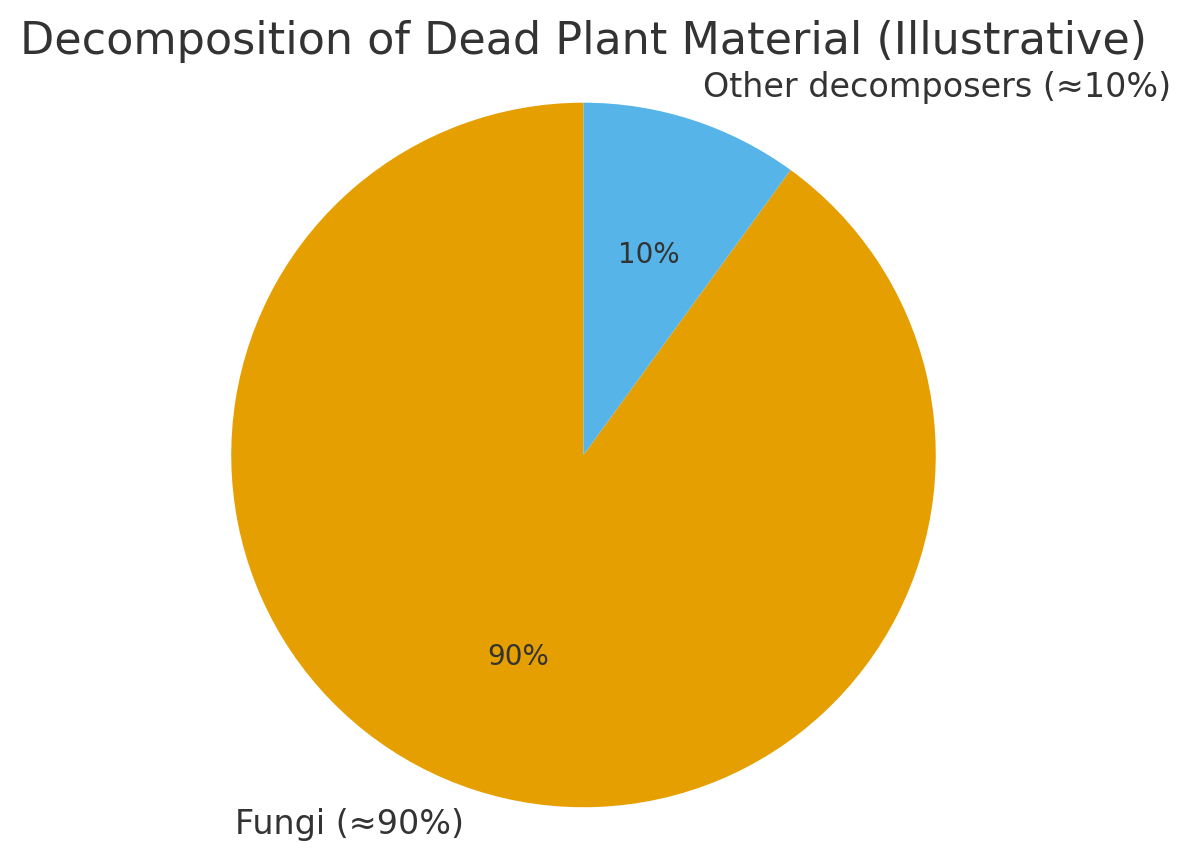
Astonishingly, fungi are responsible for decomposing around 90% of the world’s dead plant material. Without them, fallen branches and dead roots would pile up, clogging ecosystems and halting nutrient cycles. Through decomposition, fungi help sequester carbon, keeping it locked in the soil and out of the atmosphere.
When fungal diversity collapses, forests lose their resilience. When forests weaken, carbon sinks diminish, and climate instability worsens. The ripple effects extend beyond local ecosystems to the global climate system.
This isn’t just a Scandinavian story. It’s a global wake-up call, reminding us that the health of our planet hinges on the life we rarely see.
The Quiet Power of Fungal Diversity
Fungi like Piloderma are not just passive residents of the soil; they are active caretakers. They unlock nutrients trapped in dead leaves and fallen wood, helping trees access essential food like nitrogen.
Without these underground alchemists, forests would struggle to grow, trees would weaken, and the ecosystem’s ability to store carbon would diminish. In nitrogen-starved soils, particularly in boreal regions, fungi like Piloderma are nothing less than life support.
But the true power lies in fungal diversity. Think of it like a well-balanced team: some fungi handle acidic soils, others brave dry conditions, and species like Piloderma flourish in cool, ancient woodlands. Each plays a part in keeping the ecosystem stable.
When fungal diversity thrives, forests have many tools for survival. But when it declines, ecosystems become vulnerable. Just like relying on a single crop invites disaster, a forest with limited fungal diversity risks collapse.
This is why every new discovery matters. Each unknown fungus could be a hidden defender of forest health. Scientists believe we’ve only described about 10% of fungi worldwide. Beneath our feet, countless species quietly work to sustain life, waiting to be understood.
Fungi remind us that nature’s greatest mysteries are still unfolding. In a world that feels increasingly mapped and measured, they are proof that wonder—and life’s resilience—still thrive in the soil.

Source: Wikimedia Commons — CC BY-SA 3.0
Protecting Life Beneath Our Feet
We stand at a crossroads. One path leads to short-sighted deforestation and ecological loss, burying species like Piloderma fugax before we ever fully understand them. The other path leads to wonder, respect, and protection of the invisible architects of our world.
Here’s what we can do:
- Support policies that protect old-growth forests — these habitats are irreplaceable sanctuaries for fungal diversity. Their loss echoes globally, diminishing biodiversity and ecosystem health.
- Invest in research — programs like the GlobalFungi database and citizen science projects offer exciting ways to map fungal life worldwide.
- Share stories — talk about the ecosystems beneath our feet. Encourage curiosity over fear. When we appreciate the invisible, we begin to protect it.
Next time you step into a forest, pause. Feel the earth, think of the vast fungal highways weaving life through the soil. Let curiosity guide you. Know that beneath every footstep lies a kingdom of quiet brilliance, waiting to be explored.
Stay curious. Stay wondering. Step lightly—but explore deeply.
References
- Svantesson, S. et al. (2025). New ‘shy’ fungus found in old-growth forest. Uppsala University Press Release.
- Svantesson, S., Ryberg, M., et al. (2024). Five new species in Piloderma (Atheliales, Basidiomycota)… Fungal Biology.
- Rineau, F. et al. (2015). Evidence on Piloderma using organic nitrogen. PLOS ONE, 10(7): e0131561.
- Mycorrhizal networks definition & scope: Staddon, P. et al. (2012). Biological Reviews / Mechanisms, ecology & modelling (overview on CMNs).
- Zhang, Y. et al. (2025). CMNs & plant defense signaling. Cell Host & Microbe.
- Karst, J., Hoeksema, J., Jones, M. (2023). Critical review of “Wood Wide Web” claims. Nature Ecology & Evolution (commentary PDF mirror).
- Fungi & decomposition dominance (context): Liu, Z. et al. (2025). Genome Biology (framework of fungal decomposers in plant residue decomposition).
Key Takeaways
- Forest floor fungi—including mycorrhizal species, saprotrophic decomposers, and ectomycorrhizal networks—perform ecological functions on which entire forest ecosystems depend, yet remain poorly studied compared to above-ground biodiversity.
- The ‘wood wide web’ of mycorrhizal fungal networks facilitates carbon and nutrient transfer between trees of different species and ages, particularly supporting seedling establishment under the forest canopy.
- Forest floor fungal diversity is orders of magnitude greater than above-ground plant diversity; a single soil core may contain hundreds of distinct fungal species undetectable without DNA analysis.
- Human activities including recreational trampling, soil compaction from forestry machinery, and atmospheric nitrogen deposition significantly reduce forest soil fungal diversity.
- Preserving old-growth forest areas is critical for fungal diversity conservation: many specialist forest fungi require decades of ecological continuity to establish and cannot recolonise regenerating forest quickly.
Frequently Asked Questions
How do forest floor fungi connect trees in the ‘wood wide web’?
The ‘wood wide web’ refers to the networks of ectomycorrhizal and arbuscular mycorrhizal fungi that connect the roots of multiple trees, potentially allowing exchange of carbon compounds, water, phosphorus, and chemical signals between connected individuals. The concept was popularised by research from Suzanne Simard’s group at UBC showing that carbon labelled with radioactive tracers moved from mature ‘mother trees’ through fungal networks to seedlings. The existence of carbon transfer is documented; the significance of the ‘community’ aspects—whether trees strategically ‘support’ each other—remains scientifically debated, with some researchers arguing the transfer is an incidental consequence of the fungal network architecture rather than an evolved mutual support system.
Why is forest floor fungal diversity so high?
Forest floor habitats support extraordinarily high fungal diversity due to the enormous range of substrates, microhabitats, and chemical environments available in a small area. Different fungal species specialise in decomposing different types of material (fresh leaves, partially decomposed wood, fully mineralised organic matter, root cortex cells, insect frass) and occupy different microhabitats (soil surface vs. deeper mineral soil layers, sun-exposed vs. shaded patches, dry moss mats vs. moist decaying logs). Many species have evolved narrow symbiotic relationships with specific tree hosts, vascular plants, or mosses. This ecological partitioning allows hundreds of species to coexist in a few square metres of forest floor by exploiting different dimensions of the resource space.
How does nitrogen deposition affect forest floor fungi?
Atmospheric nitrogen deposition—from industrial agriculture, fossil fuel combustion, and other anthropogenic sources—profoundly alters forest soil fungal communities. Ectomycorrhizal fungi, which partner with forest trees, typically decline markedly with increasing nitrogen deposition, since nitrogen addition reduces the tree’s ‘need’ to invest carbon in mycorrhizal partnerships (trees become less carbon-limited when nitrogen is freely available from atmospheric deposition). Decomposer fungi may initially increase but shift in community composition toward species adapted to high-nitrogen conditions. Long-term studies in European forests, where nitrogen deposition has been elevated for decades, show ectomycorrhizal species richness reductions of 20–60% compared to lower-deposition reference sites.
What happens to forest fungi when trees are harvested or forests are cleared?
Forest clearing eliminates the living plant hosts of mycorrhizal fungi, causing rapid collapse of ectomycorrhizal communities. Many ectomycorrhizal fungal species require continuous connection to living host roots for survival; without a host, their mycelium dies within months. Soil disturbance from harvesting machinery compounds the problem by physically disrupting hyphal networks and altering soil structure and moisture. Post-harvest forestry environments therefore have dramatically simplified fungal communities dominated by saprotrophic species (decomposers of logging residue) rather than the diverse mycorrhizal communities of mature forests. Recovery timelines depend on recolonisation from adjacent intact forest refugia and can take decades for the most specialised old-growth associated species.
What simple actions can forest visitors take to protect fungal communities?
Forest visitors can reduce their impact on fungal communities through several straightforward practices: stay on marked trails to avoid compacting soil in unfragmented habitat; avoid breaking apart or removing decaying logs (these are critical habitat for many specialist fungi and invertebrates); if foraging for mushrooms, follow local regulations and take only what you will use, leaving behind plenty of fruiting bodies for spore release; do not collect or disturb unfamiliar fungi even if not planning to eat them; report unusual fungal finds on iNaturalist, which contributes to biodiversity databases; and advocate for the inclusion of fungal diversity criteria in forest management and conservation planning assessments.