
According to The San Diego Union-Tribune
The Delicate Balance of Rose Cultivation
Roses are among the most widely cultivated ornamental plants, valued for their appearance, fragrance, and symbolic associations. However, maintaining healthy rose plants requires constant attention, particularly when fungal diseases emerge. A recent report by The San Diego Union-Tribune examines the challenges gardeners face in managing fungal infections in roses and the strategies used to prolong healthy flowering seasons.
Fungal diseases are a persistent issue in rose cultivation, especially in environments where moisture and limited airflow create favorable conditions for pathogen development. Without proper management, infections can weaken plants, reduce flowering, and affect long-term plant health.
Why Roses Are Vulnerable to Fungal Disease
Rose plants are particularly susceptible to fungal pathogens due to the structure of their foliage and their environmental requirements. Dense leaves, repeated watering, and fluctuating humidity levels create conditions that allow fungal spores to germinate and spread.
Spores are commonly dispersed through wind, rain splash, contaminated tools, and plant debris. Once established, fungal infections can spread rapidly across leaves, stems, and flower buds.
Environmental stress, including poor soil drainage or inadequate sunlight, may further reduce plant resistance, making infections more severe.

Common Fungal Diseases Affecting Roses
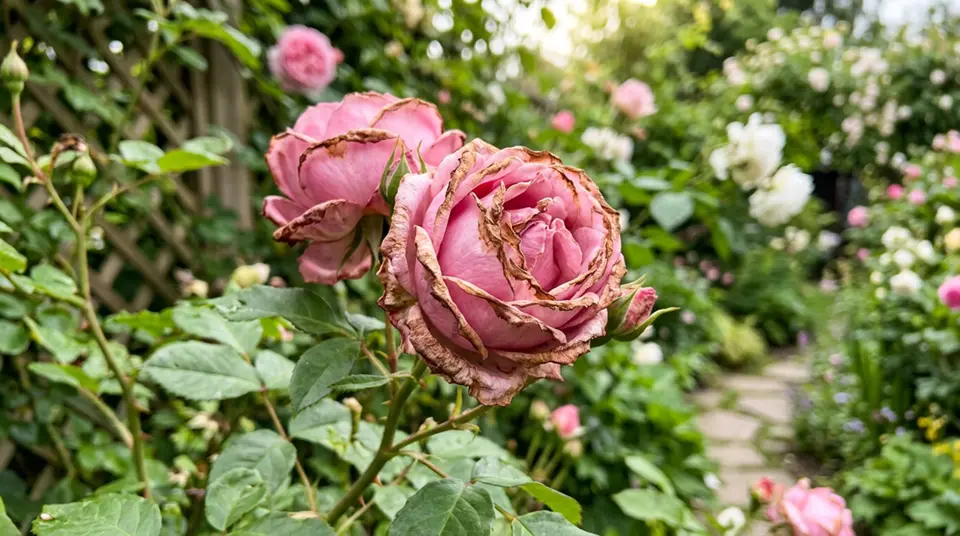
Among the most common fungal diseases in roses is black spot, a condition characterized by dark circular lesions on leaves. As the disease progresses, infected foliage often yellows and drops prematurely, weakening the plant.
Powdery mildew is another widespread issue, appearing as a white, powder-like coating on leaves and stems. This fungus thrives in humid conditions with limited airflow and can distort new growth.
Rust fungi also affect roses, producing orange or reddish pustules on leaf undersides. Severe infections can interfere with photosynthesis and reduce overall vigor.
These diseases rarely kill mature plants directly but can significantly reduce flowering quality and plant resilience over time.

Moisture and Airflow as Key Factors
The report emphasizes that moisture management is central to fungal disease prevention. Wet foliage creates ideal conditions for spores to germinate, making watering practices particularly important.
Experts recommend watering the soil directly rather than spraying leaves. Morning watering is also preferred, allowing excess moisture to evaporate during the day.
Air circulation is equally important. Proper spacing between plants and regular pruning help reduce humidity around foliage, limiting fungal growth opportunities.
Sanitation and Preventive Maintenance
Garden hygiene plays a major role in controlling fungal spread. Fallen leaves and infected plant material can harbor spores, allowing diseases to persist between growing seasons.
Removing diseased foliage promptly and cleaning gardening tools can reduce contamination. Pruning infected branches also helps prevent fungi from spreading deeper into the plant.
These preventive measures are often more effective than reacting after severe infection has already developed.
The Role of Fungicides
In some cases, fungicides are used to manage persistent infections. Both chemical and organic treatments are available, depending on the severity of the disease and gardening preferences.
However, experts note that fungicides are most effective when combined with proper cultural practices such as pruning, ventilation, and moisture control. Relying solely on treatments without addressing environmental conditions may lead to recurring problems.
Environmental Conditions and Seasonal Risk
Weather patterns strongly influence fungal disease development. Warm temperatures combined with humidity or prolonged moisture create ideal conditions for outbreaks.
In coastal or temperate regions, seasonal fog and dew can increase fungal pressure even in the absence of heavy rainfall. Gardeners often need to adjust care routines according to changing environmental conditions throughout the year.
Balancing Beauty and Plant Health
Rose cultivation reflects a balance between aesthetic goals and biological realities. While gardeners seek prolonged blooming and healthy foliage, fungi are naturally present within garden ecosystems.
Managing disease therefore involves reducing environmental conditions that favor pathogens rather than attempting to eliminate fungi entirely.
This approach aligns with broader principles of sustainable gardening, where prevention and ecological balance are prioritized over excessive chemical intervention.
Long-Term Strategies for Resilient Roses
Selecting disease-resistant rose varieties is increasingly recognized as an effective long-term strategy. Breeding programs have produced cultivars with improved tolerance to common fungal pathogens, reducing maintenance requirements.
Healthy soil management, proper nutrition, and consistent pruning further strengthen plant resilience, helping roses recover more effectively from environmental stress.
A Continuing Challenge in Gardening
Fungal diseases remain one of the most persistent challenges in ornamental horticulture. Yet they also illustrate the complexity of plant ecosystems, where climate, soil, microorganisms, and human practices intersect.
For gardeners, success often depends not on eliminating every threat but on understanding the conditions that allow diseases to flourish.
Looking Ahead
The report underscores that maintaining healthy roses requires ongoing observation and care. By combining preventive practices with timely intervention, gardeners can extend blooming periods and preserve plant vitality.
Ultimately, fungal management in roses is not simply about controlling disease—it is about creating conditions where plants can thrive despite the constant presence of environmental challenges.
References
Royal Horticultural Society (RHS) – Rose Black Spot
According to The San Diego Union-Tribune
Key Takeaways
- Roses are among the most widely cultivated ornamental plants, valued for their appearance, fragrance, and symbolic associations.
- A recent report by The San Diego Union-Tribune examines the challenges gardeners face in managing fungal infections in roses and the strategies used to prolong healthy flowering seasons.
- Without proper management, infections can weaken plants, reduce flowering, and affect long-term plant health.
- Spores are commonly dispersed through wind, rain splash, contaminated tools, and plant debris.
- Environmental stress, including poor soil drainage or inadequate sunlight, may further reduce plant resistance, making infections more severe.
Frequently Asked Questions
Why Roses Are Vulnerable to Fungal Disease?
Rose plants are particularly susceptible to fungal pathogens due to the structure of their foliage and their environmental requirements. Dense leaves, repeated watering, and fluctuating humidity levels create conditions that allow fungal spores to germinate and spread.
What should you know about common Fungal Diseases Affecting Roses?
Among the most common fungal diseases in roses is black spot, a condition characterized by dark circular lesions on leaves. As the disease progresses, infected foliage often yellows and drops prematurely, weakening the plant.
What should you know about moisture and Airflow as Key Factors?
The report emphasizes that moisture management is central to fungal disease prevention. Wet foliage creates ideal conditions for spores to germinate, making watering practices particularly important.
What should you know about sanitation and Preventive Maintenance?
Garden hygiene plays a major role in controlling fungal spread. Fallen leaves and infected plant material can harbor spores, allowing diseases to persist between growing seasons.
What should you know about the Role of Fungicides?
In some cases, fungicides are used to manage persistent infections. Both chemical and organic treatments are available, depending on the severity of the disease and gardening preferences.