The Invisible Ecosystem Inside Every Building
Most people judge water quality by what they can see. If water is clear, odorless, and meets regulatory standards, it is generally assumed to be safe. Yet between the treatment plant and the faucet lies an environment that receives far less attention: the plumbing network itself.
Inside pipes, storage tanks, fixtures, and distribution systems exists a hidden microbial ecosystem. These environments are not sterile. They support communities of bacteria, fungi, and other microorganisms that continuously interact with each other and with the surfaces around them.
For decades, research into building water systems focused primarily on bacterial threats such as Legionella and Pseudomonas. Fungi have often been treated as secondary contaminants — present, but not particularly important.
A new study challenges that assumption. The findings suggest that aquatic fungi may influence plumbing systems in ways that extend far beyond their own presence. Rather than acting as passive occupants, fungi may actively reshape microbial communities, alter biofilm development, and influence ecological conditions associated with microbial health risks.

Looking Beyond Individual Microorganisms
Traditional water microbiology often studies organisms individually. Researchers identify a bacterium, evaluate its risk, and determine how to control it. While this approach remains important, it can overlook how microorganisms behave within complex ecosystems.
The study examined what happens when aquatic fungi enter premise plumbing systems — the internal water infrastructure found in homes, hospitals, hotels, schools, offices, and other buildings.
Rather than focusing solely on fungal growth, the researchers investigated how fungal intrusion affected the broader plumbing microbiome. They examined changes in water quality, microbial community structure, biofilm development, and pathogen-associated functions. The results point toward a larger ecological story: fungi do not simply coexist with bacteria. They appear capable of influencing the structure and behavior of the microbial communities around them.
Fungi as Ecosystem Engineers
One of the most significant findings is that fungi behave less like contaminants and more like ecosystem engineers.
In ecology, ecosystem engineers are organisms that modify their environments in ways that influence other species. Beavers build dams. Corals create reefs. Trees reshape entire landscapes. While fungi operate on a microscopic scale, the principle is similar.
Once introduced into a plumbing system, fungi can alter microbial relationships, influence resource competition, and reshape community organization. These changes affect which microorganisms thrive, which decline, and how the overall ecosystem develops over time.
The concern is not simply fungal contamination. The concern is ecological transformation. A small change in one group of organisms may trigger broader changes throughout the microbial network.
Biofilms: The Real Battleground Inside Pipes
Much of the biological activity within plumbing systems occurs inside biofilms.
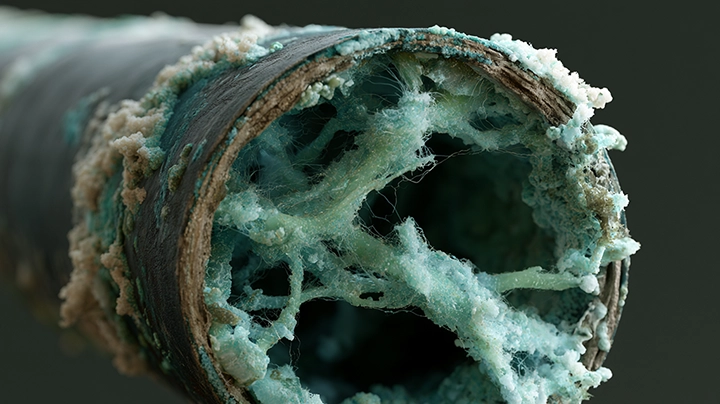
Biofilms are structured microbial communities attached to surfaces and embedded within protective extracellular matrices. They develop on pipe walls, fixtures, storage tanks, and other water-contact surfaces. Within these environments, microorganisms gain protection from environmental stress and disinfectants while accessing nutrients that support long-term survival.
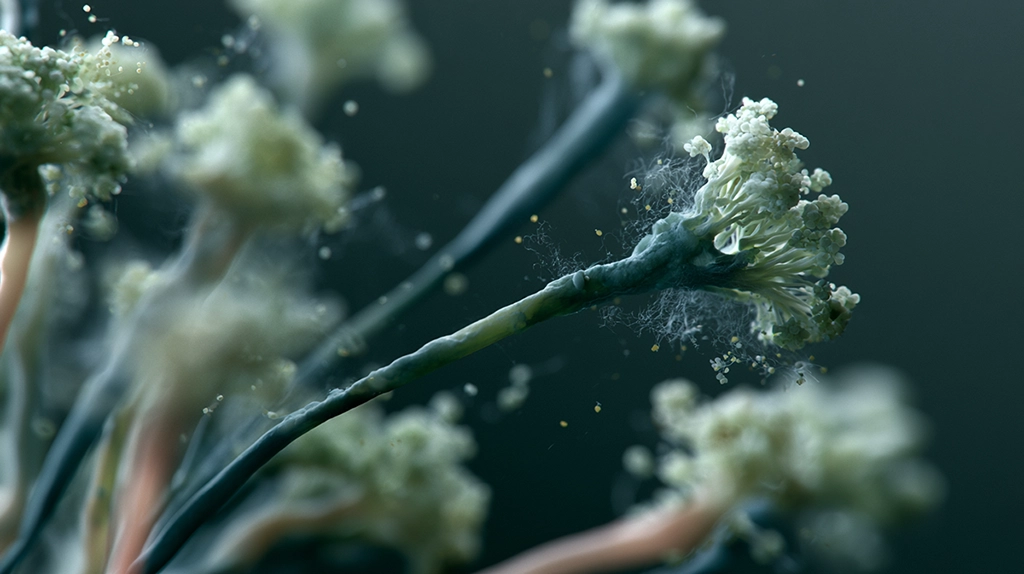
The study suggests that fungal intrusion may significantly influence how these biofilms develop. Because fungi possess filamentous growth structures, they can contribute physical architecture to microbial communities. Their presence may alter nutrient availability, surface colonization patterns, and interactions among microbial species.

In effect, fungi may help shape the habitat in which bacteria live. Since biofilms often serve as reservoirs for microorganisms throughout a water system, even subtle ecological changes within these structures can influence water quality far beyond a single pipe or fixture.
The Connection to Opportunistic Pathogens
One of the most important implications involves pathogen-associated functions within plumbing microbiomes.
The researchers found evidence that fungal intrusion may influence microbial activities associated with opportunistic pathogens. This does not necessarily mean fungi directly create dangerous bacteria. Instead, fungi appear capable of modifying ecological conditions that affect how microbial communities function.
Microbial risk is often viewed as a property of individual organisms. Yet ecosystems operate differently. The behavior of one organism can influence the success of many others. In plumbing systems, fungi may help determine which microorganisms gain competitive advantages, which niches become available, and which microbial interactions become dominant. The resulting risk may emerge not from a single species but from the structure of the community itself.
Water Quality Is Also an Ecological Problem
Water quality assessments traditionally focus on measurable physical and chemical parameters such as pH, disinfectant residuals, turbidity, temperature, and organic carbon levels. These indicators remain essential.
The study highlights an important limitation of this approach, however. Water chemistry alone may not fully describe the biological reality within a plumbing system. A system can appear chemically stable while significant ecological shifts occur within its microbial communities.
Future water-safety strategies may need to move beyond chemistry-focused monitoring toward ecosystem-level understanding. The health of a water system may depend not only on what is dissolved in the water, but also on how microorganisms interact within the infrastructure itself.
Why Buildings Matter
The implications become especially important when considering modern buildings.
Hospitals, healthcare facilities, schools, hotels, residential towers, and office complexes all contain extensive plumbing systems that create opportunities for microbial growth. Water stagnation, temperature fluctuations, low-flow conditions, and complex pipe networks can all support biofilm formation.
In these environments, microbial ecology becomes part of public-health infrastructure. If fungi influence biofilm development and microbial community composition, their effects may extend throughout entire buildings — particularly in facilities where vulnerable populations are present.
Toward Ecosystem-Based Water Management
As researchers learn more about plumbing microbiomes, future water-management strategies may become more comprehensive.
Monitoring programs may eventually incorporate fungal surveillance alongside bacterial testing. Biofilm ecology, microbial interactions, and ecosystem-level indicators could become part of routine risk assessment. Rather than reacting only to known pathogens, managers may seek to understand the broader ecological conditions that allow microbial risks to emerge.
Historically, water microbiology focused on identifying harmful organisms and eliminating them. That approach remains valuable, but it may not fully capture how microbial systems function. Microorganisms exist within networks of interaction — changes affecting fungi can influence bacteria, changes affecting biofilms can influence water quality, and changes affecting one species can alter the behavior of many others.
Understanding how fungi influence those ecosystems may prove to be one of the next major frontiers in water microbiology.
FAQ: Fungi in Plumbing Systems
Are fungi commonly found in building water systems?
Yes. Fungi can be found in plumbing systems, storage tanks, fixtures, and biofilms throughout buildings. Their presence is more common than many people realize.
What are plumbing biofilms?
Biofilms are communities of microorganisms attached to surfaces inside pipes and water systems. They provide protection and stability for microbial growth and can influence overall water quality.
Why are fungi important in plumbing microbiomes?
Fungi can influence microbial community structure, biofilm development, and ecological interactions within water systems. Their impact may extend beyond the fungi themselves.
Do fungi directly cause waterborne disease?
Not necessarily. The study focuses on how fungi alter microbial ecosystems. Their role may involve changing ecological conditions that affect other microorganisms, including opportunistic pathogens.
Why has fungal research lagged behind bacterial research?
Historically, water-quality concerns focused heavily on bacterial pathogens. As microbial ecology advances, researchers are increasingly recognizing the importance of fungal communities within water systems.
How could this research influence future water management?
Future monitoring programs may include greater attention to fungal surveillance, biofilm ecology, and ecosystem-level microbial interactions to provide a more complete picture of water-system health.
References
Effects of aquatic fungi on plumbing microbiomes and microbial health risks. ScienceDirect. https://www.sciencedirect.com/science/article/abs/pii/S004313542501293X