
Credit: Ajay Kumar Chaurasiya / Wikimedia Commons, CC0 1.0
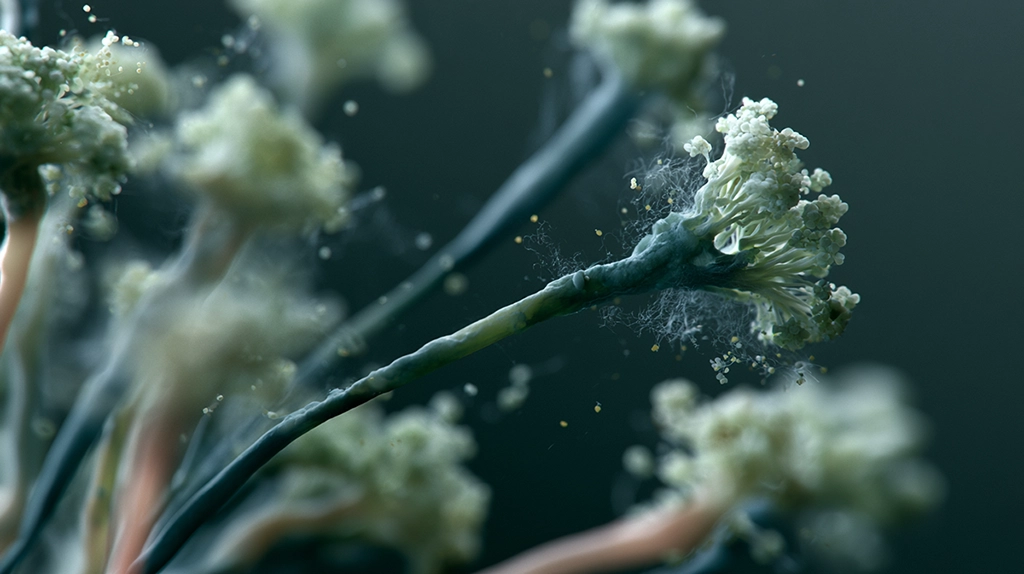
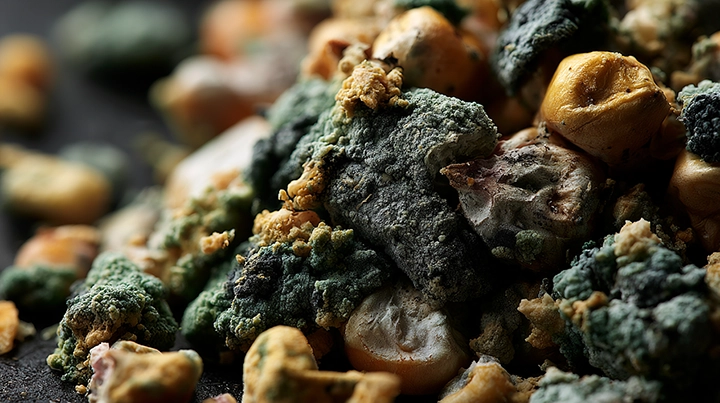
Mold contamination becomes dangerous long before visible fungal growth appears on food products. In many cases, the greatest threat comes not from the fungus itself, but from toxic compounds produced during fungal growth that remain in food long after contamination occurs.
Among the most consequential of these compounds is aflatoxin B1 — a mycotoxin produced by certain Aspergillusspecies capable of contaminating grains, nuts, spices, oilseeds, and animal feed. A 2026 study investigated whether essential oil derived from Melissa officinalis — commonly known as lemon balm — could reduce the cellular damage caused by aflatoxin B1 in laboratory cell models.
Researchers evaluated carrageenan-treated lemon balm plants and examined whether their modified essential oil could reduce oxidative stress, apoptosis, necrosis, and other toxic effects triggered by aflatoxin exposure in two human cell lines: HT-29 colorectal adenocarcinoma cells and HEK-293 kidney-derived cells.
The study belongs within the growing field of mycotoxin toxicology and natural-product research. It does not demonstrate protection in humans, nor does it suggest a consumer treatment strategy. What it does offer is a detailed window into how plant-derived compounds may interact with the cellular damage pathways that aflatoxin activates.
Why Aflatoxin B1 Remains a Global Food-Safety Concern
Aflatoxin B1 is primarily produced by Aspergillus flavus and Aspergillus parasiticus — fungi capable of colonizing grains, maize, peanuts, spices, oilseeds, and numerous agricultural commodities under favorable environmental conditions.
Unlike visible mold growth, aflatoxins are a chemical hazard. Once contamination occurs, removing fungal growth does not necessarily eliminate the toxin. The danger may persist within a food product long after visible mold disappears.
The study describes AFB1 as a potent mycotoxin capable of interacting with DNA, disrupting normal cellular function, and triggering programmed cell death. Aflatoxin-induced damage may involve oxidative stress, mitochondrial dysfunction, endoplasmic reticulum stress, and multiple apoptosis-related signaling pathways.
This is why aflatoxin management remains such a critical global issue. Poor drying practices, inadequate storage conditions, insect damage, elevated humidity, and climate-related stress can all increase the risk of fungal growth and toxin accumulation. By the time aflatoxin reaches consumers, the damage may already be operating at the molecular level — invisible to the eye, but measurable inside cells.
Why Researchers Chose Lemon Balm

Credit: Gideon Pisanty (Gidip) / Wikimedia Commons, CC BY 3.0
Melissa officinalis — lemon balm — has attracted scientific interest for its aromatic essential oils and diverse bioactive compounds. Previous studies have reported antioxidant, antifungal, and anti-aflatoxigenic activities, making the plant an interesting candidate for mycotoxin-related research.
In this study, researchers treated lemon balm plants with carrageenan, a naturally derived polysaccharide, during early plant development. The goal was to modify the plant’s chemical profile and potentially enhance production of biologically active compounds.
Chemical analysis revealed that carrageenan treatment altered the essential oil composition. Major compounds identified in the treated oil included citronellal, thymol, caryophyllene, caryophyllene oxide, and citral. Treatment also slightly increased overall essential oil yield.
The significance extends beyond lemon balm itself. The study demonstrates how agricultural practices can influence plant chemistry, which in turn may influence biological activity in laboratory testing. The research creates an interesting chain of investigation: cultivation methods affect phytochemistry, phytochemistry influences cellular responses, and cellular responses may reveal potential protective mechanisms against toxin-induced damage.
Inside the Cellular Response to Aflatoxin
Rather than measuring only cell survival, the researchers examined several layers of cellular stress simultaneously.
Cell viability assays measured overall toxicity. Flow cytometry evaluated apoptosis and necrosis. Reactive oxygen species testing assessed oxidative stress. Gene-expression analysis examined molecular pathways associated with cell death and survival.
Genes evaluated included caspase-3, caspase-9, Bax, Bcl-2, and NF-κB — all of which play important roles in regulating cellular stress responses and programmed cell death. This multi-layered approach moved the analysis beyond a simple observation that cells survived or died, allowing researchers to investigate how aflatoxin altered biological pathways and whether the essential oil influenced those changes.
Aflatoxin Triggered Oxidative Stress and Cell Death Pathways

Credit: Egelberg / Wikimedia Commons, CC BY-SA 3.0
The results confirmed the toxic nature of AFB1.
Aflatoxin exposure increased oxidative stress in both cell lines and activated multiple pathways associated with programmed cell death. Researchers observed increased expression of apoptosis-related genes including caspase-3, caspase-9, and Bax, while expression of protective genes such as Bcl-2 and NF-κB declined relative to untreated controls.
The two cell models did not respond identically. Kidney-derived HEK-293 cells showed greater necrotic damage, while colorectal HT-29 cells exhibited stronger apoptotic responses. This difference reflects an important principle in toxicology: the biological effects of a toxin depend on cell type, tissue characteristics, and underlying physiological state.
The finding also underscores why aflatoxin contamination remains such a serious food-safety concern. Its effects operate through measurable molecular pathways — oxidative stress, mitochondrial disruption, gene-expression changes — that unfold inside cells quietly and without visible warning.
The Essential Oil Reduced Several Indicators of Damage
The study’s central finding was that co-treatment with carrageenan-enhanced lemon balm essential oil reduced multiple markers of AFB1-induced toxicity.
Cells exposed to both AFB1 and the essential oil experienced lower levels of necrosis and apoptosis than cells exposed to aflatoxin alone. Reactive oxygen species production also decreased, suggesting reduced oxidative stress. At the molecular level, the essential oil partially reversed several gene-expression changes associated with aflatoxin damage — pro-apoptotic gene expression declined, while protective gene expression increased relative to cells exposed only to AFB1.
The authors interpreted these results as evidence of cytoprotective activity under laboratory conditions.
What matters most here is not that lemon balm “worked.” It is that the study identified measurable biological pathways through which cellular protection may occur. That understanding is what makes the research valuable for future mycotoxin toxicology work.
Why This Is Not a Human Health Recommendation
Cell-culture studies are valuable for understanding mechanisms, but they cannot determine whether a substance protects humans from real-world aflatoxin exposure. Human physiology is vastly more complex than isolated cells growing in laboratory conditions.
Factors such as digestion, absorption, metabolism, liver detoxification, microbiome interactions, dosage, safety evaluation, long-term exposure patterns, and individual health status all influence how any compound behaves inside the body.
Essential oils also require careful evaluation in their own right. Natural products contain biologically active chemicals, and “natural” should never be equated with universally safe. A substance showing beneficial effects in cultured cells may behave very differently in animals or humans.
The study should be viewed as an early-stage investigation into cellular mechanisms rather than evidence supporting supplementation or any form of self-treatment against aflatoxin exposure.
Why Prevention Still Matters Most

Credit: Ms Kabintie / Wikimedia Commons, CC BY-SA 4.0
Even the most promising natural compounds cannot replace effective food-safety systems.
The first line of defense against aflatoxin contamination remains crop monitoring, proper drying, moisture control, storage management, fungal surveillance, toxin testing, and regulatory oversight. Preventing contamination before toxins enter the food chain is far more effective than attempting to reduce damage after exposure occurs.
This is particularly important because aflatoxins are often invisible. Food products may appear normal while containing dangerous toxin concentrations that leave no visible indicator.
The lemon balm research complements food-safety science rather than replacing it. It contributes to our understanding of how mycotoxins damage cells and how natural compounds might eventually support broader mitigation strategies within a larger integrated approach to mycotoxin management.
Natural Products and the Future of Mycotoxin Research
The research fits within a broader scientific movement exploring natural-product approaches to mycotoxin management. Scientists are increasingly investigating plant-derived compounds, microbial biocontrol agents, antioxidants, adsorbents, and detoxification technologies that may help reduce the impact of fungal toxins across the food supply.
What makes this study particularly interesting is its multidisciplinary structure. It links agricultural treatment of a medicinal plant to changes in essential-oil chemistry, then connects those changes to toxicological responses inside cultured cells.
That pathway spans plant science, fungal ecology, analytical chemistry, toxicology, pharmacology, and food safety simultaneously. This reinforces an important principle: managing fungal toxins requires collaboration across many scientific disciplines. No single compound or technology will solve aflatoxin contamination alone.
The Real Battle Against Aflatoxin Happens Long Before Symptoms Appear
Aflatoxin B1 begins in contaminated crops but operates inside cells. It interacts with DNA, disrupts mitochondrial function, activates apoptosis pathways, and generates oxidative stress that unfolds silently in tissues — well before any clinical symptom becomes visible.
Carrageenan-treated lemon balm essential oil showed promising cytoprotective effects in laboratory models. But the research is most valuable as a window into how mycotoxins interact with living cells and what cellular pathways might eventually be targeted in future protective strategies.
The future of mycotoxin management will not depend on a single protective compound. It will depend on integrated systems combining prevention, monitoring, toxicology research, agricultural management, and food-safety infrastructure.
Because once aflatoxin enters the food chain, the challenge is no longer only fungal contamination. It becomes cellular biology.
Aspergillus Species Referenced in This Article
Aspergillus flavus, Aspergillus parasiticus, Aspergillus nomius, Aspergillus tamarii, and Aspergillus pseudotamarii are among the aflatoxin-producing fungal species studied in mycotoxin research. Aspergillus flavus and Aspergillus parasiticus were specifically identified as the primary sources of aflatoxin B1 in the study.
FAQ: Lemon Balm and Aflatoxin Toxicity
What is aflatoxin B1?
Aflatoxin B1 is a toxic mycotoxin produced primarily by Aspergillus flavus and Aspergillus parasiticus. It can contaminate food and feed products and damage cells through oxidative stress and apoptosis-related pathways.
What did this study investigate?
The study examined whether essential oil from carrageenan-treated Melissa officinalis (lemon balm) could reduce AFB1-induced toxicity in laboratory cell cultures.
Did the essential oil protect the cells?
Under laboratory conditions, co-treatment reduced oxidative stress, apoptosis, necrosis, and several gene-expression changes associated with aflatoxin toxicity.
Does this mean lemon balm prevents aflatoxin poisoning in humans?
No. The study was conducted in cultured cells and does not provide evidence of protection in humans or animals.
What remains the best defense against aflatoxin contamination?
Crop monitoring, proper drying, moisture control, safe storage, fungal surveillance, toxin testing, and regulatory food-safety systems remain the most effective prevention strategies.
References
- Cytoprotective effects of carrageenan-treated lemon balm essential oil against aflatoxin B1-induced toxicity. BMC Complementary Medicine and Therapies (2026). https://link.springer.com/article/10.1186/s12906-025-05228-8