Invisible Travelers in the Air We Breathe
What are airborne fungal spores and why do they matter for health?
Each spring, allergy forecasts focus heavily on pollen. Trees bloom, grasses release microscopic grains, and millions prepare for seasonal allergies.
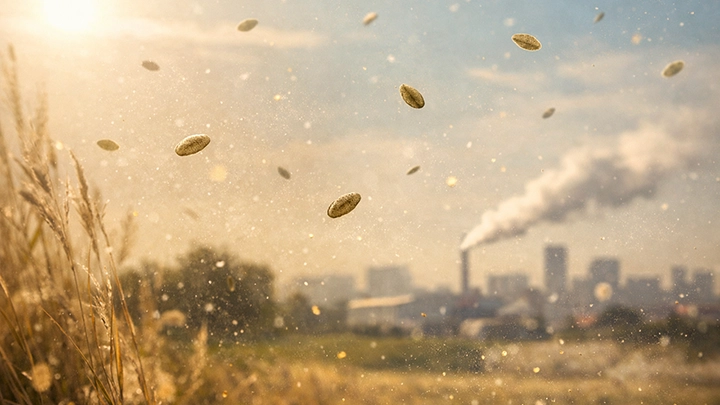
However, pollen is only part of the airborne biological environment. The atmosphere also carries vast numbers of fungal spores, microscopic reproductive particles released by molds. In many environments, these spores actually outnumber pollen grains.
For individuals sensitive to mold, these airborne fungi can significantly affect respiratory health. A study published in Scientific Reports (2026) highlights how one of the most important allergenic fungi, Alternaria, behaves in the atmosphere.
By analyzing two decades of airborne monitoring data, researchers found that the timing and intensity of Alternaria spore seasons are closely linked to environmental conditions, including climate change trends and air pollution.
Meet Alternaria: A Dominant Outdoor Mold
Why is Alternaria a major contributor to airborne mold exposure?
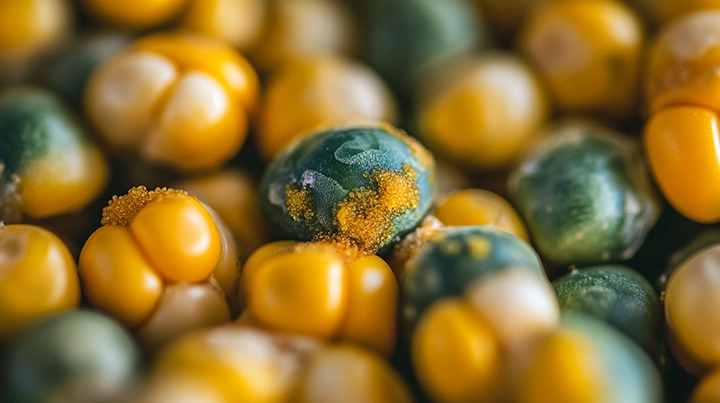
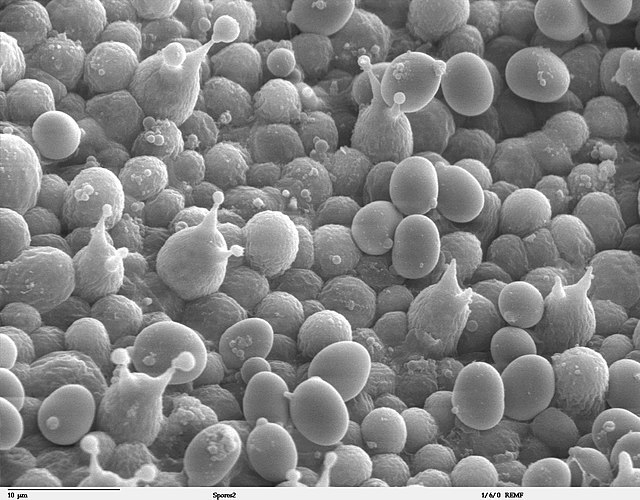
Alternaria is one of the most widespread fungal genera in outdoor environments. It thrives on decaying plant material, crops, soil, and organic debris, making it especially common in agricultural and rural areas.
As it grows, the fungus produces spores that detach easily and become airborne. These spores are highly resilient and can travel long distances, spreading across both natural and urban landscapes.
For allergists, Alternaria is a key concern. Exposure has been linked to allergic rhinitis, asthma exacerbations, and chronic airway irritation. Because the spores are abundant and easily inhaled, they often dominate the fungal component of atmospheric bioaerosols during warmer months.

Two Decades of Spore Monitoring
When does the Alternaria spore season occur?
To understand long-term patterns, researchers analyzed airborne spore data collected from 2004 to 2023. This extended dataset revealed consistent seasonal trends.
In many regions, Alternaria spores begin appearing in early spring, around March. Their concentration increases as temperatures rise, reaching peak levels during late spring and summer.
The overall spore season typically extends from March through October, with the highest activity occurring between April and October. This creates a prolonged exposure period for individuals sensitive to fungal allergens.
As a result, people affected by mold allergies may experience symptoms throughout much of the warm season, not just during peak pollen periods.
Climate Conditions Drive Spore Release
How does climate change affect Alternaria spore levels?
The study found strong connections between environmental conditions and airborne spore concentrations.
Warmer temperatures were associated with increased Alternaria levels, suggesting that heat promotes fungal growth and spore production. Elevated atmospheric carbon dioxide also showed a positive relationship with spore abundance, reflecting broader climate-related changes.
Interestingly, higher relative humidity was linked to reduced airborne spore counts. While moisture supports fungal growth on surfaces, excessive humidity can limit the release and dispersal of spores into the air.
These findings indicate that warm and moderately dry conditions are ideal for spore dispersal. As global temperatures rise and weather patterns shift, these conditions may become more frequent, potentially increasing airborne fungal exposure.
The Influence of Air Pollution
Can air pollution make mold allergies worse?
Air pollution may interact with fungal spores in ways that amplify their impact on human health.
Pollutants can weaken plants, making them more susceptible to fungal colonization and increasing spore production. Certain airborne chemicals may also influence how spores travel or how they interact with the respiratory system.
In addition, pollutants can attach to biological particles such as spores and pollen. This combination may intensify allergic reactions in sensitive individuals by enhancing inflammatory responses in the airways.
Although the exact mechanisms are still being studied, the evidence suggests that fungal spore dynamics are shaped by both natural environmental conditions and human-driven atmospheric changes.

The Ecology of Airborne Life
What are bioaerosols and why are they important?
Fungal spores are part of a broader category known as bioaerosols, which includes pollen, bacteria, viruses, and fragments of biological material suspended in the air.
These particles form a dynamic component of the atmospheric ecosystem. They influence processes such as cloud formation, microbial dispersal, and human exposure to environmental allergens.
In many environments, fungal spores represent one of the largest contributors to bioaerosols. Their constant movement connects ecosystems across large distances, linking soil, vegetation, and the atmosphere.
Long-term monitoring of these particles helps scientists understand how environmental changes affect microbial life on a global scale.
❓ FAQ
What is Alternaria and why is it important?
Alternaria is a common outdoor mold that produces airborne spores. It is a major contributor to mold allergies and can trigger asthma and respiratory symptoms in sensitive individuals.
When is Alternaria spore season?
The spore season typically runs from March to October, with peak levels occurring during late spring and summer.
How does climate change affect mold spores?
Warmer temperatures and changing environmental conditions can increase fungal growth and spore release, potentially extending exposure periods.
Can air pollution worsen mold allergies?
Yes. Pollutants can interact with fungal spores and may intensify allergic reactions by affecting how the immune system responds.
What are bioaerosols?
Bioaerosols are airborne biological particles, including fungal spores, pollen, bacteria, and viruses. They play important roles in both environmental processes and human health.
References
Burge, H. A. (2002). An update on pollen and fungal spore aerobiology. Journal of Allergy and Clinical Immunology.
D’Amato, G., et al. (2015). Climate change and respiratory diseases. European Respiratory Review.
Scientific Reports (2026). Long-term monitoring of Alternaria spores and environmental drivers.
WHO – Air quality and health.
https://www.who.int