Meta Description
A fungal infection diagnosed on Monday may not be the same infection by Friday. New research is revealing that certain fungi can adapt within the human body in days — changing how they metabolize, how they grow, and how they respond to treatment. Here is what that means.
The Assumption That Is Breaking Down
Fungal infections have traditionally been approached as stable conditions. Once a clinician identifies the pathogen and selects an appropriate treatment, the assumption is that the organism being treated today is essentially the same organism that will be present next week. The treatment targets a fixed biological profile. The course of therapy proceeds accordingly.
This assumption is being challenged by a growing body of research. Evidence now suggests that certain fungal species are capable of adapting rapidly within the human body — altering their metabolic strategies, growth patterns, and sensitivity to treatment during the course of a single infection. The biological profile being targeted at the start of treatment may shift before that treatment has time to complete its work.
This is not a marginal finding. It reframes fungal pathogens as dynamic systems rather than fixed targets, and it has direct implications for how infections are monitored, managed, and treated.
The Mechanism: Living Off the Fat of the Land
A key study published in Nature Communications in February 2026 by researchers at Kiel University and the Max Planck Institute for Evolutionary Biology identified a specific mechanism by which fungi transition from harmless environmental organisms to opportunistic human pathogens — and do so with remarkable speed.
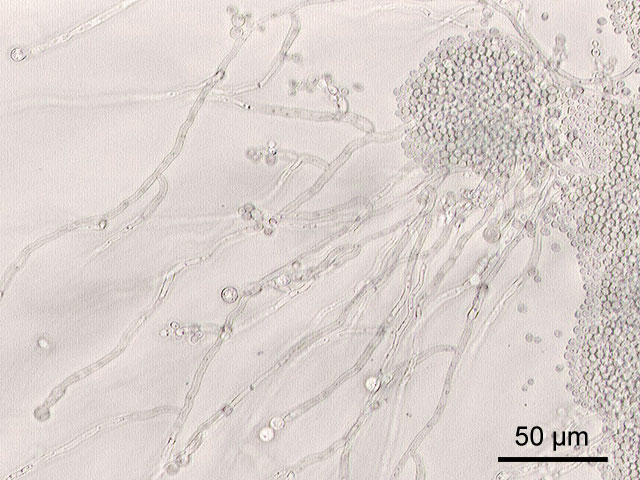
The research focused on the Trichosporonales order, which includes both soil-living decomposer species and recognized human pathogens. The study found that the transition is driven not by dramatic genetic mutation, but by something more subtle: codon optimization of metabolic genes. In practical terms, this means that certain fungi have optimized the efficiency with which their cells translate genes involved in fat metabolism. When these fungi enter the human body — an environment rich in lipids compared to the carbon-rich soil where they ordinarily live — they can rapidly upregulate fat metabolism and thrive in a way that soil-living relatives cannot.
In laboratory experiments, fungi with these optimized genes grew significantly better in lipid-rich environments. The researchers concluded that this “adaptive translation” may be a key mechanism allowing environmental fungi to colonize the human body without requiring extensive genetic change over many generations.
The implication is striking: the step from harmless environmental organism to opportunistic human pathogen may be smaller and more evolutionarily accessible than previously assumed.
Candida Under Pressure: Adaptation During Treatment
The same principle — rapid functional change under environmental pressure — plays out within the human body during antifungal treatment.
Candida albicans, responsible for bloodstream infections in hospitalized patients, provides one of the clearest clinical examples. When exposed to antifungal drugs, particularly azoles like fluconazole, Candida populations do not simply die or survive as a uniform group. Within the population, subpopulations with genetic variants that confer reduced drug sensitivity survive longer, reproduce under selective pressure, and gradually become the dominant strain.
Research analyzing approximately 2,000 clinical genomes across six Candida species identified hundreds of genes subject to recent, clinically relevant selection — evidence that these pathogens are actively and continuously adapting to both the human host environment and the antifungal treatments used against them. The genetic landscape of a Candida infection at the end of a treatment course may be measurably different from its landscape at the start.
This does not mean antifungal treatments are ineffective. They remain the primary tool for managing these infections. But it means that a therapy selected based on sensitivity testing at the time of diagnosis may face a progressively more resistant organism as treatment continues.

Why Fungi Are a Uniquely Difficult Target
The adaptability of fungi is compounded by a structural problem in antifungal medicine that has no equivalent in antibacterial treatment.
Fungi are eukaryotes — their cells share fundamental structural and metabolic features with human cells. This is unlike bacteria, whose cellular machinery differs substantially enough from human cells to provide many more potential drug targets. Because fungal and human cells are more similar, any drug that disrupts a fungal cellular process risks disrupting the equivalent process in human cells.
The consequence is a dramatically limited arsenal. There are only a handful of antifungal drug classes in clinical use — primarily azoles, echinocandins, and polyenes — compared to dozens of antibiotic classes. When a fungal pathogen develops resistance or reduced sensitivity to one of these classes, the options for alternative treatment narrow quickly.
As fungal populations adapt to antifungal exposure — both within individual patients and across the broader population of treated infections — the effectiveness of these limited drug classes erodes. This is already visible: azole-resistant Aspergillus fumigatus has become a recognized clinical problem in parts of Europe, linked partly to the use of azole fungicides in agriculture, which creates environmental selection pressure for resistance that then enters clinical settings.
Who Is Most Vulnerable
The populations at highest risk from rapidly adapting fungal infections are those whose immune systems cannot suppress fungal growth effectively — creating the conditions in which fungi can persist, reproduce under selective pressure, and adapt.
Patients undergoing chemotherapy. Organ transplant recipients on immunosuppressive therapy. People living with HIV at advanced stages. Patients in intensive care on broad-spectrum antibiotics that disrupt the bacterial communities that ordinarily compete with fungi. And increasingly, a broader category: patients with any condition requiring prolonged hospital stay, where exposure to healthcare-associated fungal pathogens is ongoing.
In these settings, a fungal infection is not a contained event that responds to treatment and resolves. It is a sustained interaction between a host with a compromised defense system and an organism that has the capacity to adjust its strategy over time.

A Shift in How Infections Are Managed
The recognition that fungal infections can evolve during treatment is driving changes in clinical approach — changes that are still in early stages but reflect a meaningful shift in medical thinking.
Serial monitoring of fungal populations during treatment — repeating sensitivity testing at intervals rather than only at the point of diagnosis — allows clinicians to detect changes in drug sensitivity before treatment failure becomes apparent in clinical symptoms. This is more resource-intensive than single-point testing, but it provides earlier information about whether a chosen therapy is maintaining its effectiveness.
Combination antifungal therapies, which use drugs from more than one class simultaneously, are being explored as a strategy to reduce the probability of adaptation. The logic is similar to combination therapy in HIV treatment: a pathogen that could develop resistance to one drug is less likely to simultaneously develop resistance to two drugs targeting different cellular mechanisms.
There is also growing interest in understanding the specific genetic and metabolic mechanisms that enable rapid fungal adaptation, with the goal of developing treatments that target those mechanisms directly — disrupting the fungus’s capacity to adapt, rather than simply targeting its current state.
The Broader Picture: From Soil to Hospital
The research emerging from Kiel University and elsewhere suggests that the boundary between environmental fungi and human pathogens is more permeable than medicine has traditionally assumed.
Fungi that live in soil — decomposers that perform essential ecological functions — may be acquiring or expressing the metabolic capabilities that allow human colonization through mechanisms as simple as codon optimization for fat metabolism. The genetic distance between a harmless environmental species and an opportunistic pathogen may, in some lineages, be quite small.
This has implications beyond individual clinical cases. As climate change shifts the geographic range and environmental prevalence of fungal species, as immunocompromised populations grow globally, and as antifungal use creates expanding selection pressure, the conditions for emerging fungal pathogens are intensifying.
As researchers at Kiel University concluded: understanding and monitoring these evolutionary dynamics is becoming increasingly important from a medical perspective — not as a future concern, but as a present one.

FAQ: Fungal Adaptation and Infection
Q: What does it mean for a fungus to “adapt” during infection? It means the fungal population changes its functional characteristics — including metabolic strategy, growth behavior, or drug sensitivity — during the course of an active infection. Research shows this can occur through mechanisms like codon optimization, which allows fungi to more efficiently express genes suited to the host environment, or through selective survival of subpopulations with genetic variants that confer advantages under treatment pressure.
Q: Does this mean antifungal treatments stop working? Not necessarily, and not uniformly. Antifungal treatments remain effective and are the primary tool for managing fungal infections. But the capacity for adaptation means that sensitivity at the time of diagnosis does not guarantee sustained sensitivity throughout treatment — which is why monitoring during therapy is increasingly important.
Q: Why are there so few antifungal drugs? Because fungi are eukaryotes — their cellular machinery shares fundamental features with human cells. This limits the number of processes that can be targeted by drugs without causing harm to the patient. The result is a much smaller drug arsenal than exists for bacterial infections, making resistance or adaptation more clinically consequential.
Q: Who is at highest risk from adaptive fungal infections? Immunocompromised individuals — including patients undergoing chemotherapy, organ transplant recipients, people with advanced HIV, and critically ill hospital patients. In these settings, fungi can persist and adapt under sustained selective pressure in ways that are not possible when the immune system is functioning effectively.
Q: How is medicine responding to this challenge? Through serial monitoring during treatment, exploration of combination antifungal therapies, and research into the specific mechanisms of fungal adaptation. The goal is to developmore responsive, adaptive treatment approaches that anticipate change rather than reacting to it after clinical failure.
Q: Are environmental fungi becoming more dangerous? Research suggests the evolutionary step from harmless environmental fungus to opportunistic pathogen may be smaller than previously assumed. Combined with climate change expanding fungal geographic ranges and growing immunocompromised populations globally, the conditions for emerging fungal pathogens are intensifying — making surveillance of environmental fungal diversity increasingly relevant to clinical medicine.
References
Academic Sources
- Guerreiro et al. (2026). Genomic and physiological signatures of adaptation in pathogenic fungi. Nature Communications, 17, 748. https://www.nature.com/articles/s41467-026-68330-6
- Schikora-Tamarit et al. (2024). Recent gene selection and drug resistance underscore clinical adaptation across Candida species. Nature Microbiology. https://phys.org/news/2024-01-candida-evolution-disclosed-insights-fungal.html
- Casadevall et al. (2021). Climate change and the emergence of fungal pathogens. PLOS Pathogens. https://journals.plos.org/plospathogens/article?id=10.1371/journal.ppat.1009503
News Sources
- Phys.org — What to watch as fungal infections rise: Species that can quickly ‘translate’ fat-use proteins (2026): https://phys.org/news/2026-02-fungal-infections-species-quickly-fat.html
Article prepared by the MoldNewsHub editorial team based on peer-reviewed research and publicly available scientific literature.