A Fragile Alliance Under a Changing Sky
Plants and fungi have depended on one another for more than 400 million years. Their alliance — forged in ancient soils long before forests towered on Earth — remains one of the planet’s most essential forms of cooperation. Through subterranean networks, fungi supply nutrients, water, and stability, while plants offer carbon in return. This quiet exchange supports forests, grasslands, crops, and ecosystems across every continent.
A new study published in Nature Ecology & Evolution reveals a disruptive force that has been underestimated in global change research. It is not simply rising temperatures, declining rainfall, or shifting seasons. It is variability — the increasingly unpredictable oscillation between extremes.
Climate whiplash, more than warming alone, is weakening the ancient partnership between plants and fungi. When weather swings violently from year to year, the timing and reliability of mutualistic exchanges break down. The relationships that form the underground scaffolding of ecosystems begin to loosen.
The message is no longer subtle: life depends not only on climate conditions, but on climate consistency.

The Hidden Language of Mutualism
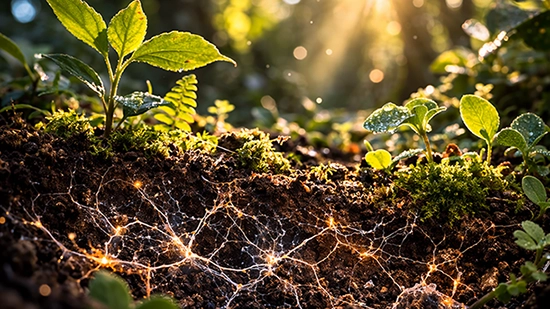
Plant–fungal mutualisms rely on synchronized, seasonally predictable exchanges. Fungi form dense myceliumnetworks that draw phosphorus, nitrogen, and micronutrients from soil and deliver them directly into plant roots. In return, plants channel carbon — the fungal energy source — back to their partners.
This symbiosis typically occurs through mycorrhiza, one of the most widespread biological partnerships on Earth.
Under stable environmental conditions, this mutualism functions like a precise ecological contract. Yet new research shows how quickly instability fractures that balance.
During unusually wet years, fungal biomass may collapse or shift into dormancy. During severe drought, plants may reduce carbon supply, forcing fungi into survival mode. When these conditions alternate repeatedly, the partners fall out of sync. Nutrient exchange weakens, carbon flows decline, and seasonal growth patterns become mismatched.
The choreography of mutualism depends not on climate averages, but on predictability. Without steady rhythms, cooperation falters.

When the Climate Starts Whiplashing
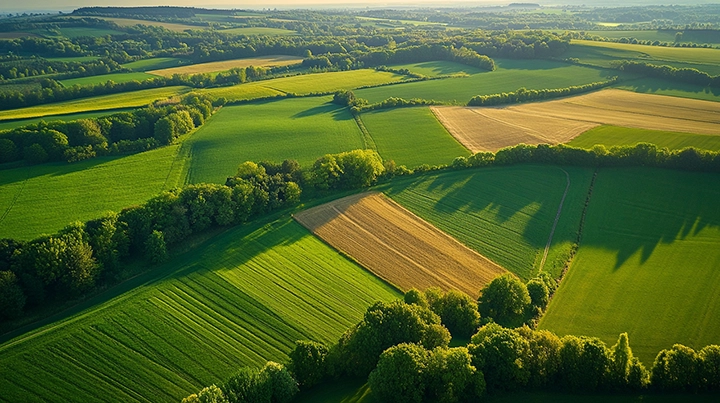
Across the world, ecosystems are experiencing sharper and more irregular swings between climatic extremes. This emerging rhythm is disrupting plant–fungal relationships across grasslands, forests, tundra, agricultural systems, and wetlands.
The study identifies several cascading consequences under conditions of high variability:
- Plants become unreliable carbon providers.
- Fungi reduce nutrient exchange and shift into defensive or dormant states.
- Growth rates for both organisms decline.
- Soil microbial communities weaken.
Over time, the mutualistic safety nets that support landscapes begin to thin.
These impacts are not confined to rare plants or specialized fungi. They affect dominant forest trees, staple crops, rangeland grasses, and widespread fungal partners such as arbuscular mycorrhizal fungi.
Wherever plants rely on fungi — which is nearly everywhere life grows on land — climate variability undermines ecological stability.

Why Variability Matters More Than Averages
One of the study’s most transformative insights is that organisms do not experience average climate. Nature perceives sequences and extremes, not annual means.
An ecosystem does not “feel” a comfortable average temperature. It experiences a heatwave followed by heavy rainfall, a drought replaced by flooding, or abrupt seasonal shifts.
Traditional climate models often smooth these fluctuations into statistical averages, inadvertently underestimating ecological risk.
For plant–fungal partnerships, timing is everything. A drought during the critical window when fungi rely on plant carbon can halt nutrient exchange for the season. A saturated period during fungal expansion can disrupt mycelial network formation.
These disruptions compound over time, weakening the resilience of entire landscapes.
Climate variability, therefore, is not a minor feature of global change — it is a core driver of ecological instability.

Consequences for Forests, Farms, and Future Landscapes
The weakening of plant–fungal mutualisms reverberates throughout entire ecosystems.
Forest Systems
Tree seedlings lacking fungal partners become less drought-resistant and more vulnerable to pathogens. Over time, forest regeneration slows and species composition shifts.
Agriculture
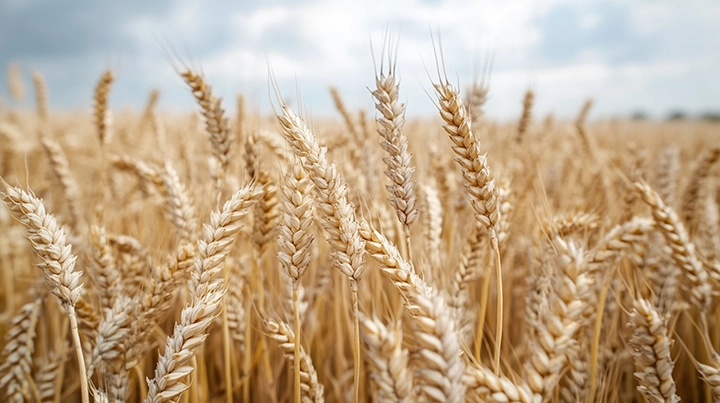
Many crops depend on mycorrhizal fungi for nutrient uptake, particularly phosphorus. Under climate variability, yields may decline even in fertilized systems, and soil health deteriorates more quickly.
Wild Ecosystems
As mutualistic support weakens, competitive balances shift. Stress-tolerant plants and invasive species may gain advantage over native vegetation.
Global Carbon Cycling
Plant–fungal networks are major drivers of carbon sequestration. When these relationships weaken, less carbon is stored in soils and vegetation, reinforcing global warming.
What happens beneath the soil ultimately determines what survives above it.

Why This Study Changes the Conversation
The most profound shift introduced by this research lies in how climate risk is understood. Climate change has often been framed as a gradual trend. This study suggests a different reality: an increasingly unstable pattern capable of unraveling ancient biological relationships.
The findings encourage scientists and policymakers to reconsider key factors:
- year-to-year climate swings
- sequencing of extreme events
- ecological timing and synchrony
- predictability as a conservation metric
The research also suggests that agricultural and forest management strategies must evolve. Adaptation will require not only tolerance to heat or drought, but resilience to climate variability itself.
Conclusion: Stability as a Form of Survival
Plant–fungal mutualisms are among the planet’s most fundamental biological alliances. They quietly maintain soil fertility, support forest resilience, and regulate global nutrient cycles.
But these relationships depend on environmental stability.
As climate patterns become more erratic, the underground partnerships that sustain ecosystems begin to weaken, leaving landscapes more vulnerable to collapse.
The study offers a clear warning: climate variability is a powerful, often overlooked driver of ecological disruption.
Protecting biodiversity will require more than limiting global warming. It will require restoring predictability — the stable foundation upon which cooperation in nature is built.
References
Academic sources
Waring, B. G., et al. (2024). Climate variability disrupts plant–fungal mutualisms. Nature Ecology & Evolution.
Smith, S. E., & Read, D. J. (2008). Mycorrhizal Symbiosis. Academic Press.
Institutional sources
Nature Ecology & Evolution. Research on climate variability and ecological mutualisms.
https://www.nature.com/natecolevol