Aromatic Obstacles, Fungal Solutions
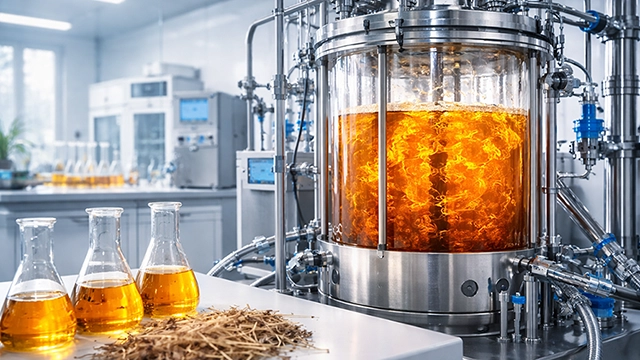
It’s no secret that our world is awash in plant waste—think stalks, husks, sawdust, and all the tough, woody leftovers from agriculture and forestry. The promise of a cleaner bioeconomy depends on turning that waste into fuels, chemicals, or next-generation materials. But there’s always been one stubborn barrier: lignin. This tangled plant polymer is packed with aromatic compounds—chemicals that can jam up the gears of even the most industrious microbe.

For decades, the assumption was simple: lignin and its aromatic breakdown products spell trouble for microbial fermentation. They’re toxic, they stall growth, and they limit what we can recover from biomass. But a new study, hot off the presses in Biotechnology for Biofuels and Bioproducts, is flipping the narrative—thanks to a humble, underappreciated fungus from the oxygen-free guts of cattle: Neocallimastix californiae.

Fungi in the Face of Stress
Researchers set out to test how N. californiae responds to aromatic compounds released during the breakdown of lignocellulose (plant material made of cellulose, hemicellulose, and that infamous lignin). Aromatics like vanillinare notorious growth inhibitors. But instead of buckling under the pressure, this fungus responded with metabolic agility.

The Results? When grown on a combination of cellulose (the sugar-rich part) and alkaline lignin (rich in aromatics), N. californiae didn’t just tolerate the challenge. It grew faster and amped up its polysaccharide-degrading machinery—meaning it broke down plant sugars even more efficiently. That’s not all: it started producing far more melanin, a dark pigment often associated with fungal stress and defense.
Melanin: A Stress Signal with Benefits
Why does melanin matter here? In many fungi, melanin acts as an antioxidant and a shield against environmental stressors—UV light, drying, or chemical attack. It’s also why some notorious molds (think black mold in your shower or the famous Chernobyl fungus) thrive in tough environments. In the case of N. californiae, producing more melanin in the presence of aromatic compounds may help protect vital cell functions, letting the fungus not just survive, but thrive, in chemically rough conditions.
The study suggests that melanin isn’t just a passive stress marker—it’s an adaptive tool that equips fungi to keep on working even as “toxic” chemicals build up. That’s an asset for bioprocessors hoping to convert all parts of biomass, not just the easy sugars.
Microbial Makeover: Metabolism in Motion
To get to the heart of this adaptation, the scientists dug deep. They looked at the fungus’s transcriptome (what genes are turned on or off) and its metabolome (what chemicals it’s making and using). The upshot? N. californiae actively reprograms its gene networks—shifting amino acid synthesis, boosting detox pathways, and dialing up melanin production—to match the chemical reality it faces.

This is more than just endurance; it’s a playbook for how fungi can remodel their metabolism to turn obstacles into opportunities.
What Does This Mean for Bio-Based Manufacturing?
For anyone in bioenergy, green chemistry, or waste valorization, this research is a breath of fresh air. Instead of seeing lignin-rich residues as a liability, we may soon see them as a resource—if the right fungus is in the mix. Imagine biorefineries that can process straw, corn stover, or sawdust—aromatic warts and all—into valuable chemicals, without stalling out when the tough stuff hits the tank.

What’s more, melanin itself is a valuable bioproduct. Its uses range from medicine (radioprotective agents, drug carriers) to electronics (organic conductors) and cosmetics. If fungi can make it efficiently from waste streams, we’re looking at a two-for-one win: biomass valorization and pigment production in a single pot.
New Frontiers in Fungal Engineering
The takeaway? Fungi like Neocallimastix californiae are not just decomposers—they’re metabolic shape-shifters. For biotechnologists, this opens a new world of engineering possibilities:
Designing or evolving fungi that thrive on real-world, “messy” feedstocks.
Integrating melanin production into biorefinery workflows.
Using transcriptomic and metabolomic data to select or tweak strains for industrial performance.
And for the mold-curious, it’s a reminder: The same stress strategies that let a fungus survive in a cow’s stomach—or on the walls of Chernobyl—can be harnessed to clean up our supply chains and green our industries.
References
Academic Sources
Hooker, C. A., et al. (2024). Aromatic compounds stimulate melanin production and metabolic remodeling in the anaerobic fungus Neocallimastix californiae. Biotechnology for Biofuels and Bioproducts.
DOI: https://doi.org/10.1186/s13068-024-02458-9
Solomon, E. I., et al. (2013). Biological lignin degradation and modification. Proceedings of the National Academy of Sciences.
Cordero, R. J. B., & Casadevall, A. (2017). Functions of fungal melanin beyond virulence. Fungal Biology Reviews.
DOI: https://doi.org/10.1016/j.fbr.2016.12.003
Official Sources
National Renewable Energy Laboratory (NREL). Lignocellulosic biomass research overview.
https://www.nrel.gov
U.S. Department of Energy Bioenergy Technologies Office.
https://www.energy.gov/eere/bioenergy
National Center for Biotechnology Information (NCBI). Transcriptomics overview.
https://www.ncbi.nlm.nih.gov