Why Mold Happens Around the World
Let’s begin with something we often take for granted: the freshness of our food. We rinse a handful of strawberries, toss them into lunchboxes, or store leafy greens hoping they’ll last until the week’s end. But mold doesn’t wait for dinner plans. It doesn’t care if food is organic, homegrown, or air-freighted. All it needs is warmth, moisture, and a small crack in the system.
In today’s unstable climate and overburdened food chains, fungi are silently taking over. Fungal contamination now causes up to 25% of global crop loss annually (FAO, 2023). That’s more than spoiled fruit—it’s food insecurity, economic loss, and health risks wrapped in plastic.
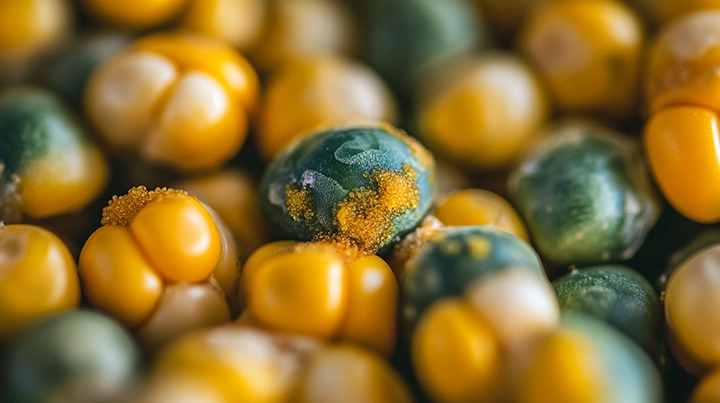
Chemical fungicides are being banned, and resistance is rising. At the same time, most of our inspection tools only see the surface—letting fungi spread unnoticed. Spores hide not only on produce but in packaging, plastic crates, and poorly ventilated corners. These overlooked places—like rubber fridge seals or damp storerooms—are where dangerous molds such as Aspergillus niger and Stachybotrys chartarum silently thrive.
That’s where linalool enters the scene.

Source: Wikimedia Commons, CC BY 2.5
From Spa Scent to Fungal Fighter
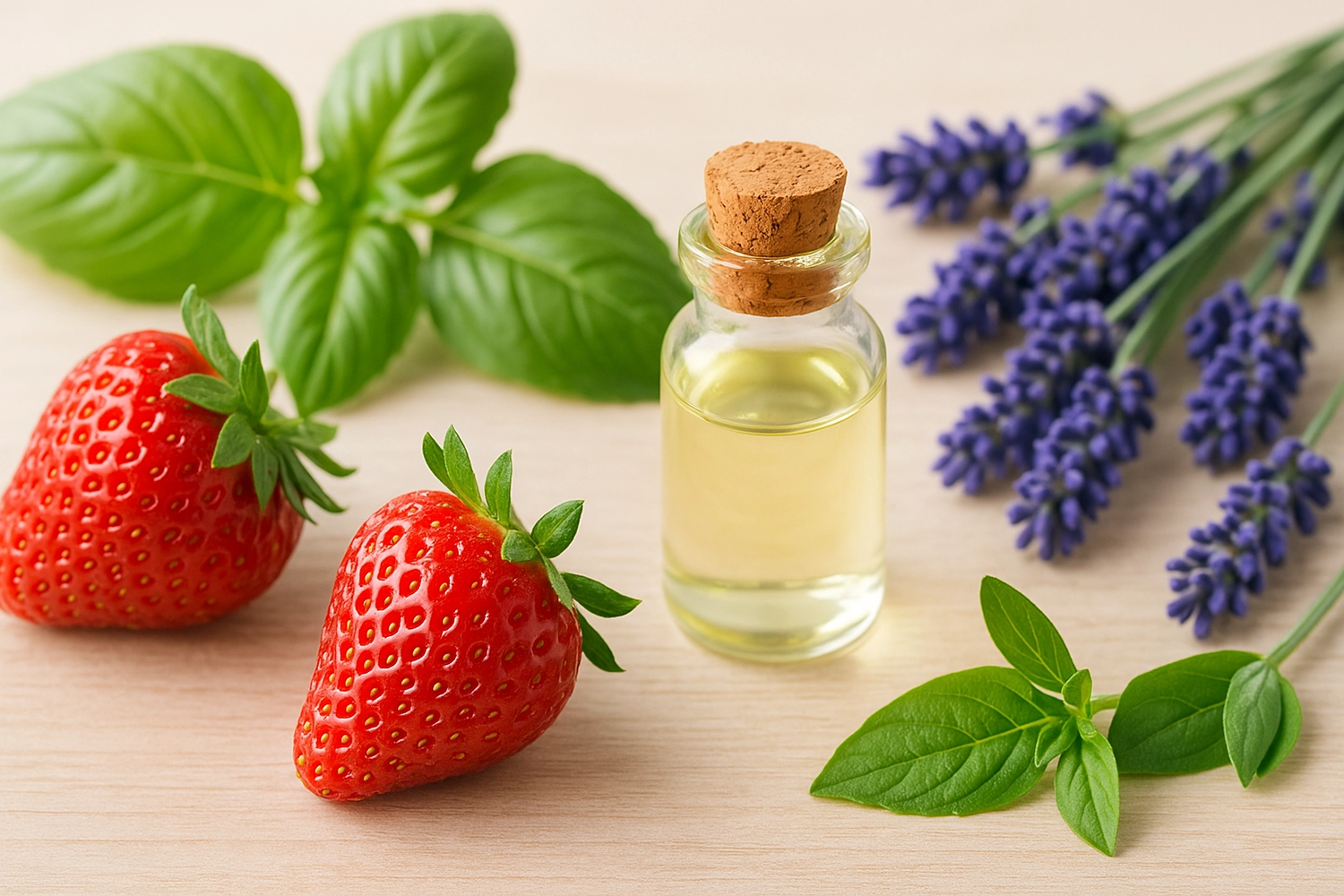
Linalool, a natural compound found in lavender and basil, is best known for its soothing scent. But researchers are now discovering its unexpected superpower: fighting mold.
In a 2024 study, scientists tested linalool on goji berries infected with Alternaria alternata, a mold that commonly ruins fruit after harvest. What happened was remarkable. Lesion size on the berries shrank by 78% in five days. Mold spore growth dropped over 90%. At a molecular level, the linalool interfered with how the fungus built its cell walls and protected itself, causing it to collapse from the inside.
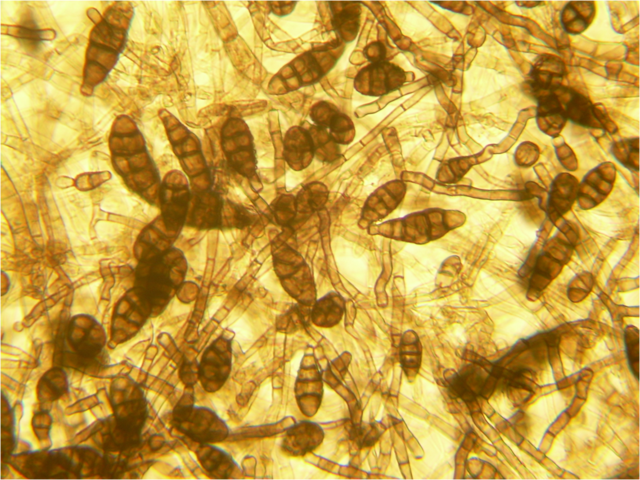
Source: Wikimedia Commons, CC BY 2.5
The Bigger Promise
Half of fruit spoilage happens after harvest. That means damage during shipping, while sitting in warehouses, or even on store shelves. When heat and moisture rise, mold spreads—quickly. Current solutions rely on harsh fungicides, many of which are now under scrutiny or banned. Linalool offers a safer alternative. It can be added as a natural vapor in storage, misted over produce, or included in packaging.
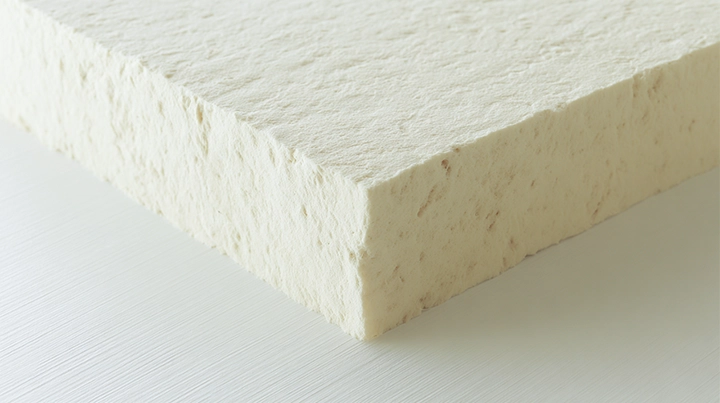
But the threat isn’t just on the fruit. Mold hides in unexpected places: crate linings, packaging foam, the corners of coolers. These become invisible breeding grounds for black mold, which not only damages food but also releases harmful spores that affect health.
Linalool’s vapor doesn’t just protect fruit—it helps disinfect the air and surfaces around it. That makes it more than a preservative. It’s an environmental shield.
From Farms to Pharmacies
Linalool’s mold-fighting abilities don’t stop at produce. Because it disrupts genes in fungi, scientists are exploring its medical potential—like creams for skin infections, dental rinses, or hospital sprays for sterilization. With the right delivery systems, it could one day show up in over-the-counter creams or air-sanitizing devices in clinics.

Source: Wikimedia Commons, CC BY 2.5
What’s Holding It Back
Here’s the challenge: linalool evaporates fast. That’s great in aromatherapy, but not ideal for long-term mold control. If it fades too quickly, its power vanishes before it can fully protect food.
Scientists are now working on ways to stabilize it—like trapping it in microbeads or blending it into slow-release coatings. These innovations could turn linalool into an antifungal spray or vapor that works for days instead of minutes. It might soon be possible to use linalool safely in food storage, hospital settings, and even home refrigerators.
If these stabilization methods succeed, linalool could change the way we protect food and spaces—offering a cleaner, safer alternative to chemical preservatives.
What Needs to Happen Next
To make this shift real:
- Researchers must improve delivery of linalool, ensuring effectiveness over time.
- Food companies and cold-chain operators should test linalool mists, liners, and containers.
- Pharma developers should investigate linalool-based solutions for skin and respiratory fungal issues.
- Regulators need to include safe natural antimicrobials like linalool in safety standards.
A New Standard for Clean
Consumers are ready for a new standard of clean—one that protects their food and health without harsh chemicals. Linalool is more than a fragrance; it’s a practical, natural solution for mold control across food storage, air treatment, and even healthcare settings.
Its promise is clear: lower spoilage, cleaner environments, and safer alternatives to synthetic fungicides. But its potential will only be realized if we build it into systems now—before contamination becomes the cost of inaction.