Soil: The Hidden Battlefield of Climate Change
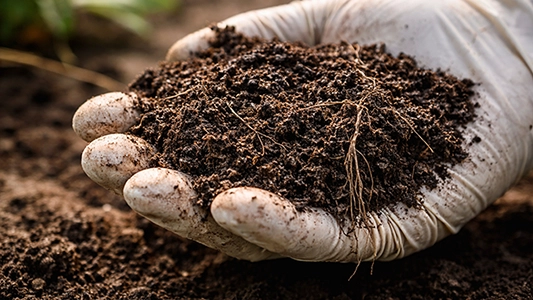
When we talk about the climate crisis, the imagery is all skyward: receding glaciers, relentless drought, relentless heatwaves, wildfires licking at forest edges. But beneath all of that, an invisible crisis is brewing — and it’s rooted in the very ground we walk on. Few people realize that the world’s soils are alive, home to sprawling metropolises of microbes, and that fungi are among their chief architects.
Soil microbiology is easy to overlook; after all, less than half a percent of soil mass is living. Yet these microorganisms — bacteria, archaea, viruses, protozoa, and especially fungi — are responsible for nearly all the key processes that sustain life aboveground. They regulate nutrient cycling, carbon storage, and even the air we breathe. At the heart of this system, fungi play roles that stretch far beyond decomposing leaves or causing the occasional mushroom bloom.

Fungi: The Unsung Architects of Soil Life
Fungi have a quiet power. They don’t just break things down; they build up the very foundations of our terrestrial world. As saprotrophs, they break down fallen logs, dead leaves, and organic debris, converting them into simpler compounds that plants and other microbes can use. Mycorrhizal fungi, meanwhile, strike up intimate relationships with plant roots, trading carbon for phosphorus and nitrogen — nutrients essential to every forest and field.
But perhaps the most underappreciated contribution of soil fungi is their necromass — the remains of their cells, packed with resilient compounds like chitin and melanin. These remnants, unlike most bacterial debris, decompose slowly and anchor stable pools of organic carbon in soil. According to soil ecologists, fungal necromass is one of the most durable forms of organic matter, creating long-lasting carbon “vaults” that help regulate Earth’s climate over decades or even centuries.
Without fungi, soil would lose its structure, fertility would decline, and terrestrial carbon would quickly return to the atmosphere as greenhouse gases. These underground networks, invisible to the naked eye, are a hidden line of defense against climate instability.


Climate Stress: A Disruption from Below
The study at the heart of this article throws a spotlight on how climate change is disrupting these ancient, finely-tuned systems. Global warming doesn’t just melt ice caps or parch riverbeds; it alters the chemistry and biology of the soil itself — with consequences that ripple outward.
Warming soils speed up microbial respiration and decomposition. Fungi work faster, but that means carbon gets released as CO₂, eroding the very carbon banks that took centuries to build.
Elevated CO₂ in the air alters plant physiology, changing the mix of sugars and compounds released by roots. Fungi, reliant on these exudates, must adapt, and the species that thrive under these new conditions may not be the ones best at stabilizing carbon.
Drought and flooding flip the microbial world upside down. Drought can put fungi into dormancy or stress, reducing diversity and disrupting nutrient cycling. Flooding, on the other hand, favors different microbial groups and can cause pulses of greenhouse gas emissions.
Prolonged stress means that some of the fungi most essential for resilience may disappear, reducing soil’s ability to recover from future shocks.
This underground drama isn’t just a scientific curiosity — it’s a slow-motion transformation of the planet’s carbon cycle. If the right fungi fade away, so does our climate resilience.

Necromass: Soil’s Forgotten Carbon Vault
One of the study’s most compelling insights is the role of fungal necromass in soil health and climate regulation. Unlike bacteria, whose cell walls break down quickly, fungi leave behind structures (chitin-rich cell walls, melanin pigments) that resist decay.
In grasslands, croplands, and forests, this necromass can make up a major share of soil organic carbon. It creates long-lasting carbon pools that stabilize fertility and act as buffers against environmental change. But as climate change accelerates decomposition, we risk burning through these stores faster than we can replenish them.
The worry? Soils could shift from being net carbon sinks — absorbing more CO₂ than they release — to carbon sources, actively contributing to atmospheric greenhouse gases. It’s a feedback loop that could undermine our best climate strategies.

Modeling the Microbial Future
To grapple with this invisible crisis, scientists are deploying sophisticated models like DNDC (Denitrification-Decomposition), which simulate the complex interplay among soil microbes, carbon, nitrogen, and climate variables. These models let researchers forecast how different management strategies — from crop rotations to cover cropping — might protect or undermine soil health under warming scenarios.
By understanding which fungi are most essential, and how their populations shift under pressure, we gain new tools for climate mitigation and agricultural sustainability.

Indoor Parallels: Mold Under Stress
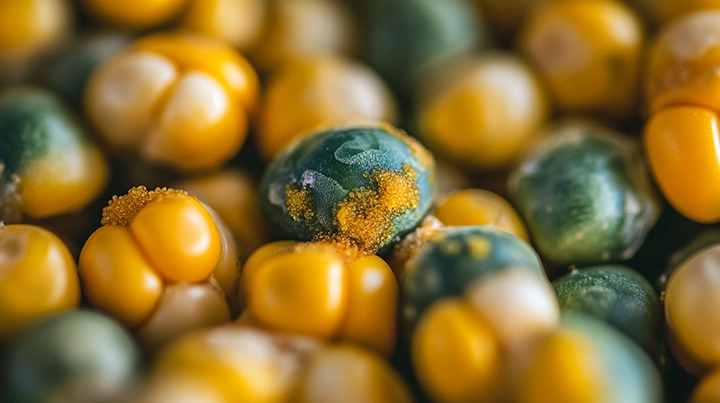
The same drivers — heat, humidity, moisture — that reshape soil fungal communities are reshuffling the deck inside homes, offices, and factories. Increased temperatures can favor certain mold species indoors, while others fade away. Moisture buildup leads to persistent fungal necromass in hidden spaces — not unlike what happens in soils.
The lesson: studying soil fungi deepens our understanding of indoor mold ecology, allergenicity, and even long-term building health.
The stability of global soils — and our food systems, climate, and even water quality — depends on fungal resilience. These underground actors are among the most adaptable, yet also the most threatened, by rapid environmental change. Losing them would mean not only a loss of biodiversity, but a breakdown in the very processes that sustain life on land.
As we chart our response to the climate emergency, we must dig deeper, investing in research, soil health policies, and restoration efforts that protect fungal diversity. It’s a call not just to look up at the sky, but to listen to the slow, essential rhythms beneath our feet.
References
Academic Sources
- Liang, C., Schimel, J. P., & Jastrow, J. D. (2017). The importance of anabolism in microbial control over soil carbon storage. Nature Microbiology, 2, 17105. https://doi.org/10.1038/nmicrobiol.2017.105
- Kallenbach, C. M., Frey, S. D., & Grandy, A. S. (2016). Direct evidence for microbial-derived soil organic matter formation and its ecophysiological controls. Nature Communications, 7, 13630. https://doi.org/10.1038/ncomms13630
- Cotrufo, M. F., Wallenstein, M. D., Boot, C. M., Denef, K., & Paul, E. (2013). The Microbial Efficiency–Matrix Stabilization (MEMS) framework integrates plant litter decomposition with soil organic matter stabilization. Global Change Biology, 19(4), 988–995. https://doi.org/10.1111/gcb.12113
- Gilhespy, S. L., et al. (2014). First 20 years of DNDC (DeNitrification DeComposition): Model evolution. Ecological Modelling, 292, 51–62. https://doi.org/10.1016/j.ecolmodel.2014.09.004
Official Sources
- Intergovernmental Panel on Climate Change (IPCC). Climate change assessment reports and impacts context. https://www.ipcc.ch/
- U.S. Environmental Protection Agency (EPA). Soil and climate / greenhouse gas context. https://www.epa.gov/
- Food and Agriculture Organization of the United Nations (FAO). Soil health and sustainability context. https://www.fao.org/soils-portal/en/