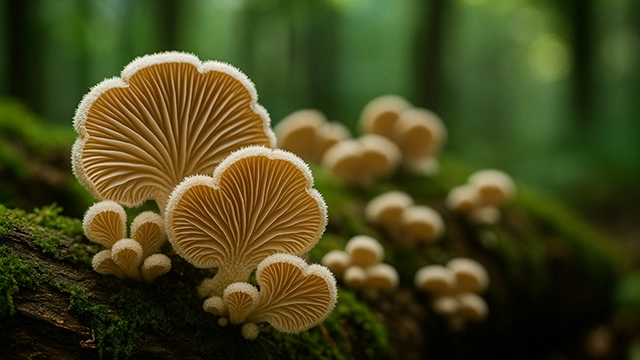
In a world where wellness trends change with the seasons, one mushroom has quietly earned a seat at the table—not with hype, but with substance. Schizophyllum commune, also known as the split-gill mushroom, isn’t flashy. You won’t see it center stage on supplement shelves or dominating foodie reels. But behind its fan-like gills lies a biochemical profile that might just redefine what we call a superfood.
From ancient forests to cutting-edge labs, this humble fungus is rewriting the story of functional foods and natural medicine. Let’s take a walk through its many talents—and why you’ll likely be hearing a lot more about it in the years to come.

A Mushroom That Multitasks
At first glance, S. commune looks like any other wood-loving mushroom, thriving on decaying logs in forests across the globe. But its chemical repertoire is anything but ordinary. Scientists have been zeroing in on this fungus, uncovering a powerhouse of bioactive compounds with wide-ranging health benefits.
Here’s what you’ll find inside:
- Polysaccharides with immune-boosting and cancer-fighting potential
- Flavonoids—those antioxidant warriors that mop up harmful free radicals
- Saponins, known for reducing inflammation and regulating cholesterol
- Ergosterol, a precursor to vitamin D, offering antibacterial and anti-inflammatory effects
Individually, these compounds are impressive. Together? They form a natural synergy that supports everything from cellular defense to metabolic health.

Nature’s Gentle Guardian
If chronic illness is the defining health challenge of our time, S. commune is quietly rising to meet it. Preliminary research points to benefits in a variety of areas:
- Cancer prevention through immune modulation and anti-tumor activity
- Cardiovascular health, with reduced inflammation and oxidative stress
- Diabetes management, helping to stabilize glucose and lipid levels
- Neuroprotection, possibly shielding neurons from the damage of aging
What stands out most is its potent antioxidant profile—a crucial factor in slowing down cellular aging and preventing DNA damage. In short: this mushroom isn’t just nourishing, it’s protective.

The Detox Defender
In a surprising twist, researchers are now exploring S. commune as a shield against environmental toxins. Early findings suggest that it may reduce the harmful effects of endocrine disruptors like Bisphenol A (BPA). This positions the mushroom not just as a dietary ally, but as a potential tool in the growing field of environmental health and detox support.
The idea that a mushroom could defend your body from modern pollutants? That’s the kind of innovation we didn’t know we needed—but absolutely do.

From Forest Floor to Wellness Formulas
Thanks to its safety profile (non-toxic even at high doses), S. commune is quickly making its way into wellness spaces around the globe. Think of it as a triple threat:
- In pharmaceuticals, it’s a source of natural compounds for drug development
- In functional foods, it’s being added to teas, soups, and fermented products
- In supplements, its extracts are popping up in powders and capsules aimed at liver health, immunity, and metabolic resilience
And it doesn’t stop there. Its enzymatic diversity hints at future applications in green chemistry, antimicrobial development, and even bioremediation.

Proceed with Curiosity (and a Bit of Caution)
While the early data is promising, most of the research on S. commune is still in preclinical stages—think lab dishes and animal models. Before this mushroom becomes a household name, we’ll need:
- Clinical trials in humans
- Standardized dosing and formulation methods
- More exploration into how it interacts with the gut microbiome and other nutrients
In other words, the stage is set, but the spotlight is just beginning to shine.

Don’t Underestimate the Quiet Ones
What makes Schizophyllum commune remarkable isn’t just its breadth of potential—it’s the way it bridges categories. It’s food, it’s medicine, it’s a detox agent, and it’s environmentally promising. This isn’t a passing fad. It’s a mycological multitasker with staying power.
In a wellness culture dominated by bold claims and fast fixes, S. commune reminds us that quiet strength and deep roots often yield the most lasting results. So whether you’re sipping it in tea or reading about it in clinical trials, know this: the split-gill mushroom is more than just another edible fungus.
It might just be your next health ally—one that’s been hiding in plain sight all along.
References
Academic
- Hyde KD, et al. (2019). Schizophyllum commune: a review on pharmacological properties and biotechnological potential. Frontiers in Microbiology. Publisher page
- Patel A, et al. (2020). Nutraceutical applications of mushrooms: Schizophyllum commune as a case study. Journal of Functional Foods. ScienceDirect