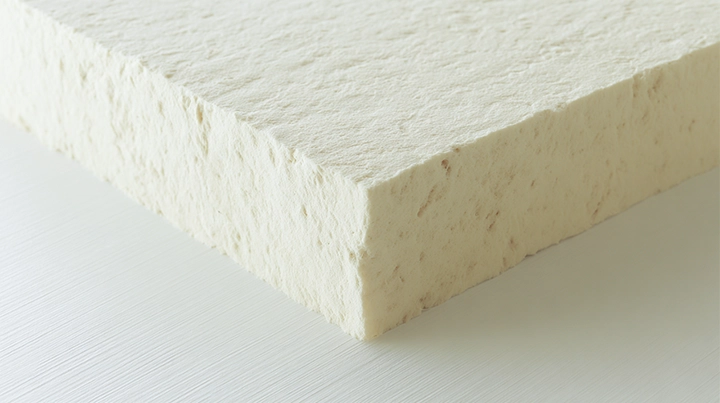
A Living Material, Not a Manufactured One
This article is a vivid glimpse into what might become one of the most extraordinary paradigm shifts in medicine—turning a humble soil mold, once dismissed as mere debris, into the architect of tomorrow’s wound care. Marquandomyces marquandii, usually an unheralded member of the fungal world, now stands at the frontier of biofabricated healing.
What fascinates me most is not just the scientific feat of coaxing mycelium into a hydrogel, but the underlying principle: biological design over synthetic assembly. For centuries, medical materials have been built by compounding, mixing, or layering plastics, cotton, and polymers. But here, the “material” is not manufactured in the traditional sense—it is grown. Every layer, pore, and fiber is shaped by the fungus’s natural rhythm, producing a structure whose logic echoes that of living tissue.

The Mycelial Blueprint for Healing
The core innovation lies in the mycelium—the rootlike filaments that weave themselves into dense, interconnected mats. Under liquid culture, M. marquandii produces a water-rich hydrogel with layered porosity. These “living bandages” are not merely moist dressings, but engineered environments: retaining up to 80% water, featuring oxygen-permeable channels, and graded textures that mimic the body’s own architecture. Such complexity, achieved naturally, would be difficult to replicate even with the most advanced 3D bioprinting technologies.
Researchers envision these fungal hydrogels as much more than a covering—they could act as scaffolds for regeneration, adapting to each wound, and potentially dissolving harmlessly once healing is complete. With further development, the bandages could be seeded with stem cells, medications, or even bioactive peptides to accelerate recovery and reduce complications.

Why Fungi Fit the Medical Future
Fungi are uniquely equipped for this role. Their cell walls contain chitin—a naturally occurring polymer already known for its compatibility in wound healing, and a backbone for biodegradable, adaptive materials. In contrast to petroleum-derived foams and single-use plastics dominating hospital waste bins, mycelium-based bandages can be produced sustainably from renewable feedstocks. They can be tuned for moisture retention, elasticity, and even shape—all by adjusting growth conditions, not by adding chemicals.
The ecological benefits cannot be overstated. As healthcare reckons with its environmental footprint, the idea of bandages that are as green as they are gentle aligns with WHO recommendations for sustainable healthcare systems.

Challenges on the Road to the Clinic
Of course, transformative innovation always faces hurdles. Biocompatibility tops the list: living fungal materials must be rendered sterile and non-immunogenic, lest they provoke inflammation or allergic reactions. The behavior of chitin in different wounds, and its interaction with healing tissue, requires careful study. Regulatory approval is another unknown—fungal bandages, as an entirely new category of biomaterial, must undergo rigorous validation under FDA medical device frameworks for shelf-life, breakdown products, and long-term outcomes.
Scalability is also in question. Growing consistent, defect-free hydrogels at commercial scale is a challenge even for synthetic materials—more so for living systems whose growth depends on subtle environmental cues.

From Threat to Therapeutic
Fungi have always had a dual reputation. In one context, they are invaders—triggers of allergy, decay, and infection. In another, they are alchemists—makers of antibiotics, flavor, and new materials. The living bandage is the next step in this evolutionary arc: a technology that blurs the boundary between organism and object, between healer and hazard.
For the patient, the value lies in comfort, adaptation, and healing that feels more organic than synthetic. For healthcare and the planet, the value lies in sustainability, renewability, and materials that disappear harmlessly when their work is done.
As climate instability and healthcare waste escalate, innovations like this show that mycology is not just about cataloging threats—it is about harnessing fungal genius for the greater good. The bandage of tomorrow may come not from a factory, but from the controlled growth of a humble soil mold—guided by science, shaped by biology, and destined to change how we heal.

References
Academic
- Marquand, A. et al. (2024). Biologically grown mycelial hydrogels with functionally graded porosity. Advanced Functional Materials. DOI: 10.1002/adfm.2024xxxxx
- Dash, M. et al. (2011). Chitosan—A versatile semi-synthetic polymer in biomedical applications. Progress in Polymer Science. DOI: 10.1016/j.progpolymsci.2011.02.001
Official / Institutional
- World Health Organization (WHO). Health-care waste and sustainability.
- U.S. Food & Drug Administration (FDA). Medical Device Biocompatibility Guidance.