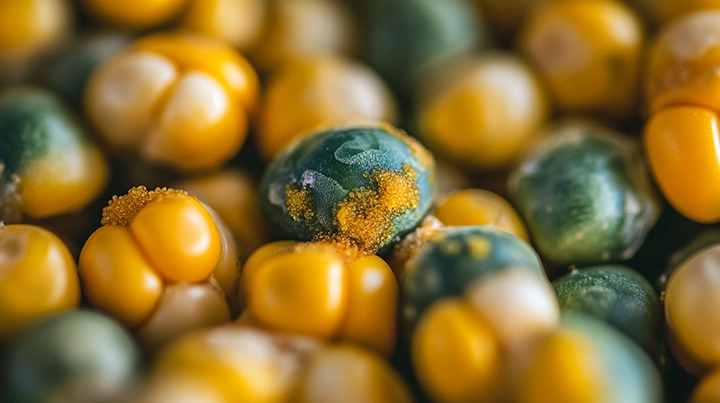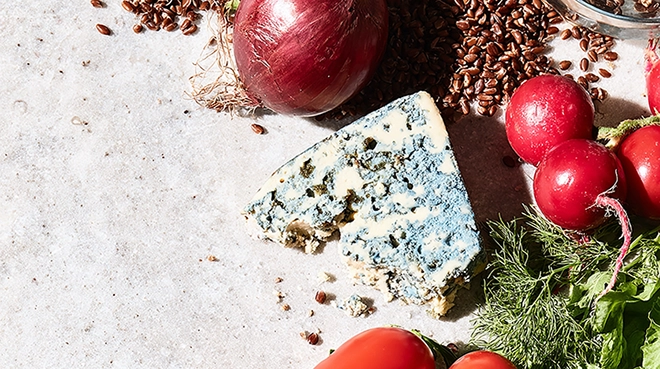
Penicillium roqueforti is responsible for the blue veins in Roquefort. It is also responsible for the fuzzy growth that appears on bread left out too long. Same genus. Entirely different outcome.
This is the central complication in food mold — and the one that most consumer-facing information fails to address. Treating mold on food as a single phenomenon, with a single risk profile and a single correct response, produces guidance that is sometimes too cautious and sometimes not cautious enough. The science supports a more differentiated view.
The Spoilage Landscape
Food spoilage molds are not a unified group. They occupy distinct ecological niches, colonize different substrates, and operate at different speeds.
Penicillium and Aspergillus are consistently identified as the dominant spoilage molds across the widest range of food types. Their prevalence reflects their adaptability — both genera include species capable of growing across a broad range of temperatures, moisture levels, and pH conditions. This adaptability is precisely what makes them such persistent problems in storage and distribution.
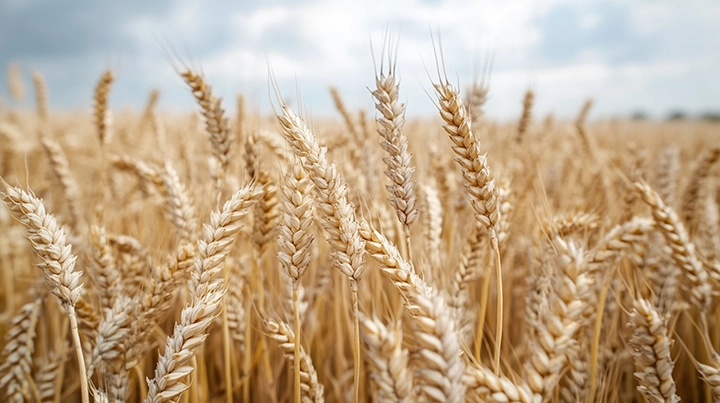
Fusarium and Alternaria operate differently. Both are field fungi, establishing themselves in crops before harvest and persisting through processing. By the time grain or produce reaches storage, contamination may already be present, invisible, and actively producing compounds. Rhizopus and Mucor are more visible in their damage — fast-growing molds that colonize bread, soft fruits, and fresh produce rapidly, producing the cottony white or grey growth that most people recognize as spoilage.
These differences matter operationally. A spoilage problem driven by Fusarium in a grain supply chain requires a different intervention than Penicillium growth in cold storage. The organism shapes the solution.

The Mycotoxin Tier
Not all spoilage is equal. The presence of visible mold growth is a problem; the presence of mycotoxins is a different category of problem — one that persists after the mold is gone, is undetectable by appearance or smell, and is not reliably eliminated by cooking.
The genera of greatest concern for mycotoxin production overlap substantially with the common spoilage molds. Aspergillus is the primary source of aflatoxins — some of the most potent naturally occurring carcinogens known — particularly in nuts, maize, and groundnuts under warm, humid storage conditions. Fusarium produces fumonisins and trichothecenes in cereals, with significant implications for both human health and livestock feed. Penicillium species are associated with patulin in fruit products and ochratoxin A in cereals and dried fruits. Alternaria toxins, including alternariol, are increasingly recognized as contaminants in grain and vegetable supply chains, though regulatory frameworks around them remain less developed than for aflatoxins.
The regulatory response to this reflects the seriousness of the risk. Maximum limits for aflatoxins, ochratoxin A, fumonisins, and deoxynivalenol are established in food law across the EU, US, and most major markets. Surveillance systems monitor levels in commodity grain, nuts, and dried fruits at scale. The challenge is that these limits are necessarily set at levels where risk is considered acceptable — not zero.
The Productive Exception
The same genera that include dangerous species also include organisms that food production depends on.
Penicillium roqueforti and Penicillium camemberti are deliberately introduced into blue and soft-ripened cheeses respectively, where they drive the enzymatic activity that produces characteristic flavor compounds. Aspergillus oryzae is foundational to soy sauce, miso, and sake production. Rhizopus oligosporus is the organism responsible for tempeh fermentation. These are not incidental presences — they are the production process.
What separates these uses from contamination is control. Selected strains, managed inoculation, defined environmental conditions, and monitored outcomes characterize food-grade fungal fermentation. The organism is the same class of life form; the context is entirely different.
This is why genus-level information, while useful, is insufficient for food safety decision-making. Aspergillus on a warehouse pallet of maize and Aspergillus oryzae in a controlled fermentation facility represent very different situations.

Substrate Determines Community
Which molds colonize a food is not random. It reflects the ecological conditions the food provides — and those conditions are specific enough that certain genera reliably dominate in certain substrates.
Bread and bakery products create warm, slightly acidic environments that favor Rhizopus and Penicillium. Fresh fruits, with their surface sugars and moderate acidity, tend to support Penicillium, Alternaria, and Aspergillus depending on storage temperature and handling conditions. Cereals and grains — particularly when stored at elevated moisture — are associated with Fusarium (from the field), Penicillium (in cold storage), and Aspergillus (in warm, humid storage). Dairy creates a more complex environment, with Penicillium and Mucor appearing most frequently in uncontrolled contamination.
These patterns have direct implications for where in the supply chain intervention is most effective. A Fusarium problem in grain cannot be resolved in the warehouse — it requires management at harvest and during drying. A Penicilliumproblem in cold storage can be addressed through temperature control and humidity management.
The Visibility Problem
A persistent issue in food mold management — at both the consumer and industrial level — is the limitation of visual inspection as a detection method.
Visible mold growth represents a late stage of colonization. The mycelial network that produced the visible surface growth has typically penetrated well into the food matrix by the time it becomes apparent. In soft, high-moisture foods, the penetration can be extensive. In dense or hard foods, it may be more limited.
More significantly, mycotoxins can be present without visible mold — produced during storage or transit under conditions that no longer support visible growth by the time the product is inspected. Color, texture, and odor provide no reliable indication of mycotoxin presence.
This is the basis for the food safety guidance that recommends discarding moldy soft foods rather than attempting to salvage them. It also supports the case for upstream contamination control rather than end-of-line inspection.

What Changing Conditions Mean for Food Systems
The distribution of food molds is not static. Temperature, humidity, and precipitation patterns influence which organisms establish themselves in crops and where they thrive in storage. As average temperatures shift and weather patterns become less predictable, the ecological conditions that favor certain molds over others are also changing.
Aspergillus species, which generally prefer warmer conditions, are increasingly reported in geographic areas that previously saw them only rarely. Fusarium behavior in cereal crops is sensitive to temperature and rainfall patterns during specific growth windows. These shifts have implications for monitoring programs, storage protocols, and the geographic distribution of risk.
At the same time, research is advancing on early detection methods — molecular tools capable of identifying fungal contamination at levels far below what visual inspection can detect, and predictive models that can estimate contamination risk based on environmental conditions during crop growth. These represent a shift from reactive to preventive management.
The long-term direction is toward integrating environmental data, supply chain monitoring, and rapid detection in ways that address contamination risk before it becomes a food safety event rather than after.
FAQ
Is all mold on food dangerous? No. Some molds are deliberately used in food production — in cheeses, fermented products, and traditional foods. Unexpected or uncontrolled mold growth should be treated with caution, particularly in soft or perishable foods.
Can mold be identified by color? No. Color is not a reliable indicator of species, risk level, or mycotoxin presence. The same genus can produce mold of different colors under different conditions, and dangerous molds cannot be distinguished from harmless ones by appearance.
Why are some molds more dangerous than others? Because certain species produce mycotoxins — chemically stable compounds that persist in food independently of the mold that produced them. Not all molds produce mycotoxins, and not all conditions favor their formation.
Why should soft moldy food be discarded rather than trimmed? Because the fungal network extends into the food beyond the visible surface growth, and because mycotoxins may be present in areas that appear unaffected. Dense, hard foods with low moisture may allow safe trimming with wide margins; soft foods do not.
What determines which mold grows on a particular food? The environmental conditions the food provides: moisture content, temperature, pH, oxygen availability, and chemical composition. These factors determine which genera are best adapted to colonize a given substrate.
References
- Journal of Food Protection — Food Mold Diversity and Environmental Conditions: https://www.sciencedirect.com/science/article/pii/S0362028X23054819?via=ihub
- International Journal of Food Microbiology — Penicillium in Food Systems: https://www.sciencedirect.com/science/article/abs/pii/S0168160503002915
- PMC / NIH — Aspergillus and Mycotoxin Contamination: https://pmc.ncbi.nlm.nih.gov/articles/PMC8363598/