Fungi Beneath Our Feet, Gas Above Our Heads
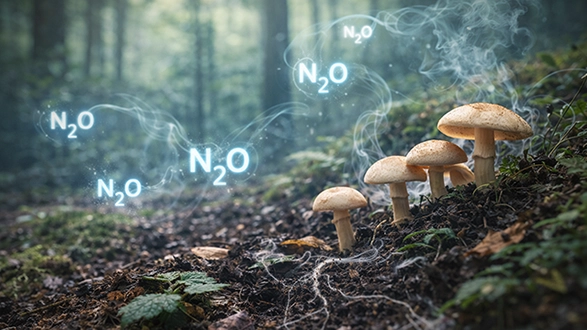
In the lush, humid soils of subtropical southern China, a silent drama unfolds beneath our feet. Here, fungal filaments—microscopic and unassuming—are helping write the script for one of the planet’s most important climate stories: the fate of nitrogen, and the production of nitrous oxide (N₂O), a greenhouse gas packing nearly 300 times the warming punch of carbon dioxide.
A 2025 study in Applied Soil Ecology has thrown fungal denitrifiers into the climate conversation, challenging the long-held assumption that bacteria alone control the emission of N₂O from soils. By running a complex experiment across forest plots, manipulating nitrogen pollution, drought, and seasonal changes, researchers set out to track exactly who (or what) is driving the soil’s gas emissions. The answer? Fungi and bacteria—each with their own tempo and resilience.


🧪 A Tale of Two Kingdoms: Fungal and Bacterial Denitrifiers
Using genetic markers (nirK and nirS genes) to distinguish between fungal and bacterial denitrifiers, the research team found clear and seasonally distinct differences. Fungal nirK gene abundance was highest in winter, indicating that fungi take center stage in the soil nitrogen process when conditions cool. In contrast, bacterial nirK abundance peaked in summer, suggesting that bacteria are more active during warmer months, while bacterial nirS gene levels remained relatively stable throughout the year. When precipitation was reduced to simulate drought, there was a much stronger suppressive effect on bacterial genes, particularly in winter, whereas fungal nirK was less affected by these drier conditions. Furthermore, increased nitrogen deposition—mimicking pollution or fertilizer use—reduced both fungal and bacterial denitrifier genes in winter, reinforcing the conclusion that fungi and bacteria respond differently to environmental pressures and are not interchangeable when it comes to managing soil nitrogen or N₂O emissions.


🧠 Fungi: The Resilient Climate Actors
Why is this important? For decades, models of the nitrogen cycle and greenhouse gas emissions have focused on bacteria. This study reveals that fungi, with their different climate sensitivities, can dominate at certain times and may be more resilient to drought. That’s especially relevant as climate change increases both temperature extremes and drought frequency in many forested regions.
For environmental policy, soil management, and even carbon credit markets, this means the fungal half of the story can no longer be ignored. Fungi may help buffer forests against drought-induced greenhouse gas emissions—an adaptive advantage that needs to be built into our models.


🌾 What Controls Fungal Denitrifiers?
One of the study’s most useful findings comes from machine learning analysis. The strongest predictor for fungal nirK gene abundance wasn’t temperature or rainfall, but available phosphorus (AP) in the soil. This means nutrient management (fertilizer strategies, phosphorus cycling) may influence fungal-driven denitrification, impacting not just plant productivity but also the atmosphere above.
For bacterial nirK, soil pH and phosphorus were most important, while bacterial nirS was mainly shaped by ammonium levels. The takeaway: microbial communities and their climate effects are tightly linked to the broader nutrient landscape. It’s not just about how much nitrogen is added, but how all the soil nutrients interact.

🔮 Implications for Forests, Policy, and the Fungal Future
This is more than an academic finding. As nitrogen pollution rises (think fertilizers and industrial emissions) and precipitation patterns shift, the balance of fungal and bacterial denitrification will change. That could mean altered N₂O emissions from forests—impacting climate models, emission inventories, and land management decisions from local parks to global agreements.
It also connects to mycorrhizal fungi, known as nutrient partners for trees. Their potential to act as denitrifiers means the “quiet” fungal networks belowground are intricately tied to both plant health and climate regulation aboveground.
For decades, the narrative was simple: bacteria in the dirt, greenhouse gases up, plants in between. This article shows the story is richer and more complex—fungi are key players, not just bystanders. They don’t just rot logs or spoil food; they can quietly shift the chemistry of the atmosphere itself. As the climate changes, fungi may help forests adapt—or amplify their emissions, depending on how we manage the land.
If you care about forests, food, climate, or the future, it’s time to mind the mold beneath your feet.
References
Academic Sources
- Li, X., et al. (2025). Fungal and bacterial denitrifiers differentially regulate nitrous oxide emissions under nitrogen addition and drought. Applied Soil Ecology.
- Kuypers, M. M. M., et al. (2018). The microbial nitrogen-cycling network. Nature Reviews Microbiology. DOI: 10.1038/s41579-018-0043-6
- Philippot, L., et al. (2013). Denitrifying prokaryotes in soil ecosystems. Nature Reviews Microbiology. DOI: 10.1038/nrmicro2919
Official & Institutional Sources
- Intergovernmental Panel on Climate Change (IPCC) – Greenhouse gas assessments: https://www.ipcc.ch
- Food and Agriculture Organization (FAO) – Soil biodiversity: https://www.fao.org
- U.S. Environmental Protection Agency (EPA) – Nitrous oxide overview: https://www.epa.gov