Beneath Every Ecosystem, a System of Control
Ecosystems often appear self-sustaining.
Forests regenerate after disturbance. Soils renew themselves season after season. Nutrients circulate in patterns that seem stable, even predictable. From a distance, it is easy to assume that these systems operate on their own, guided by simple cycles that repeat endlessly.
But beneath this apparent balance lies a system that is anything but passive.
A study highlighted reveals that fungi are not merely participants in ecological processes. They are regulators, shaping how ecosystems function at their most fundamental level. They influence when organic matter breaks down, how nutrients are released, and how energy moves through living systems.
What appears to be nature’s steady rhythm is, in reality, the result of countless microscopic decisions—many of them made by fungi operating below the threshold of visibility.

Beyond Decomposition: The Control of Timing
For decades, fungi have been described as decomposers, organisms that break down dead material and recycle nutrients back into the soil.
This description is correct, but incomplete.
The research reveals that fungi do not simply decompose organic matter. They regulate the timing of decomposition, and timing is what determines whether ecosystems function efficiently or lose stability.
Some fungal species accelerate breakdown, rapidly converting complex organic material into forms that plants can absorb. Others slow the process, stabilizing compounds and delaying their release. These contrasting strategies create a balance between immediacy and conservation.
In ecological systems, timing governs everything. Nutrients released too quickly may be lost through leaching or atmospheric escape. Released too slowly, they can limit plant growth and disrupt biological cycles.
Fungi operate within this narrow window, aligning decomposition with ecological demand. What emerges is not a simple recycling system, but a controlled flow of resources moving at biologically appropriate speeds.


Nutrient Flow as a Coordinated Network
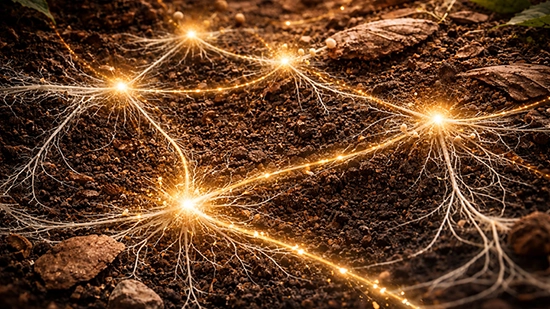
The movement of nutrients through soil is often described as a cycle, but in practice, it behaves more like a network.
Fungi are central to this network.
Through their filamentous mycelium structures, they connect different regions of the soil, forming pathways through which nutrients can be transported and redistributed. These networks link plants, microbes, and organic matter into an integrated system of exchange.
Rather than nutrients moving randomly, they are guided—redirected toward areas of demand, withheld in times of scarcity, and released when conditions align.
This transforms fungi into coordinators of ecological flow. They influence which plants gain access to nutrients, how competition unfolds, and how ecosystems organize themselves over time.
What grows above ground is not simply a reflection of available resources.
It is shaped by how those resources are managed below.

Carbon and Climate: A Fungal Lever
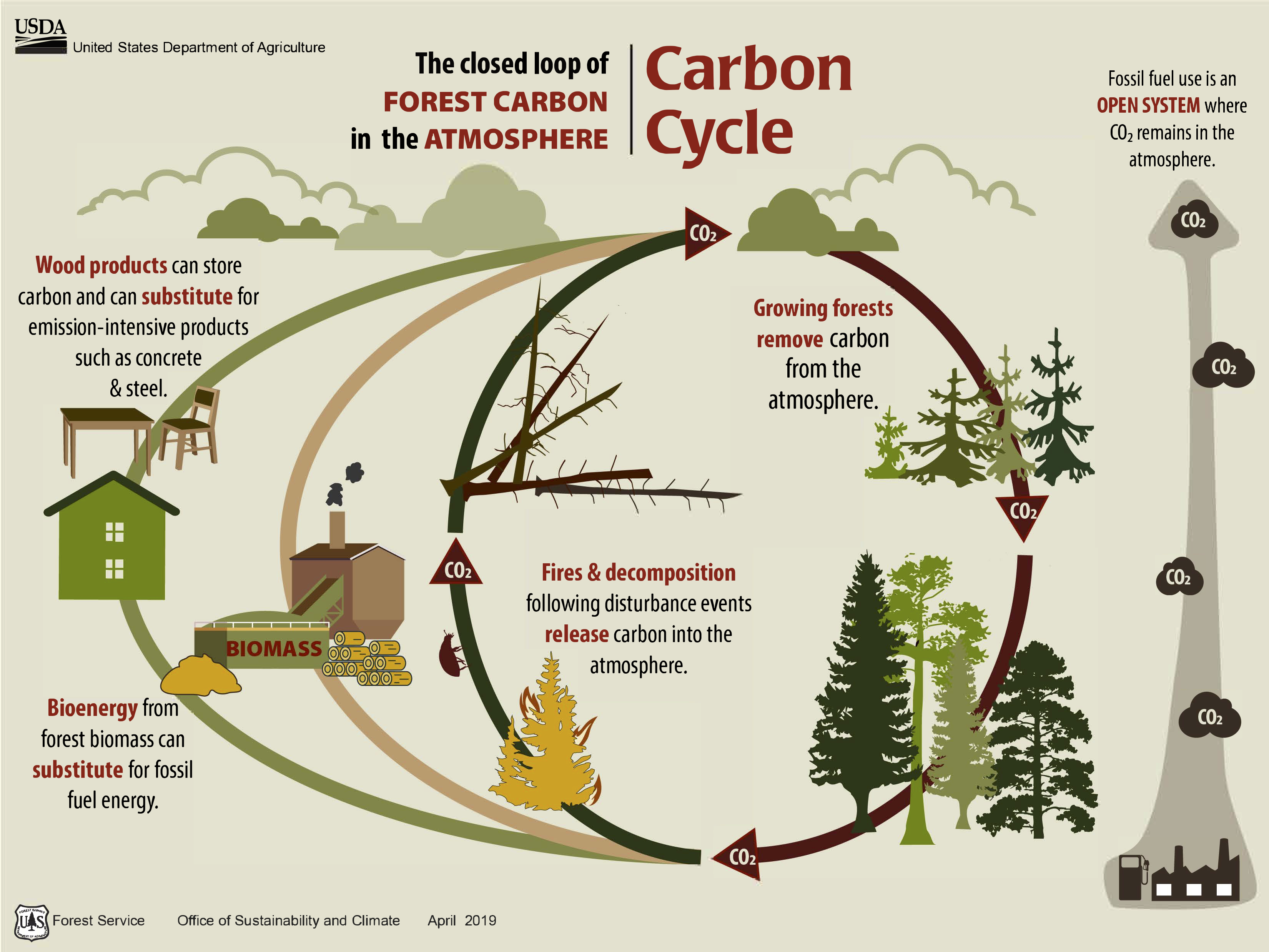
The regulation of decomposition extends beyond nutrients into one of the most critical systems on Earth: the carbon cycle.
As fungi break down organic material, carbon is either released into the atmosphere or retained within soil structures. The pace and pattern of this process determine how long carbon remains stored.
Faster decomposition leads to rapid carbon release. Slower processes allow carbon to persist in the soil, contributing to long-term storage and ecosystem stability.
This places fungi at a pivotal point in climate dynamics. Their activity influences whether ecosystems function as carbon sinks or carbon sources, shaping feedback loops that extend far beyond local environments.
In this sense, fungal regulation is not confined to the soil. It is connected to atmospheric systems, global temperature patterns, and long-term environmental change.

Interactions That Shape Ecosystems
Ecosystems are defined by interactions, and fungi influence these interactions in ways that are both subtle and far-reaching.
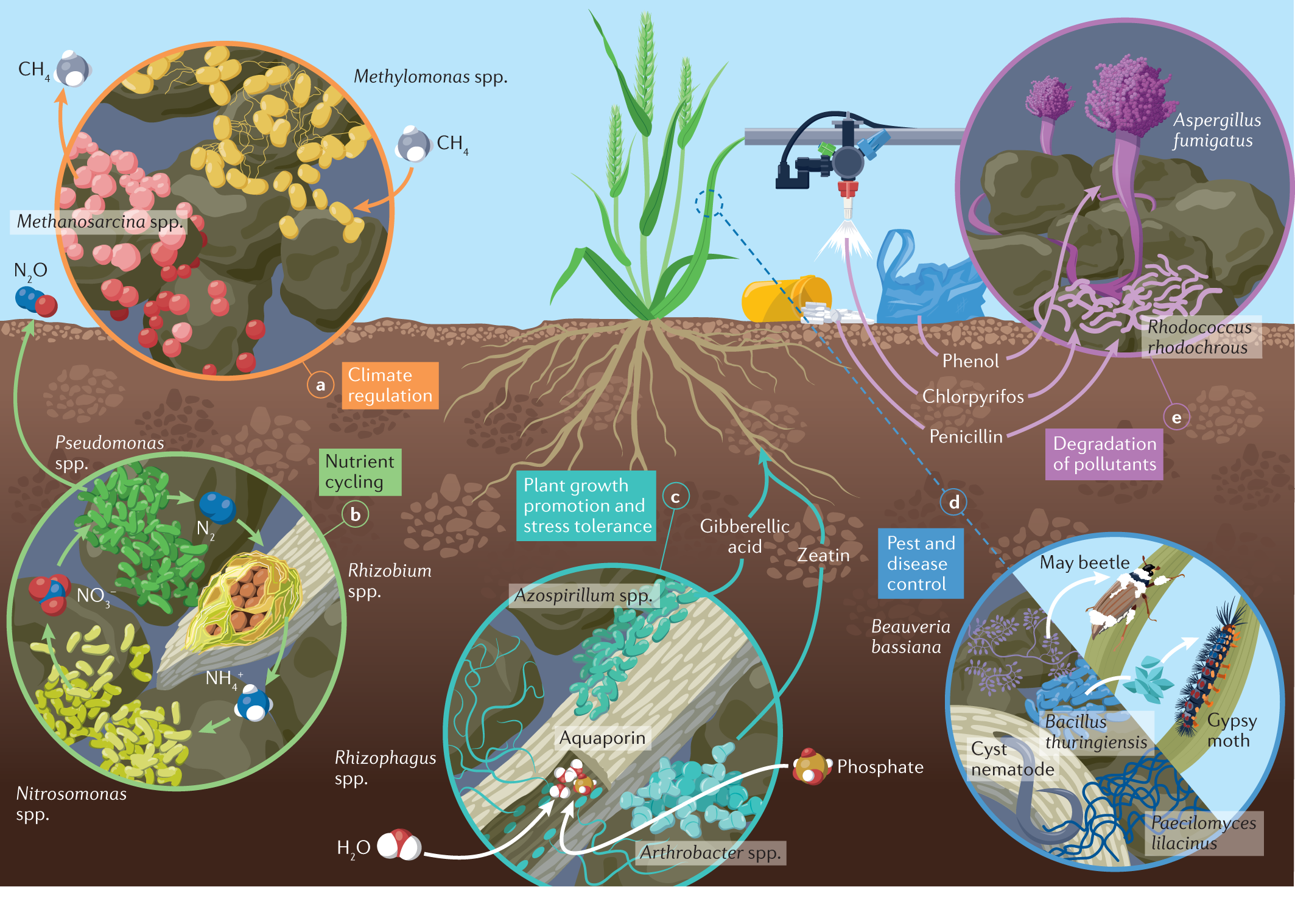
By controlling nutrient availability, they shape plant growth and competition. By interacting with bacterial communities, they influence microbial diversity and function. By altering soil structure, they affect water retention and environmental stability.
These effects do not occur in isolation. They propagate through the system, creating cascading outcomes that shape entire landscapes.
A shift in fungal activity can alter plant communities, which in turn affect herbivores, predators, and broader ecological dynamics. The influence of fungi extends outward, connecting microscopic processes to macroscopic patterns.
A Shift in Ecological Understanding
This research reflects a broader change in how ecosystems are understood.
For much of scientific history, attention focused on visible components—plants, animals, and large-scale environmental factors. Microorganisms were acknowledged but often treated as secondary players.
That perspective is changing.
Fungi are now recognized as drivers of system behavior, operating across scales and linking biological processes into cohesive networks. Their influence spans from cellular interactions to global cycles, integrating soil biology with climate dynamics.
Understanding ecosystems now requires understanding fungi—not as background organisms, but as central regulators of ecological function.
Implications for a Changing World
As environmental conditions become more unstable, the importance of fungal regulation becomes increasingly apparent.
Ecosystems facing climate variability, land degradation, or biodiversity loss rely on stable internal processes to maintain function. Fungal communities help preserve these processes, ensuring that nutrient cycling, carbon storage, and biological interactions continue despite external pressures.
Disrupting fungal networks can weaken these systems. Supporting them can enhance resilience.
This insight carries implications for agriculture, conservation, and climate strategy. It suggests that managing ecosystems effectively requires attention not only to visible organisms, but also to the underlying biological systems that sustain them.

Rethinking Control in Nature
Control in ecosystems is often associated with large-scale forces—climate patterns, geographic features, or dominant species.
Yet this research reveals that control can emerge from much smaller interactions.
Fungi regulate processes without centralized coordination. Their influence arises from countless localized exchanges, each contributing to a larger pattern of organization. This distributed form of control allows ecosystems to remain flexible, adapting continuously without relying on a single point of stability.
What appears as balance is not static. It is maintained through constant adjustment, guided by organisms that operate quietly beneath the surface.
❓ FAQ
What role do fungi play in ecosystems?
Fungi regulate decomposition, nutrient flow, and carbon storage, making them central to ecosystem function.
Do fungi only decompose organic matter?
No. They control the timing and distribution of decomposition, influencing how ecosystems operate.
How do fungi affect climate?
They influence whether carbon is stored in soil or released into the atmosphere.
Why are fungal networks important?
They connect plants and soil systems, directing nutrient movement and stabilizing ecosystems.
What happens if fungal systems are disrupted?
Ecosystems can lose stability, with weaker nutrient cycles and reduced resilience to environmental stress.
References
Academic Sources
van der Heijden, M. G. A., et al. (2008). The unseen majority: soil microbes as drivers of plant diversity and productivity. Ecology Letters. https://doi.org/10.1111/j.1461-0248.2007.01139.x
Allison, S. D., et al. (2010). Soil-carbon response to warming dependent on microbial physiology. Nature Geoscience. https://doi.org/10.1038/ngeo846
Crowther, T. W., et al. (2016). Quantifying global soil carbon losses in response to warming. Nature. https://doi.org/10.1038/nature20150
Official Sources
Food and Agriculture Organization (FAO) – Soil biodiversity: https://www.fao.org
United Nations Environment Programme (UNEP) – Ecosystem processes: https://www.unep.org