When most people think of mold, they picture spoiled bread or black patches on a damp wall. These images make fungi synonymous with dirt and decay. But the fungal world is far more complex, strange, and even theatrical. Inside the bodies of insects, there exists a group of fungi that hunt, infect, and sometimes even manipulate their hosts. They are called entomopathogenic fungi (EPF), and they are among nature’s most dramatic “scriptwriters.”
Who Are These Fungal Hunters?
Entomopathogenic fungi (EPF) are not a single species but a broad group scattered across multiple fungal lineages. They live in soil, leaf litter, forests, and even urban green spaces, silently waiting for their next insect victim. Famous members include Beauveria bassiana, Metarhizium anisopliae, and the notorious Ophiocordyceps unilateralis, which turns ants into “zombies.”
These fungi are not obscure curiosities. They play essential roles as regulators of insect populations, indirectly shaping plant health, agricultural productivity, and even aspects of human life.

The Infection Script: A Precise Assassination
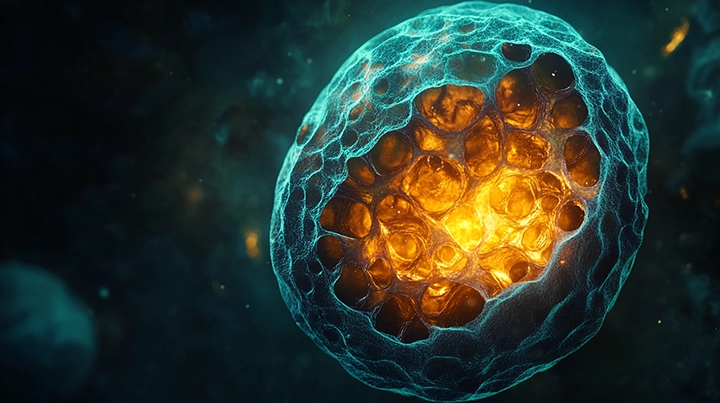
The drama begins with a single spore. When a spore lands on an insect’s exoskeleton, it clings tightly like an invisible time bomb. Soon it releases enzymes that dissolve the tough outer shell, carving a microscopic doorway into the host. Once inside the hemocoel, the fungus takes over. Hyphae spread quickly, draining nutrients and releasing toxins that cripple the insect’s immune system. The host weakens, falters, and eventually dies.
Death is not the end. The fungus bursts outward, sprouting hyphae or fruiting bodies from the carcass. Fresh spores are released into the environment, ready to seek new hosts. This cold, efficient cycle shows fungal design at its most astonishing.

The Real-Life Theater of Zombie Ants
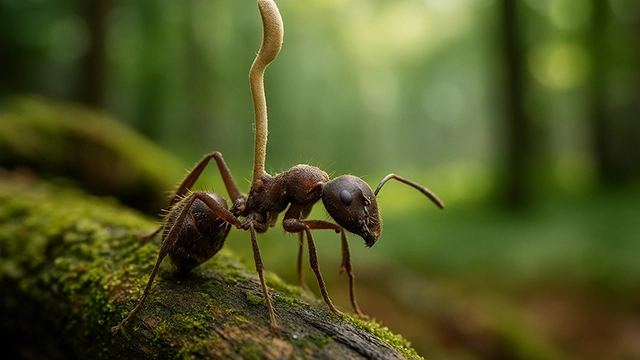
The most spectacular case is the “zombie ant.” When Ophiocordyceps infects an ant, the host loses control of its behavior. Instead of following colony trails, the ant wanders off into humid forest niches. At the right moment, it climbs a leaf or branch, bites down firmly, and dies locked in place. Days later, a slender stalk erupts from its head, raining spores onto the forest floor below.
This is not a horror movie—it is everyday reality in tropical ecosystems. For the fungus, manipulating host behavior is an ingenious strategy to maximize spore dispersal. For us, it is a striking reminder of how biology often surpasses imagination.

Biological Pest Control
Entomopathogenic fungi are not just nature’s oddities—they are allies in agriculture. Insects like locusts, aphids, and whiteflies cause devastating losses to crops. Chemical pesticides have long been the standard defense, but they bring serious downsides: toxic residues, environmental pollution, and pesticide resistance.
Fungi offer an alternative. Species like Beauveria bassiana and Metarhizium anisopliae have already been developed into commercial biopesticides. They specifically target pests, are safe for humans and animals, and are environmentally friendly. This means fewer chemicals sprayed in the fields, reduced health risks for farmers, and safer food for consumers. In a quiet but profound way, these fungi are protecting the food on our tables.
A New Frontier in Disease Control
Beyond farms, fungi may soon help in public health. Mosquitoes are vectors of diseases like dengue, malaria, and yellow fever. Conventional mosquito control relies heavily on insecticides, but these chemicals breed resistance and pose risks to people.
Research has shown that certain EPF can infect and kill mosquitoes, lowering their survival and reproduction rates (Nature Microbiology, 2019). Imagine releasing these fungi in targeted environments: mosquito populations would drop, and disease transmission could decline. While still in experimental stages, this strategy offers a natural, chemical-free addition to global health efforts. Entomopathogenic fungi may one day become tools against some of humanity’s most persistent diseases.
Ecological Significance: Mold as Nature’s Balancer
Without these fungi, ecosystems would look very different. Insect populations could explode, stripping forests bare and devastating farms. Pollination, soil health, and plant diversity would all be at risk. EPF act as invisible regulators, keeping insects in check and maintaining ecological balance. In turn, they indirectly safeguard the environments and resources humans depend on.
Rethinking Mold
From spoiled bread to zombie ants, fungi reveal astonishing diversity. They are decomposers, hunters, pest controllers, and potential public health allies. Entomopathogenic fungi, in particular, remind us that mold is not merely a symbol of decay but a dynamic force shaping life on Earth.
Next time you notice mold, pause for a moment. Somewhere out there, fungi may be silently orchestrating battles inside insect bodies—battles that ripple outward to affect our crops, our health, and our shared environment.
References
Academic / Official Sources
- Frontiers in Microbiology – Entomopathogenic fungi as biocontrol agents
- Nature Microbiology – Fungal control of mosquitoes