Spring Is Here—And So Is the Hidden Water Crisis
Spring showers bring fresh flowers—but they also bring a hidden threat to homes everywhere. The real water disaster isn’t loud, fast, or obvious.
It’s slow, creeping, and invisible—silently rotting buildings, homes, and entire cities from the inside out. By the time you see the signs, it’s already too late.
As temperatures rise, so does the risk of mold and water damage. But governments aren’t regulating it properly, and homeowners aren’t prepared for it.
And the cost of ignoring it? Billions in preventable damage—and an entire generation of homes that may not even be safe to live in.
This isn’t just a matter of checking for leaks and running dehumidifiers. There are external factors at play—government policies, outdated building codes, and neglected public infrastructure—that put all of us at risk.
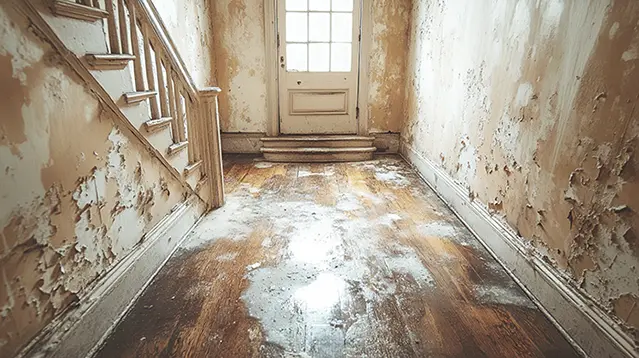
Spring dampness isn’t just an inconvenience—it’s a growing disaster that no one is talking about.

Source: Wikimedia Commons, CC BY-SA 4.0
Invisible Water Damage Is a Slow-Motion Disaster
The real enemy is the moisture that sneaks in with spring humidity, settling in places you don’t even think to check.
- A cracked pipe might drip, unnoticed, for years.
- A roof could let in just enough moisture to rot the wood.
- Humidity trapped in walls can turn insulation into a mold breeding ground.
By the time you notice the first stain, the musty smell, or the warped wood, the damage has already been done. Nearly 98% of basements in North America will experience water damage at some point. The U.S. alone spends over $13 billion annually on water damage repairs.
Worse, mold can start growing within 24–48 hours of moisture exposure, making early detection critical. This isn’t just a homeowner problem—it’s a global infrastructure crisis.

Source: Wikimedia Commons, CC BY-SA 3.0
Your Home Is Already at Risk
Water damage isn’t just structural—it’s biological. When moisture seeps into a building, it doesn’t just weaken walls and floors—it feeds mold.
Mold spores are already in your home, lingering in the air, on walls, and in your HVAC system. They don’t become a problem until water gives them a reason to grow, and when they do, they spread rapidly.
Once mold takes hold in wood, drywall, or insulation, it’s nearly impossible to remove completely. It affects air quality, spreading through ventilation and turning your home into an invisible health hazard.
Chronic exposure to mold can lead to asthma, brain fog, fatigue, and long-term respiratory disease.
The worst part? Springtime humidity makes this process happen even faster. Most people don’t even realize their home is making them sick—until it’s too late.

Source: Wikimedia Commons, CC BY-SA 3.0
The Bigger Disaster: Entire Cities Are Decaying From the Inside
This isn’t just about homeowners. Cities are facing the same slow-moving catastrophe, with old infrastructure crumbling from within.
- Roads, bridges, and tunnels not designed for modern humidity are deteriorating faster than we can repair them.
- Schools, hospitals, and office buildings—places where people spend most of their time—are quietly filling with hidden mold problems.
Governments only react when disaster strikes. They ignore leaks until they become floods. They ignore humidity until it becomes rot. They ignore structural decay until buildings collapse.
By the time they acknowledge the problem, it’s already too late.
This is not just individual responsibility—it’s a larger policy failure. Without updated building codes, better drainage systems, and stricter inspections, water damage will continue to erode our homes and public spaces.
What You Can Do Before It’s Too Late
Every water damage crisis follows the same pattern:
- The problem is ignored.
- Small signs appear, but action is delayed.
- By the time action is taken, the cost has tripled.
Ignoring hidden water damage today will lead to billions in preventable repairs tomorrow. Neglecting building maintenance now will result in uninhabitable homes in the future. Allowing this to continue unchecked will create a massive public health crisis, fueled by mold, air pollution, and structural failures.
We don’t need more awareness—we need action.
- Check your home for leaks, condensation, or signs of water damage before they become expensive problems.
- Use a dehumidifier in moisture-prone areas, especially during humid seasons like spring.
- Advocate for updated building codes and stricter regulations to prevent future water damage crises.
- Support policies that invest in public infrastructure repair—if cities don’t act now, the damage will only get worse.
This isn’t just about protecting our homes—it’s about protecting our communities, health, and future.

Source: Wikimedia Commons, CC BY-SA 3.0
References
- Mold – Wikipedia
- Water Damage – Wikipedia
- EPA – Mold Resources
- Building Code – Wikipedia
- Infrastructure – Wikipedia
- NCBI – Respiratory Disease and Mold
- Wikimedia Commons images:
- Flood damaged home (CC BY-SA 4.0)
- Leaking pipe (CC BY-SA 3.0)
- Mold on wall (CC BY-SA 3.0)
- Dehumidifier (CC BY-SA 3.0)