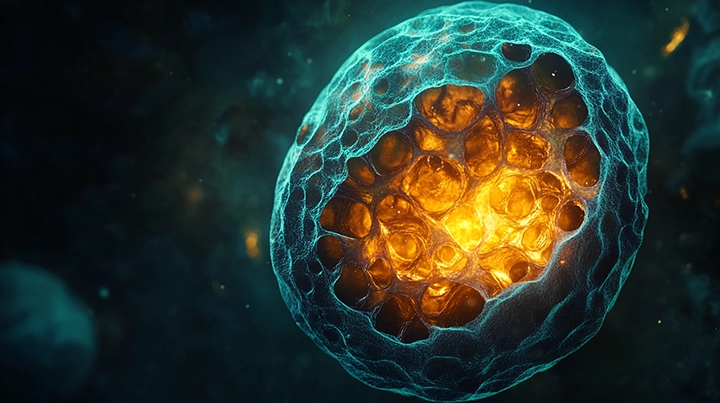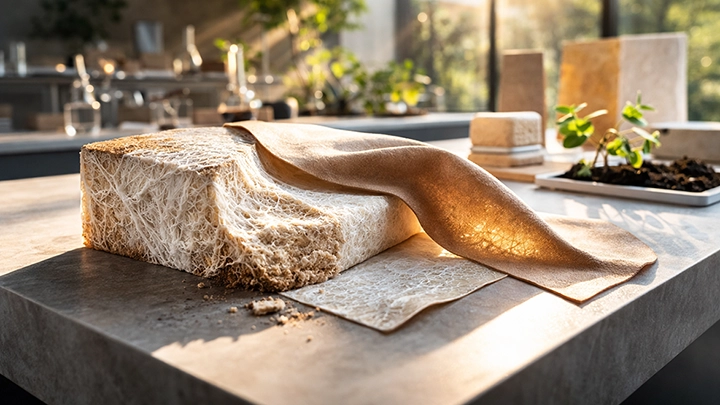
There is a moment in the life of a forest log, right before it softens back into earth, when nature reveals its most understated architect. A pale mesh of hyphae threads through the wood, reorganizing fibers and creating microscopic corridors as it digests what once stood tall. This unseen organism — the mycelium network — is the true body of fungi. Not the mushroom’s brief appearance, not the mold patch we rush to clean, but the sprawling, metabolically active structure that fuels decomposition, nutrient cycling, and ecological renewal.

Now that hidden architect is stepping from soil into studios and laboratories. A recent report from Noticias Ambientales highlights how mycelium is transitioning from natural engineer to industrial collaborator. Designers, material scientists, and architects are turning to fungal networks to create biomaterials capable of replacing plastics, leather, foams, textiles, and even structural composites. It is sustainability expressed through growth rather than fabrication, where material emerges from metabolism instead of petrochemistry. Mold becomes medium; fungus becomes co-designer.

The Real Body of Fungi
Although mycelium is often described as the “root system” of fungi, the metaphor collapses under scrutiny. The hyphal network is not supportive tissue; it is the organism itself, pulsing with enzymatic activity. Mushrooms are merely temporary reproductive structures, an afterthought in comparison.

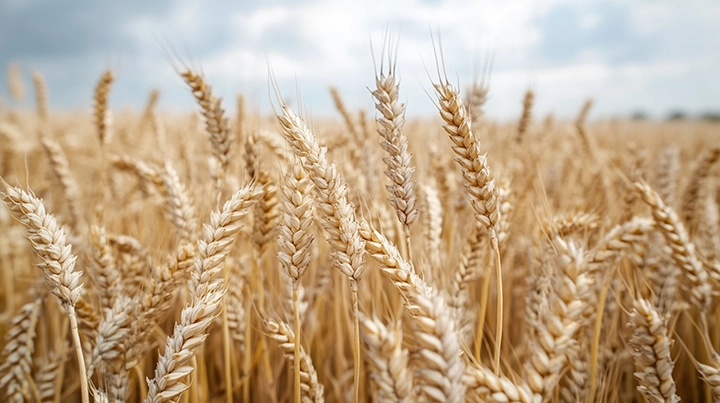
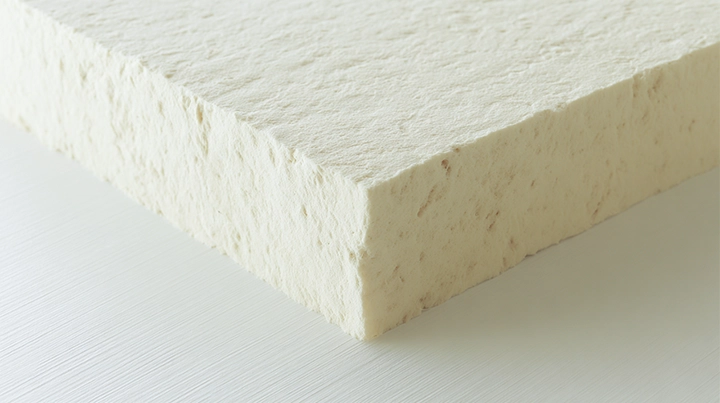
When cultivated in controlled environments, mycelium becomes a material with remarkable engineering potential. Fed with agricultural byproducts — sawdust, straw, corn residues — the network binds loose particles together as it grows, forming dense, cohesive composites. Once the desired shape is reached, the material is dried or heat-treated to preserve its internal structure. The result is a biodegradable composite that can mimic foam, leather, cork, or even lightweight wood alternatives. It can emerge soft or rigid, smooth or textured, cast or sculpted. It is matter with memory, a material that carries the imprint of how it grew.

From Packaging to Architecture
Across industries, mycelium has moved past novelty and into practical deployment. Packaging manufacturers now replace Styrofoam inserts with fungal composites that cushion electronics, protect glassware, and insulate refrigerated goods — all without leaving plastic waste behind. Home designers incorporate mycelium into lampshades, acoustic tiles, and wall panels, producing interiors that seem to glow with quiet organic texture.

Construction innovators are exploring mycelium bricks, insulation panels, and biocomposite boards. These materials start as living systems and end as carbon-sequestering structures once cured. Architecture firms are experimenting with “grown structures,” cultivating mycelium within molds to form load-bearing elements that are later dried into permanence. If concrete defined the built landscape of the previous century, fungal composites may shape the next — lighter, cleaner, and aligned with ecological logic.
Textile innovators have also embraced fungal biology. Mycelium-derived “leathers” now rival animal hides in softness and grain detail, produced with a fraction of the water and without the environmental toll of livestock farming. Out of a fungal network comes a jacket, a shoe, or a handbag — each one a quiet revision of how textiles can be made.

And in the realm of food, mycelium’s versatility reappears. Species such as Fusarium venenatum, grown for high-protein meat substitutes, remind us that the same metabolism that decomposes wood can also synthesize complete protein with impressive efficiency.
A Circular Economy Written in Hyphae
Mycelium’s greatest strength is not its variety of forms but its underlying philosophy. It thrives on agricultural waste, converting discarded plant matter into functional materials. When those materials reach the end of their life, they return harmlessly to soil. No petroleum binders. No toxic curing agents. Minimal energy requirements. The lifecycle mirrors the natural arc of decomposition: gather, grow, bind, return.
This positions fungi as ideal partners for a circular economy. Agricultural leftovers become packaging or insulation; textile waste becomes feedstock for new composites. In a world weighed down by plastic pollution and the carbon intensity of construction, mycelium offers a biological workaround — or perhaps a biological blueprint for an entirely different materials economy.
Yet enthusiasm must coexist with engineering reality. Scaling fungal biomaterials requires precise control of humidity, contamination, strain selection, and post-growth stabilization. Poorly cured composites can absorb moisture or lose durability. Some mycelial structures require reinforcement to meet industrial standards. The design universe is vast, but material science is still refining its rules.
Even so, a pattern is emerging: industries are beginning to design with growth rather than extraction.
When Decay Becomes Design
The molds that infiltrate buildings or the toxins that challenge global agriculture — this story turns the usual narrative inside out. Here, mycelium is not an intruder but an ally. The same strategies that make fungi relentless decomposers now become tools for human innovation.
This shift invites a cascade of design questions. What happens when architecture is cultivated instead of cast? When textiles are grown instead of woven? When cities integrate fungal materials not as curiosities but as core infrastructure?
Mycelium suggests that sustainability may rely less on novel synthetics and more on rediscovering the deep biological intelligence already threaded through natural ecosystems. Sometimes, the breakthrough is not invention but recognition — seeing the possibilities that nature has rehearsed for millions of years.
References
Academic Sources
Jones, M., et al. (2020). Engineered mycelium composite construction materials. Scientific Reports.
Appels, F. V. W., et al. (2019). Fabrication factors influencing mechanical properties of mycelium-based composites. Materials & Design.
DOI: https://doi.org/10.1016/j.matdes.2019.107964
Finnigan, T. J. A., et al. (2017). Mycoprotein: The future of nutritious non-meat protein. Current Opinion in Food Science.
DOI: https://doi.org/10.1016/j.cofs.2017.02.007
Official Sources
Food and Agriculture Organization (FAO). Sustainable biomaterials overview.
https://www.fao.org
United Nations Environment Programme (UNEP). Circular economy and biomaterials.
https://www.unep.org
Know before it shows.