When a Sealed World Is Opened
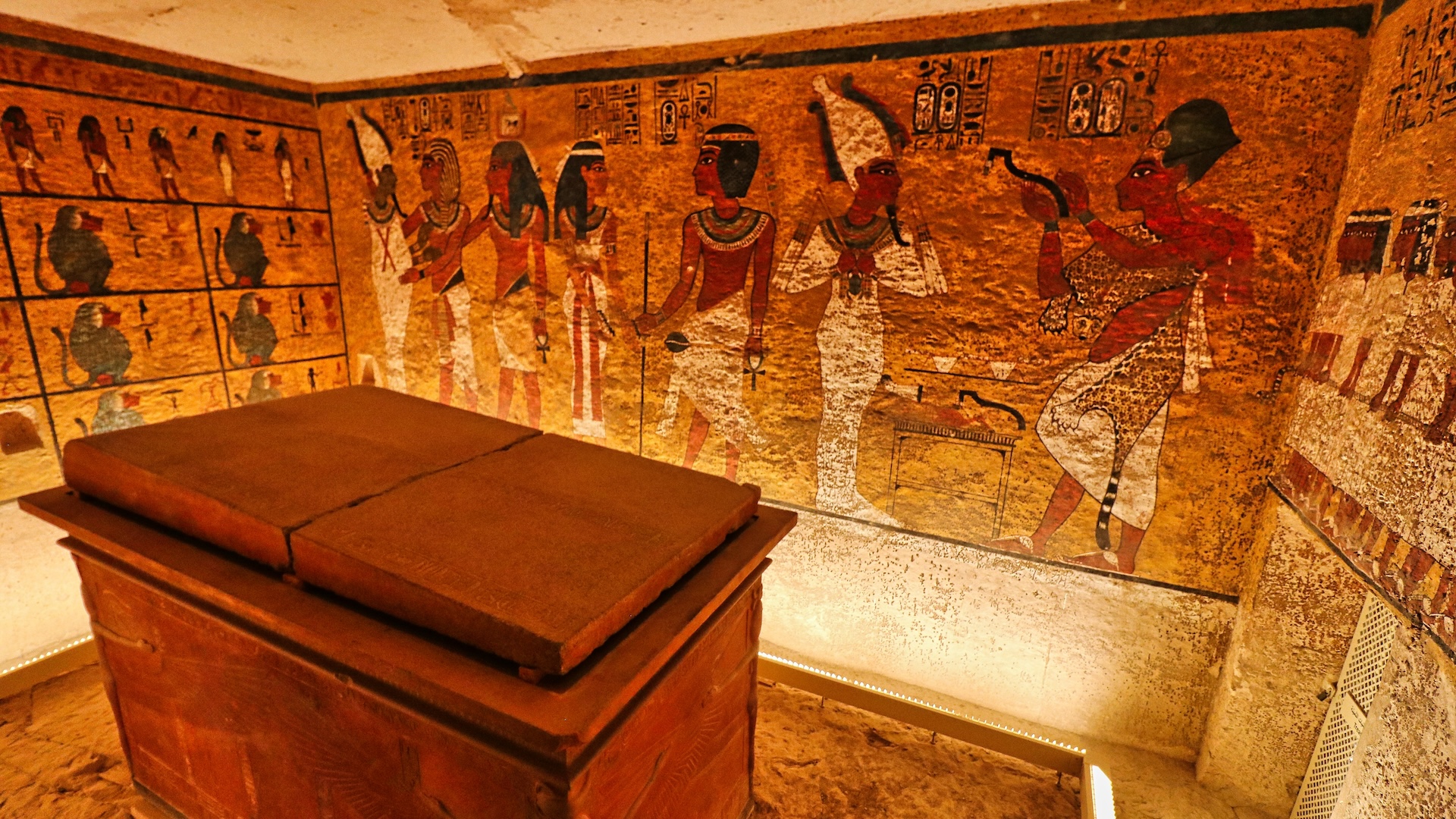
The discovery of Tutankhamun’s tomb in 1922 remains one of the most celebrated moments in archaeological history. Hidden chambers, preserved artifacts, and a nearly untouched burial site offered a rare window into ancient Egypt. Yet alongside the excitement came an enduring narrative: a supposed “curse” linked to illness and death among those who entered the tomb.
For decades, this idea lived somewhere between superstition and coincidence. Today, however, advances in microbiology and environmental science offer a more grounded interpretation. The tomb was not simply a historical space. It was a sealed environment — and sealed environments preserve more than artifacts.
They preserve biological systems.
Tombs as Microbial Reservoirs
Ancient tombs are stable, enclosed ecosystems. Within them exist organic materials such as wood, textiles, oils, and human remains, all of which can support microbial survival over long periods.
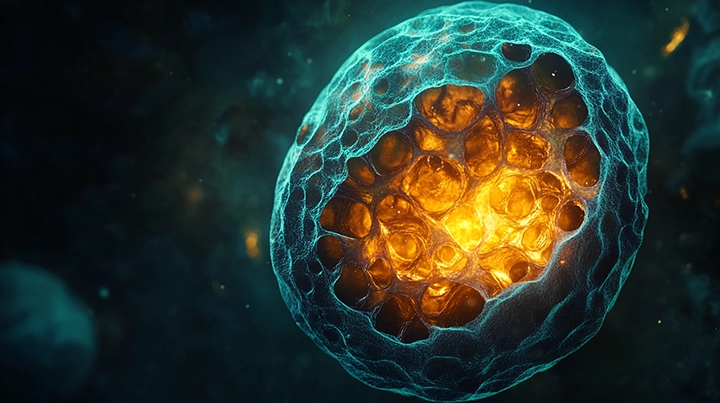
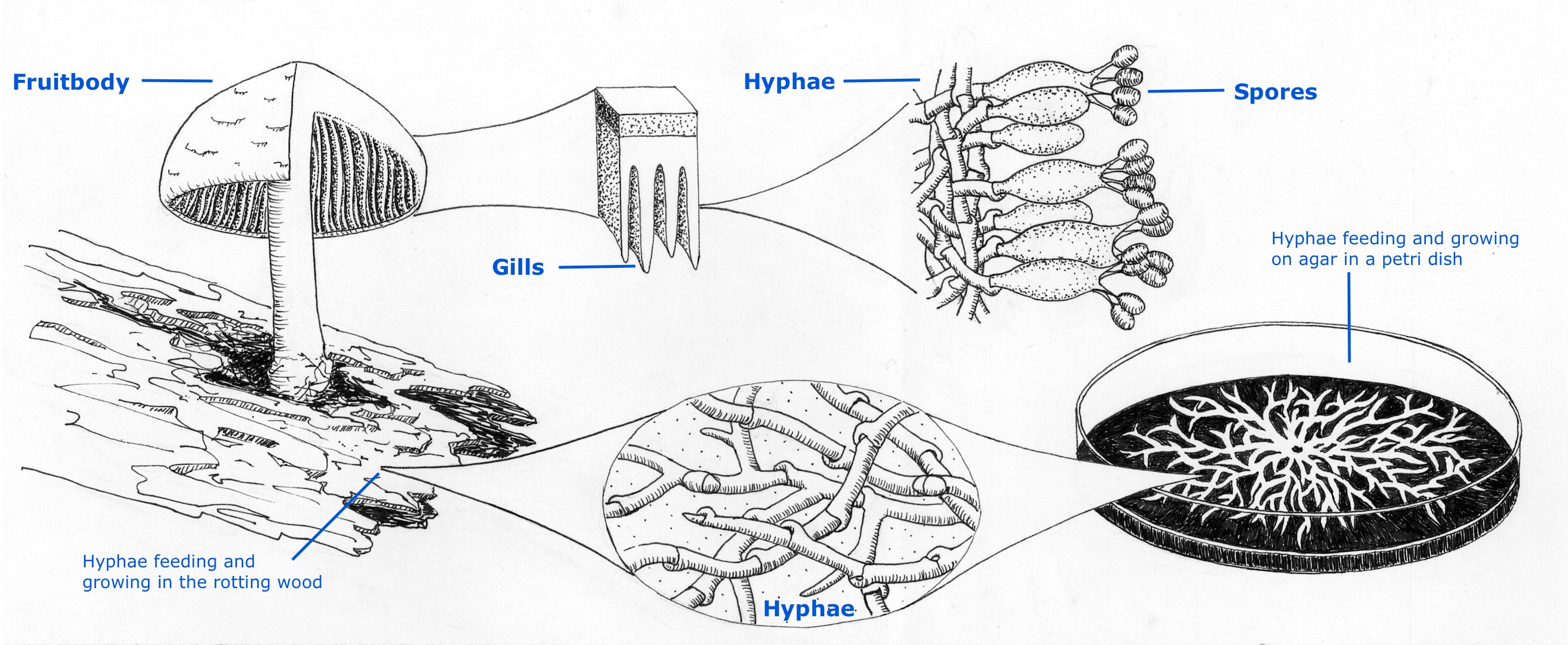
Fungi are particularly well adapted to these conditions. Their spores can remain dormant for decades or even centuries, surviving in darkness, dryness, and nutrient-limited environments. In a sealed tomb, these spores do not need to grow actively. Instead, they accumulate gradually in dust and air, forming a concentrated but inactive microbial reservoir.
This balance can persist undisturbed for thousands of years. The system remains stable as long as it remains closed.

The Moment of Disturbance
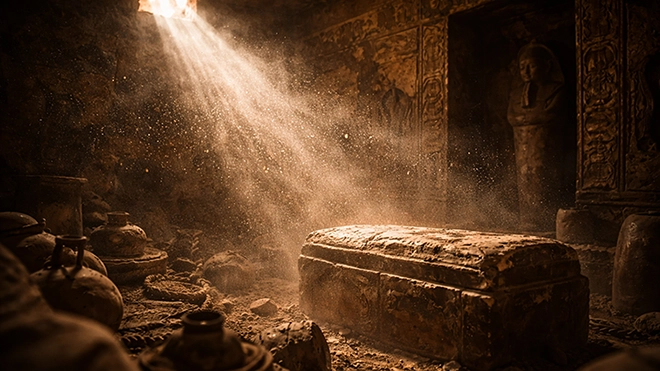
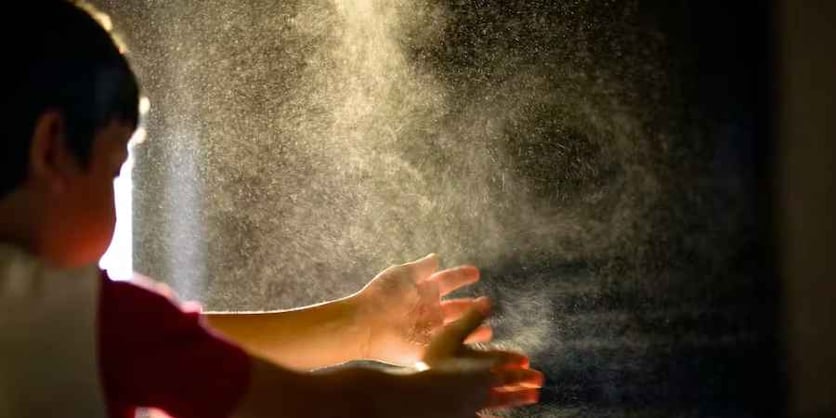
The primary risk arises not from the existence of fungi, but from the moment the environment is disturbed. When a sealed chamber is opened, airflow changes abruptly. Dust is displaced, surfaces are disrupted, and dormant spores become airborne.
This creates what can be understood as a concentrated exposure event. Individuals entering the space may inhale a dense mixture of particles that had previously remained contained.
Fungi such as Aspergillus fumigatus, commonly found in soil and dust, are often harmless at low concentrations. However, in enclosed environments where spores have accumulated over long periods, the exposure dose can be significantly higher. Inhalation of large quantities of spores can irritate the respiratory system or, in vulnerable individuals, lead to infections such as aspergillosis.
The risk, therefore, is not unusual biology, but unusual concentration.

From Myth to Mechanism
The idea of a curse reflects a human tendency to interpret unexplained outcomes through narrative. In the case of Tutankhamun’s tomb, many of the reported deaths can be attributed to natural causes, age, or coincidence. There is no definitive evidence linking a specific pathogen to those events.
However, the broader concept of microbial exposure is well established. Fungal spores are known to trigger respiratory responses, produce irritants, and in some cases cause infection.
What was once framed as supernatural consequence can now be understood as an early encounter with environmental health risk — one that was not yet recognized or measured at the time.
A Universal Environmental Pattern
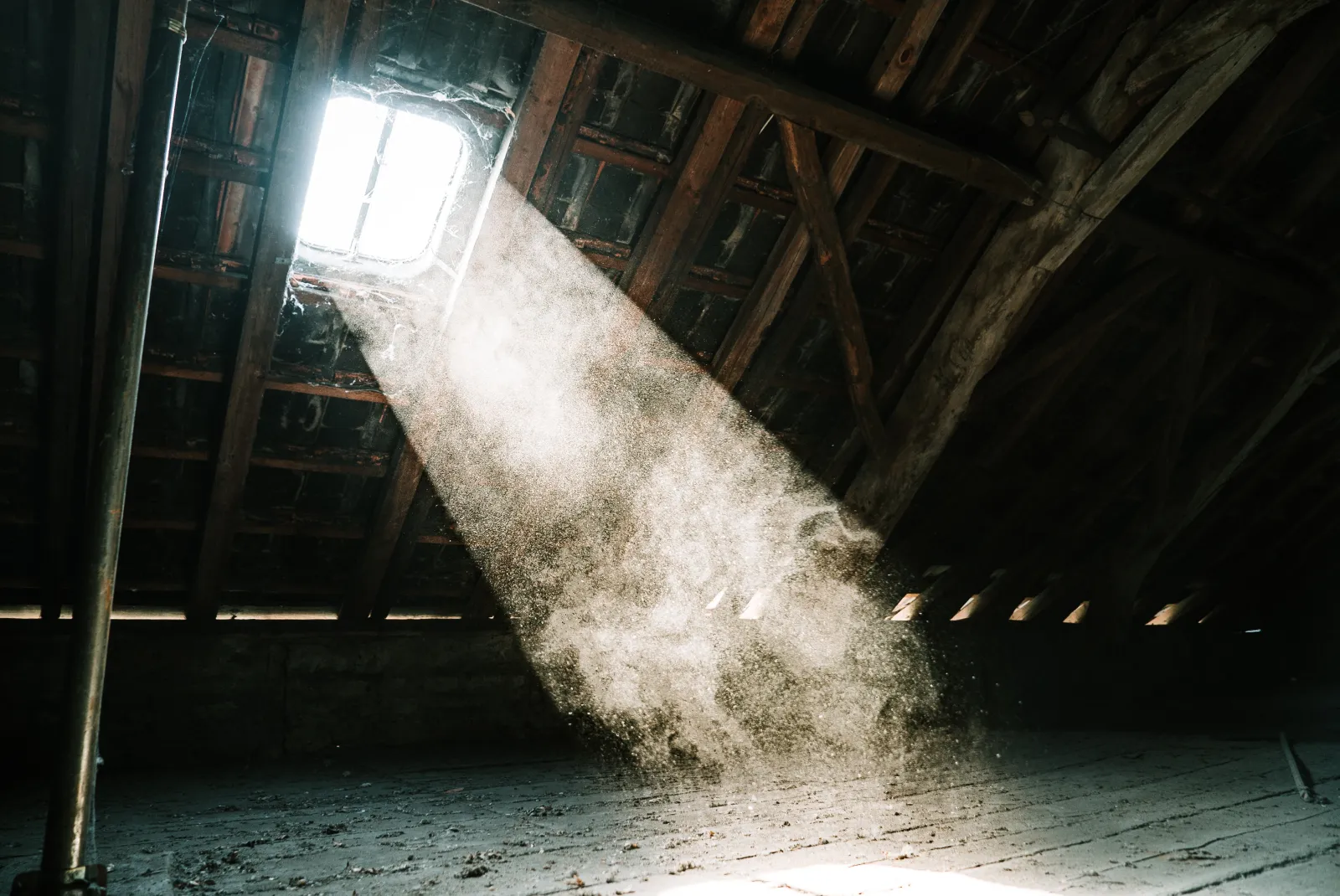
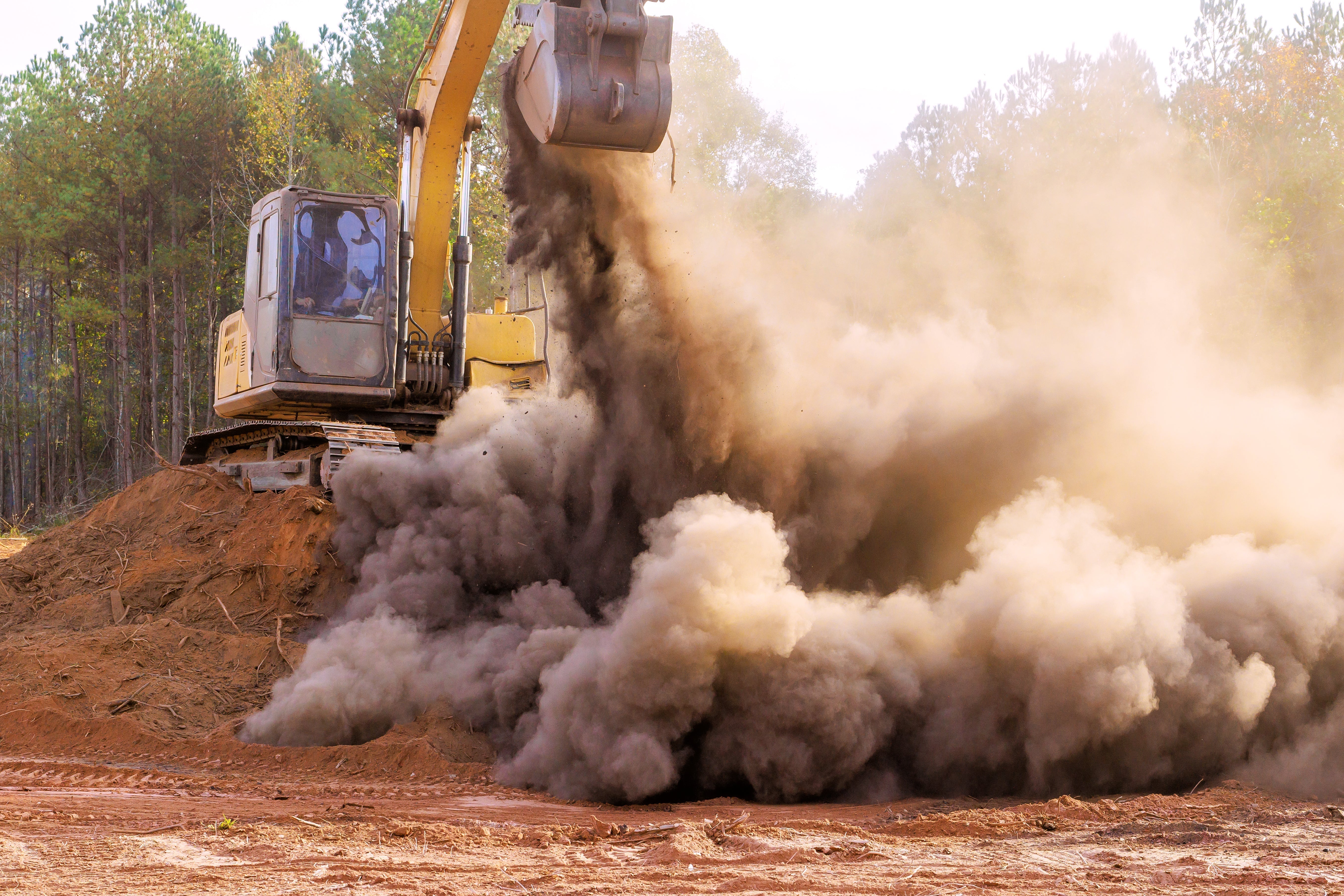
The principle observed in ancient tombs extends far beyond archaeology. Any environment that remains sealed or undisturbed for extended periods can accumulate biological material. When that environment is reopened or disrupted, the accumulated particles can become airborne.
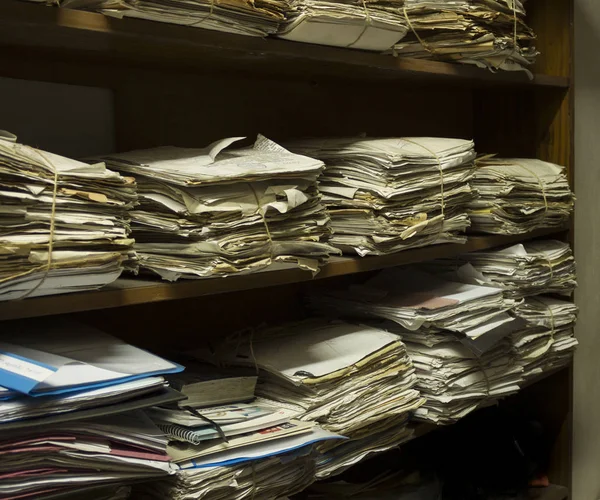
This pattern can be observed in a range of modern contexts, including abandoned buildings, renovation sites, caves, archival storage areas, and disaster zones. In each case, the system itself is not inherently dangerous while stable. The risk emerges when that stability is broken.
Fungi do not need to spread aggressively to create impact. Under the right conditions, simple release into the air is enough.
A Microbial Perspective on History
Reexamining historical events through a microbial lens reveals that human experiences are often intertwined with invisible biological systems. The opening of Tutankhamun’s tomb can be seen not as the triggering of a curse, but as the disturbance of a long-contained ecosystem.
This perspective does not diminish the significance of the discovery. Instead, it adds a layer of understanding. It highlights that environments, whether ancient or modern, are never biologically empty. They carry microbial histories that interact with those who enter them.
Fungi, in this context, are not anomalies. They are constant components of the environments humans inhabit.
Rethinking the Idea of Risk
The enduring appeal of the “curse” reflects a deeper intuition: that disturbing certain environments carries consequences. Science does not remove this idea. It refines it.
The risk is ecological rather than supernatural. Sealed environments can concentrate biological material over time, and disturbance transforms that material into an exposure pathway. Recognizing this allows for better preparation, monitoring, and protection in both archaeological work and modern environmental management.
Lessons for the Present
The story of Tutankhamun’s tomb illustrates a broader and ongoing reality. Human activity continues to intersect with environments that contain hidden microbial systems. Construction, excavation, climate-driven disturbances, and building renovations all create moments where previously contained biological material becomes airborne.
Understanding these dynamics supports safer practices. It encourages the use of protective equipment, environmental assessment, and awareness of air quality in enclosed or long-undisturbed spaces.
What emerges from this perspective is not a warning rooted in myth, but a practical insight grounded in science: environments hold more than what is visible, and disturbance can change how those hidden elements behave.
❓ FAQ
Did King Tut’s tomb contain dangerous fungi?
It likely contained fungal spores, but the risk depends on exposure levels rather than the presence of unusual organisms.
Can fungi survive for thousands of years?
Yes. Fungal spores can remain dormant for long periods in stable environments.
What is aspergillosis?
It is a respiratory infection caused by inhaling spores from fungi such as Aspergillus.
Are similar risks present today?
Yes. Disturbing enclosed or long-undisturbed environments can release accumulated bioaerosols.
How can exposure be reduced?
Through ventilation, protective equipment, and environmental monitoring before entering confined spaces.
References
Academic Sources
Bongomin, F., et al. (2017). Global and multi-national prevalence of fungal diseases—estimate precision. Journal of Fungi. https://doi.org/10.3390/jof3040057
Fisher, M. C., et al. (2020). Emerging fungal threats to human health. Nature Reviews Microbiology.
Gorbushina, A. A. (2007). Life on the rocks. Environmental Microbiology. https://doi.org/10.1111/j.1462-2920.2007.01301.x
Official Sources
Centers for Disease Control and Prevention (CDC) – Fungal Diseases: https://www.cdc.gov/fungal
World Health Organization (WHO) – Indoor air quality and health: https://www.who.int