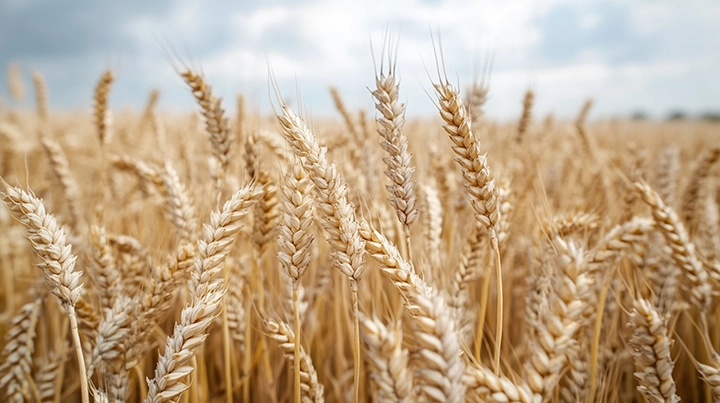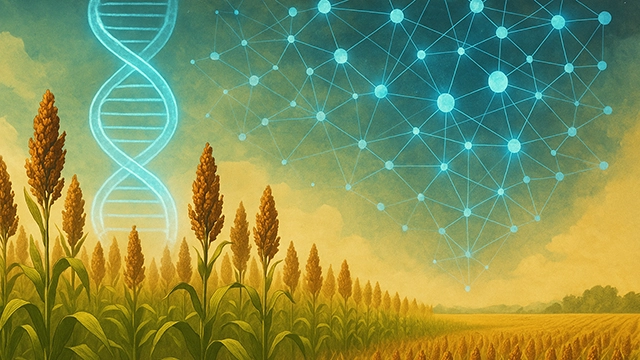
Sorghum, the climate-resilient cereal feeding millions across arid landscapes, has a quiet nemesis: grain mold. This disease, caused by a medley of opportunistic fungi, doesn’t just steal yield—it spoils seed quality, sours profits, and undermines food security in heat-stricken regions. For decades, plant breeders have hunted for resistance genes like detectives chasing clues through a genetic fog. But a new twist has changed the game: machine learning-enhanced genetics.
Published in Heredity this month, a team of researchers unveiled a hybrid approach to resistance breeding: blending genome-wide association studies (GWAS) with machine learning (ML). The goal? To uncover the subtle, overlapping genetic patterns that make sorghum mold-resistant—not through one silver-bullet gene, but through a mosaic of defense pathways that only AI could piece together.

🌾 Grain Mold: A Fungal Puzzle in the Tropics
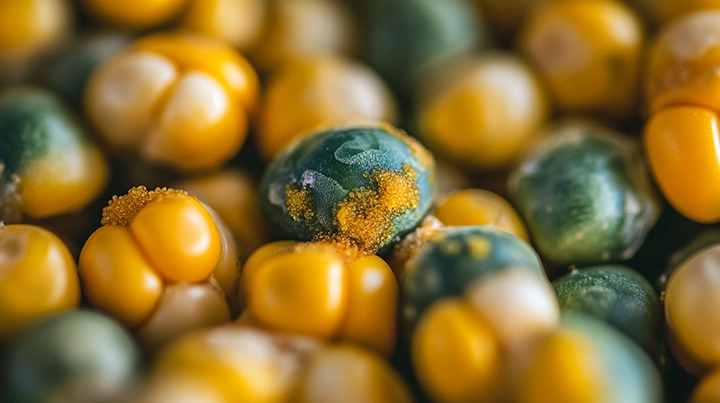
Grain mold in sorghum is caused by a pathogen cocktail including Fusarium, Curvularia, and others. These fungi thrive in humid conditions, particularly post-flowering, when vulnerable seeds are exposed. Resistance has proven elusive because it’s not governed by one or two genes, but by hundreds of small-effect variants that act together.
That complexity overwhelms traditional GWAS, which tends to pick up only the strongest signals. Grain mold resistance, however, lives in the subtle spaces—interactions, regulatory tweaks, and networked responses.

Beyond the Genome: Learning from Complexity
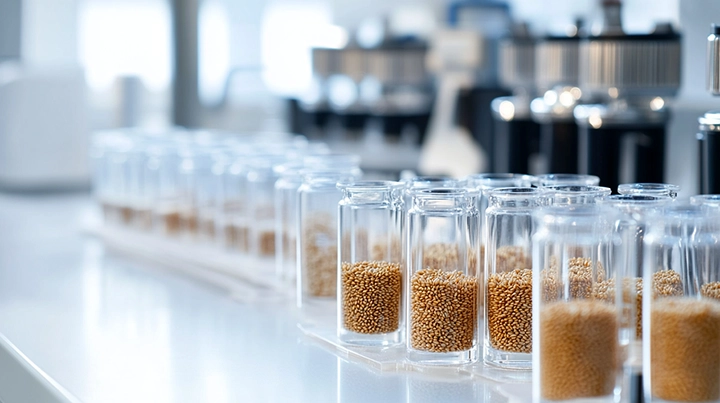
This is where machine learning shines. The research team collected 306 genetically diverse sorghum lines, each meticulously scored for grain mold severity. But instead of feeding a single trait into a GWAS pipeline, they created three parallel phenotypes:
- Raw disease scores
- Difference traits comparing treated vs. untreated samples
- Principal components summarizing trait variability
They fed this complex dataset into Boosted Tree and Bootstrap Forest models—two ensemble learning methods capable of decoding non-linear, multi-gene interactions.
The result? Not just confirmation that resistance is polygenic, but a shortlist of SNPs (single nucleotide polymorphisms) consistently associated with resistance across multiple traits and models. These weren’t one-hit wonders—they were robust, reproducible signals.

The Biology Behind the Bytes
Digging into the biological meaning, the top-ranked SNPs sat near genes involved in pathogen recognition, DNA repair, and stress modulation. In other words, the plants aren’t fighting mold with brute-force immunity. They’re:
- Detecting invaders early
- Maintaining genome stability under fungal-induced stress
- Modulating their response instead of overreacting
This paints a picture of distributed resilience rather than isolated defense. It’s not one alarm bell; it’s a well-coordinated security system.
From Petri Dish to Field Plot
For breeders, this research is a genetic GPS system. Instead of navigating blind through trait heritability, they now have candidate SNPs to use in marker-assisted selection (MAS) or genomic selection (GS) models. That means faster breeding cycles, more targeted crosses, and potentially, more climate-resilient sorghum.
But the implications go beyond sorghum. This ML-GWAS framework can be applied to:
- Drought tolerance in maize
- Disease resilience in pulses
- Heat and yield stability in rice
It’s not just about solving one crop problem—it’s about restructuring how we approach complex traits.
The AI Transparency Challenge
Of course, there’s a catch: interpretability. Machine learning models, especially ensemble trees, can behave like black boxes. They offer excellent prediction, but don’t always explain why a particular SNP matters.
The next step is to marry ML discovery with wet-lab validation. CRISPR knockouts, gene expression assays, and epigenomic maps will be crucial to confirm causal genes and avoid false signals.
But that’s the nature of frontier science. AI opens the door—and biology walks through it.
Food Security Meets Intelligent Computation
This study arrives at a critical moment. As climate extremes and pathogen evolution escalate, the old model of searching for “the gene” is becoming obsolete. Traits like resistance, drought tolerance, or nutrient efficiency aren’t governed by kings—they’re run by committees of subtle effectors.
Machine learning doesn’t flatten that complexity. It embraces it, organizes it, and learns from it.
This isn’t just a win for sorghum. It’s a proof of concept that AI can make sense of tangled biology without oversimplifying it. It shows that machine learning doesn’t replace plant scientists—it augments them, revealing patterns that humans might miss but can still interpret and act on.
If resistance is a hidden conversation between genes, environments, and time, then AI is the translator that makes it audible.
In a world of heatwaves, fungal shifts, and fragile yields, this new approach doesn’t just promise better crops. It offers a smarter, faster, more nuanced path to food resilience in the age of uncertainty.
Welcome to the future of disease resistance. It speaks in code, learns in patterns, and grows in the fields we still depend on.