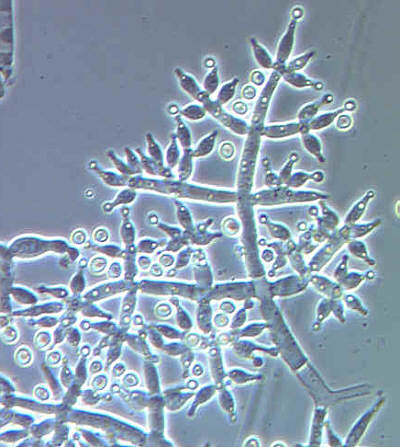
In the world of microscopic warfare, one of nature’s quiet chemists has stepped forward: Trichoderma reesei, a humble soil fungus better known for digesting plant waste, may soon become a key player in the fight against viruses. In a breakthrough that blends mycology with nanoscience, researchers have shown that this fungus can produce silver nanoparticles (AgNPs) capable of blocking SARS-CoV-2, the virus behind COVID-19.
Nature-powered nanomedicine
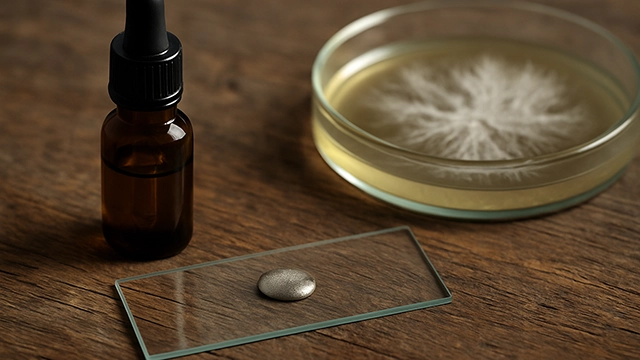
This isn’t the first time silver has shown promise in infection control, but how it’s being made is the surprise. In low-oxygen lab conditions, T. reesei naturally synthesizes silver nanoparticles, stabilizing them with its own proteins. The result: spherical, uniform particles created without harsh chemicals—a cleaner, scalable approach to nanomedicine.

Fighting the virus on two fronts
The study, led by Professor Roberto do Nascimento Silva at the University of São Paulo, discovered that these biologically crafted AgNPs can bind to the virus’s spike protein. This disrupts its ability to enter human cells, reducing infection rates by nearly 50% in controlled lab settings.
But the most compelling discovery came from testing in hamsters: not only did the nanoparticles reduce the viral load in lung tissue, but they also curbed inflammation. The particles appeared to inhibit the inflammasome (a protein complex that triggers cytokine storms) and reduced levels of interleukin-1β, a key molecule involved in lung damage.
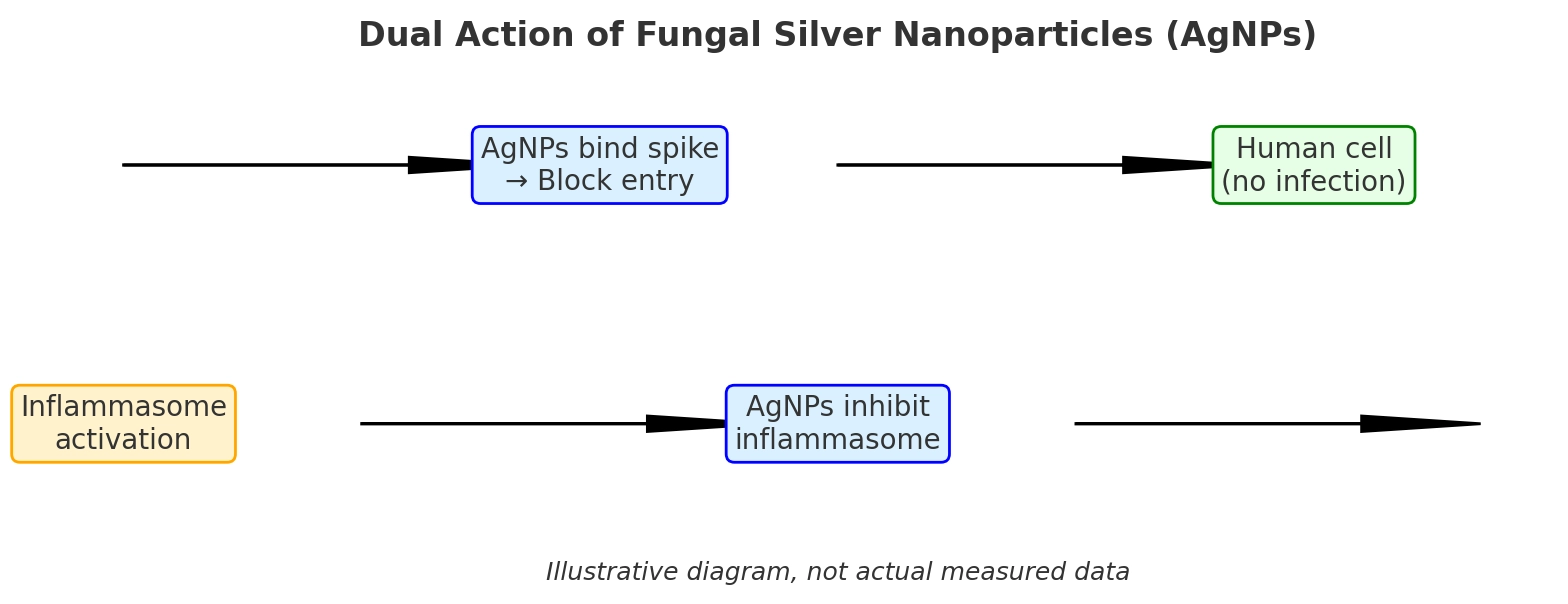
In simpler terms: the fungus-made silver doesn’t just block the virus’s entry; it also soothes the storm that follows.
Beyond COVID-19
This dual action opens the door to much more than COVID-19 treatments. These nanoparticles may be formulated into nasal sprays, wound gels, antiviral coatings for hospital equipment, or even embedded in masks and medical gowns. Their broad-spectrum protein-binding ability hints at potential applications for HIV, herpes, influenza, and future unknown viral threats.
The idea started as a cancer treatment platform, but the pandemic shifted the team’s focus. Now, after promising preclinical results, they’re aiming to patent the formulation and begin clinical trials.
Safety and accessibility
Safety remains key. Though silver can be toxic in large quantities, the doses used were 10× lower than toxic thresholds, and most of the metal cleared from the body within 8 weeks.
What makes this especially promising is its potential accessibility. While silver is a precious metal, growing Trichodermacultures at scale is cost-effective. If successful, this could offer a sustainable antiviral tool for low-resource settings—a fungal factory producing microscopic shields.
A convergence of biology and biotechnology
Professor Silva calls it “a convergence of biology and biotechnology, where nature doesn’t just inspire—it manufactures.”
As viral threats loom larger in the age of climate shifts and global mobility, this unlikely alliance between fungus and metal offers a different kind of hope: a defense system that grows in darkness, spins silver into protection, and redefines what we call medicine.
Sometimes, the most advanced tools don’t come from a lab bench—but from the forest floor.
References
- Silva R.N. et al. Mycosynthetized silver nanoparticles inhibit SARS-CoV-2 replication and inflammasome activation(University of São Paulo, 2023).
- CDC. Coronavirus (COVID-19). CDC.gov
- WHO. HIV/AIDS fact sheet. WHO.int
- CDC. Herpes – Fact Sheet. CDC.gov
- CDC. Influenza (Flu). CDC.gov
- Wikipedia. Trichoderma reesei, Silver nanoparticles, Interleukin 1 beta, Spike protein, Nanomedicine