Beneath the Surface: Nail Fungus Gets Personal
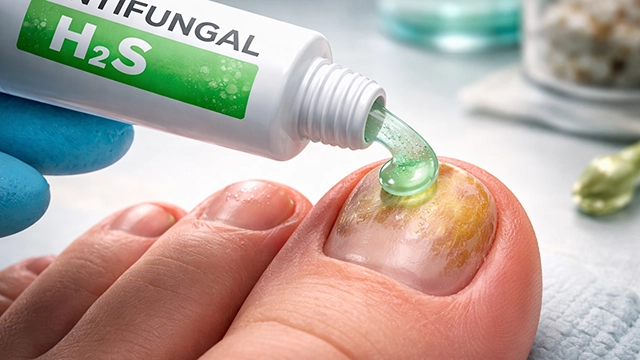
There’s something humbling about the world beneath our nails—a place most of us ignore until discomfort or embarrassment brings it into sharp relief. Fungal nail infections, or onychomycosis, are more than a cosmetic nuisance. For millions, especially those who are older, diabetic, or immunocompromised, these infections become chronic battles.
The nail turns thick, yellow, crumbly. Shoes become uncomfortable. Confidence takes a hit. And as any dermatologist or podiatrist will tell you, curing these infections is one of modern medicine’s most stubborn little quests.

Why is it so hard? The answer is both simple and frustrating: the enemy is well-defended. Fungi such as Trichophyton rubrum and Trichophyton mentagrophytes don’t just linger on the nail surface—they burrow beneath the dense, keratin-rich plate, forming biofilms that are nearly impenetrable.
Topical creams and lacquers barely scratch the surface; oral antifungals can work, but take months and sometimes come with serious side effects. It’s not unusual for patients to try treatment after treatment, only to watch the infection return, stubborn as ever.
A Stinky Savior: The Science of Hydrogen Sulfide
Enter an unexpected player: hydrogen sulfide (H₂S). If you’ve ever wrinkled your nose at the smell of rotten eggs, you already know this gas. But while most of us associate it with decay and danger, researchers at the University of Bath and King’s College London are reimagining H₂S as a hero.
Why hydrogen sulfide? For one, its tiny molecular size lets it penetrate dense tissues easily—exactly the quality needed to breach the stubborn fortifications of the nail plate.

In the lab, scientists have shown that hydrogen sulfide not only diffuses through keratin, but it also exerts a potent antifungal effect. Unlike many standard antifungals, which can take weeks or even months to halt an infection, hydrogen sulfide acts fast—killing nail pathogens within hours.
The secret lies in its disruptive power. When H₂S reaches the fungal cells, it interferes with key metabolic processes, essentially shutting down the cell’s “power plant.” This triggers a cascade of cellular damage, culminating in fungal death.
What’s remarkable is that hydrogen sulfide’s action appears broad-spectrum: it’s just as effective against drug-resistant strains as it is against more common dermatophytes.
But before anyone panics at the idea of bathing their toes in a cloud of rotten-egg gas, take heart—scientists are developing slow-release compounds that generate hydrogen sulfide exactly where it’s needed, in tightly controlled doses.
From Laboratory Promise to Clinical Reality
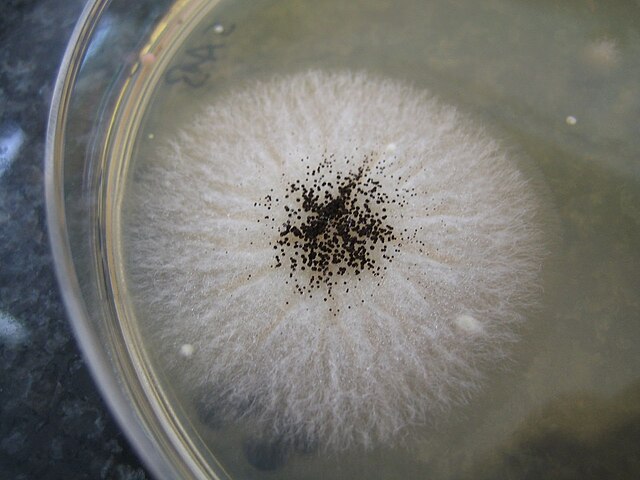
Of course, what works in a petri dish doesn’t always translate smoothly to living, breathing humans. The path from discovery to pharmacy shelf is full of challenges and checkpoints.
The Bath and King’s College teams are now racing to optimize their hydrogen sulfide–releasing formulations, working on ways to maximize the gas’s antifungal power while minimizing risk and (critically, for patient compliance) odor.
Safety studies will be key. Although H₂S is produced naturally in the body in tiny quantities, it can be toxic in high doses. The topical treatments under development are designed to keep exposure low and localized.
Next up are animal models and, eventually, human clinical trials to test efficacy, tolerability, and real-world outcomes.
The Wider Impact: Beyond Vanity
Fungal nail infections aren’t life-threatening, but that doesn’t mean they’re trivial. For the elderly, the immunocompromised, or people with diabetes mellitus, onychomycosis can open the door to dangerous bacterial infections, cellulitis, or ulcers.
And for anyone, the psychosocial toll can be surprisingly heavy.
If a treatment like hydrogen sulfide can break this cycle, the impact goes well beyond the cosmetic. It’s about restoring comfort, confidence, and mobility to millions.
There are broader scientific lessons here, too. Hydrogen sulfide’s journey from environmental hazard to medical ally is part of a growing movement to reconsider “bad actors” in the natural world.
The Road Ahead: What to Watch For
The path forward will require careful, rigorous science. Researchers must perfect odor-masking and dosing, ensure safety across all user groups, and run large-scale trials to see how the treatment performs outside the lab.
Still, the potential is enormous. Imagine walking into your local chemist and finding a discreet, scent-free, fast-acting antifungal gel, powered by a compound you’d once have run from.
Until then, keep an eye on your toes—and your headlines. The next big thing in medicine may be, quite literally, underfoot.