It doesn’t come with a horror movie name. It doesn’t produce black slime on your bathroom ceiling. And it won’t trigger a CDC emergency alert—yet.
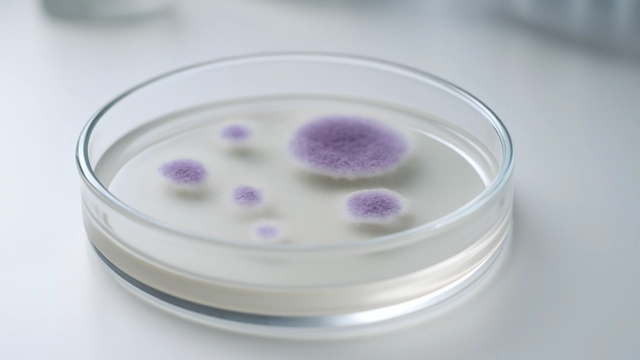
But Purpureocillium lilacinum, the delicate purple-hued mold once known only to soil scientists and greenhouse workers, is making a slow, strange climb into the clinical spotlight.
A recent nationwide surveillance study in the U.S. uncovered something unexpected: fungal cultures submitted to Labcorp between 2019 and 2025 showed a steady rise in P. lilacinum detections—from 56 to 74 per 100,000 cultures in just a few years, with some quarters spiking even higher.
That may seem minor—until you realize that most medical mycology trends don’t shift that fast without a reason.
What Is This Mold, and Why Should We Care?
P. lilacinum isn’t new. It’s been used for years in agriculture as a biopesticide, especially for controlling nematodes in crops. Organic farming? Greenhouses? Tree farms? This mold’s already there, doing its job.
But now it’s turning up in people’s sputum, eyes, skin lesions, even blood.
While it rarely causes disease in healthy individuals, it can become a serious problem for immunocompromised patients. And worse? It resists amphotericin B—a frontline antifungal drug. That means if you miss the ID, or confuse it with another species, you could be treating with the wrong tool for weeks.
And that matters when lives are on the line.

A Mold That Hitches Rides
The study found that P. lilacinum showed up most in samples from the South Atlantic and Pacific states—humid, warm, and agriculturally active zones. It favored respiratory specimens, pointing toward possible airborne transmission or environmental exposure. Men over 65 were the most common demographic for positive cultures.
But let’s be clear: not all detections equal infection. Some cases may reflect simple colonization or lab contamination. Still, if you see a pattern forming, the next question is: why now?
Agriculture Meets Hospital Corridor
Here’s the theory raised by researchers: as agricultural use of P. lilacinum increases, so too does environmental exposure. The spores don’t just stay on the farm.
They drift, they stick to boots, they ride on produce—and maybe even circulate through hospital ventilation.
For someone with a weakened immune system, a soil-friendly mold can turn unfriendly fast.
One pseudo-outbreak described in the study seemed to come not from patient-to-patient spread, but from the environment itself.
That blurs the line between clinical infection and ecological consequence.

Why This Quiet Rise Deserves Attention
Let’s not make the mistake of ignoring P. lilacinum just because it doesn’t scream like Candida auris or charge in like Aspergillus fumigatus.
This mold plays the long game.
- It grows slowly, so clinical labs may miss or underestimate it.
- It resists a major antifungal drug.
- It thrives in high-organic, moist environments—just like many hospitals, greenhouses, and homes.
More importantly, its rise could signal a broader ecological shift: a future where fungi used in agriculture begin creeping into medicine.
Where the solution to nematodes might someday become the problem in intensive care units.

What We Need to Do
- Improve Lab Detection – Clinical labs should be trained to identify P. lilacinum and distinguish it from contaminants or commensals.
- Monitor Agricultural Use – Regulatory bodies like EPA and FAO must assess where and how much P. lilacinum is applied, including human health impact.
- Study Cross-Exposure Pathways – Research how spores travel from farms to clinics, and who’s most at risk.
- Create Clear Reporting Guidelines – Not all positives are infections, but all deserve documentation. Current surveillance is patchy at best.
P. lilacinum may not be famous. It may not be deadly in every case. But it’s climbing the charts for a reason.
And if we want to stay ahead of fungal risks in a changing world—where climate, agriculture, and health are increasingly intertwined—we need to listen to the quiet ones, too.
Because sometimes, the most important molds are the ones that don’t make a scene—they make a shift.