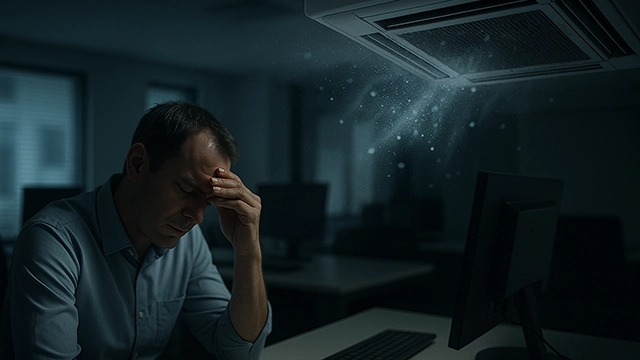
Have you ever spent a whole day in the office and ended up with a headache, dry eyes, a stuffy nose, or unusual fatigue? Many people assume it’s because of air conditioning. But the truth may be more hidden—the real culprit could be mold. This is what we call Sick Building Syndrome (SBS), and mold plays a major role in it.
Where Mold Hides: Air Conditioners and Damp Corners
Mold needs moisture, dust, and organic material to grow. Modern building air conditioning systems often provide the perfect conditions. Stagnant water in condensate pans, clogged drains, dusty filters, and damp ducts become mold’s “VIP suites.” Common species include Aspergillus, Penicillium, Cladosporium, and Rhizopus. Once spores enter indoor air through the AC system, the entire office becomes a mold distribution site.
How Mold Affects You
Mold affects human health in three main ways.
First, spores and microbial volatile organic compounds (MVOCs) irritate the eyes, nose, and throat. This leads to congestion, coughing, or eye irritation—classic SBS symptoms.
Second, people with weaker immune systems, such as premature babies, organ transplant patients, or those on long-term immunosuppressants, face higher risks. For them, mold can cause not just allergies but also severe infections like pneumonia, abscesses, or even systemic infections.
Third, some mold metabolites affect the nervous system and skin, leading to fatigue and poor concentration. These effects make SBS even harder to ignore.
Data Shows SBS Is Not an Illusion
The World Health Organization reported that in the 1970s and 1980s, about 10% to 30% of newly built office buildings had SBS cases. A survey in China showed that dampness and mold in homes significantly increased the chance of SBS symptoms, with a clear dose–response relationship. The study also found that simple actions such as opening windows, airing bedding, and regular cleaning could reduce symptoms. Another epidemiological analysis showed that visible mold or dampness indoors increased the risk of respiratory problems by 30% to 50%. Together, these findings confirm that mold is a major driver behind SBS.
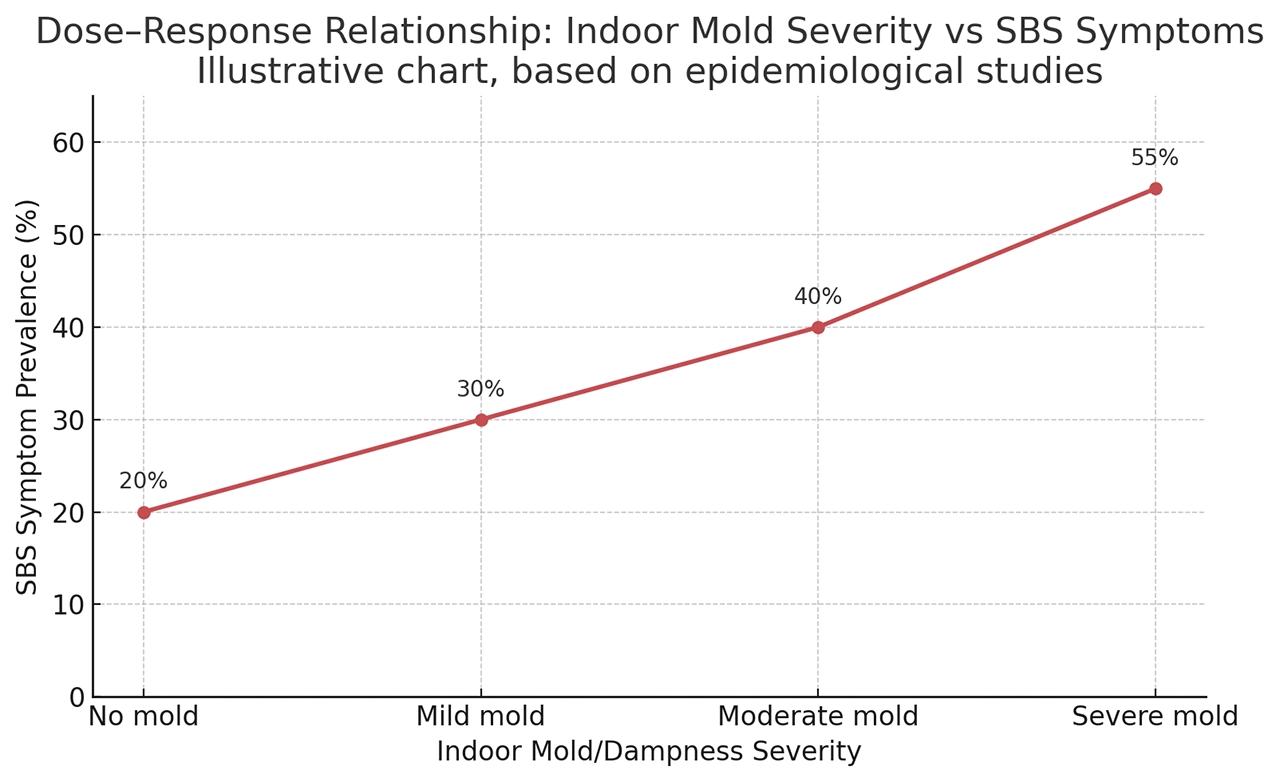
(No visible mold = baseline; Visible mold/damp = +30–50% risk)
Real Cases: Mold Is Not a Small Problem
In 2023, a study in India followed 200 office workers using air conditioning and 200 without AC. The results showed that the AC group experienced SBS symptoms more often, had lower lung function, and took more sick leave. These findings suggest that the issue is not air conditioning itself but mold and pollutants accumulating in the system.
In the UK, a young child died after living in a damp, mold-infested apartment for a long period. This tragedy led to the creation of Awaab’s Law, which requires social housing landlords to fix mold problems quickly once reported. These cases prove mold is not a minor nuisance—it is a serious public health issue.

Why Air Conditioning and Humidity Help Mold Thrive
Air conditioning connects closely to mold for more than one reason. Poorly maintained systems—dirty filters, wet pans, or clogged drains—become breeding grounds for spores that circulate throughout the building. On the other hand, over-drying by AC damages the protective lining of the nose and throat, making it easier for mold to invade. Modern buildings add another problem: windows that cannot open and poorly ventilated corners. This allows mold to accumulate in enclosed spaces.
How to Stop Buildings From Getting “Sick”
Preventing SBS is not a mystery. The key is reducing opportunities for mold to grow.
- Clean and maintain air conditioning regularly, including condensate pans, drains, and filters.
- Keep indoor humidity between 40% and 60%. Too much moisture feeds mold, while too little weakens natural defenses.
- Increase fresh air exchange by opening windows or using mechanical ventilation.
- Use high-efficiency filters or UV-C devices to block or kill spores.
- For people with allergies or weak immunity, placing an air purifier near their desk or bedroom offers direct protection.
Conclusion: Bringing Buildings Back to Health
Sick Building Syndrome is not just an illusion of “spending too long under the AC.” It is a real intersection of environment and health. Mold is a hidden enemy in this story, quietly affecting our respiratory system, immunity, and even concentration.
To keep buildings from becoming “sick,” we need more than comfortable air conditioning. We need awareness, regular maintenance, humidity control, and proper ventilation. When we take these steps, health will no longer feel like a luxury, but part of everyday life.