Could the air inside your home be affecting your mood? A groundbreaking new study says yes—especially if you’re older and living with mold. In rural China, where many elderly residents still rely on traditional cooking fuels and live in aging homes, scientists have uncovered a hidden link between indoor air quality and mental health. The culprit? Common household mold.

Researchers analyzed data from over 9,200 older adults as part of the Chinese Longitudinal Healthy Longevity Survey. They found that seniors exposed to indoor mold were more than twice as likely to suffer from depression or anxiety compared to those in mold-free homes. This association held strong even when controlling for income, education, and other social factors.
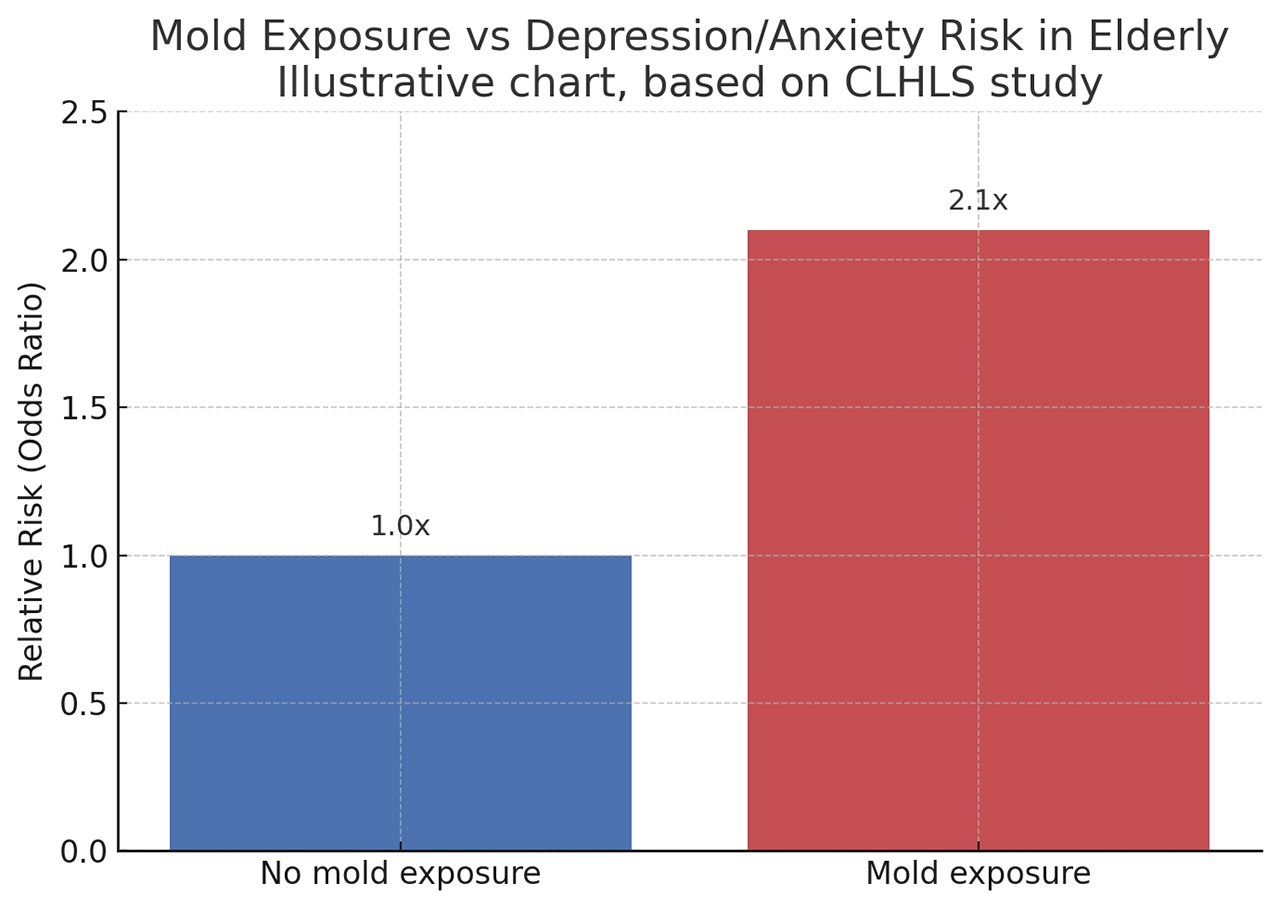
No mold exposure = 1.0x, Mold exposure ≈ 2.1x
But the picture gets more complex. The study also examined solid fuel use, like coal and wood-burning stoves. These are still widely used in rural Chinese households and were found to independently increase risks of anxiety and depression. Interestingly, in homes that used solid fuels, the anxiety risk from mold exposure appeared slightly lower—though researchers aren’t yet sure why.

What does this mean? It suggests a dual environmental burden for many older adults: poor ventilation and invisible fungal growth may be quietly undermining both physical and emotional wellbeing. Mold is no longer just an aesthetic issue or allergen—it may be a mental health hazard, especially for vulnerable populations.
How exactly mold affects the brain remains under investigation. Scientists hypothesize that inhaled fungal spores or mycotoxins may trigger inflammatory pathways, alter stress hormones, or lead to chronic stress by degrading the comfort and cleanliness of the home environment. These effects could disrupt emotional stability, particularly in older adults who spend more time indoors and may already face isolation.
So what can be done? The researchers urge a shift in public health focus. Indoor mold remediation and a transition to cleaner cooking fuels should be part of aging and housing policy, particularly in humid or poorly ventilated regions. Mental health screening could also include assessments of home environments, especially for elderly individuals reporting mood changes.
With climate change expected to increase indoor dampness globally, these findings are a timely call to action. Clean air isn’t just about lungs—it’s about emotional resilience, cognitive health, and dignity in aging.
Public policy, housing design, and community care must all take this message to heart. Because protecting our elders begins with ensuring they have safe, clean, and dry places to call home.

References
- WHO. Depression Fact Sheet. WHO.int
- WHO. Mental Disorders. WHO.int
- WHO. Mycotoxins Fact Sheet. WHO.int
- WHO. Ageing and Health. WHO.int
- PubMed. Indoor air, mold and depression in elderly. PubMed
- Chinese Longitudinal Healthy Longevity Survey. Dataset
- IPCC. Climate Change Reports. IPCC.ch
- Wikipedia. Mold, Fungal spores, Rural society in China