Floods Are Gone—But the Mold is Just Getting Started
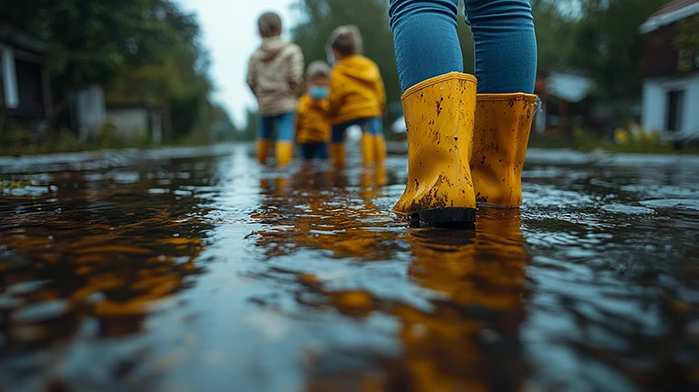
Floods don’t just wash away homes—they create the perfect breeding grounds for mold. As climate change intensifies storms and rising waters sweep through communities, a new danger takes hold inside homes, creeping into walls, insulation, and air vents.
This isn’t just happening in one place—it’s happening everywhere. In hurricane-hit cities across the United States, in monsoon-ravaged South Asia, and now, once again, in Northern Rivers, New South Wales.
Governments have seen this before. They know what happens when homes stay damp, when floodwaters retreat but moisture lingers. And yet, they do nothing. The mold crisis isn’t just a consequence of storms—it’s the result of deliberate negligence. And now, families are paying the price.

Source: Wikimedia Commons, CC BY-SA 3.0
The Storm is Over—But For Northern Rivers, the Real Nightmare is Just Beginning
As of March 10, 2025, families in Northern Rivers are trapped inside homes they can’t afford to fix, breathing air that is making them sick. The floodwaters may have receded, but mold is only just beginning its takeover.
Walls are soaked. Insulation is rotting. Air vents are infested with spores. Parents are watching their children cough, battle fatigue, and struggle for air. The elderly and those with weak immune systems are at even greater risk—but they have nowhere else to go.
And the government? Silent.
There are no national emergency mold response teams. No funding for safe, flood-resistant housing. No guidance on how families are supposed to make their homes livable again.
And the insurance companies? Refusing to cover mold damage. Telling homeowners they’re on their own.
This isn’t just a housing issue. This is a public health disaster.

Source: Wikimedia Commons, CC BY-SA 3.0
This Isn’t Just Australia—This is a Global Crisis
If you think this is only happening in Northern Rivers, you haven’t been paying attention. Climate change is creating stronger storms, more floods, and a mold crisis no one is prepared for.
In the United States, hurricane survivors aren’t just fleeing storm damage—they’re leaving homes filled with toxic mold. Entire communities are forced to abandon their homes not because of floodwaters, but because of what’s left behind.
In Bangladesh, monsoon season is fueling an epidemic of fungal infections, lung diseases, and chronic illness. Families already struggling with poverty now face an invisible, airborne threat.
In Europe, historic rainfall is turning schools and hospitals into mold-infested spaces. Doctors are seeing spikes in mold-related illnesses as people unknowingly breathe in contaminated air.
And what do governments do? Delay. Deny. Ignore. They treat mold like a building issue instead of what it really is: a full-scale public health emergency.

Source: Wikimedia Commons, CC BY-SA 4.0
Why This Matters—And Why It’s Only Getting Worse
This crisis isn’t new. But every year, it’s getting worse.
Governments refuse to modernize flood-prone housing. Builders continue using moisture-trapping materials. Insurance companies deny claims.
And mold? It keeps evolving.
Spores are becoming resistant to basic cleaning methods.
Fungal strains are growing stronger, more toxic, and harder to remove.
Once a home is contaminated, it may never be livable again.
This isn’t just a temporary inconvenience. Long-term mold exposure is linked to:
Chronic respiratory illness—prolonged exposure can lead to asthma, bronchitis, and lung infections.
Neurological damage—certain molds release toxins that can affect memory, focus, and cognitive function.
Weakened immune systems—especially dangerous for children, the elderly, and those with preexisting conditions.
And yet, governments pretend this problem will fix itself. It won’t. It’s only growing.

Source: Wikimedia Commons, CC BY-SA 3.0
How Many More Have to Suffer Before We Take This Seriously?
This is predictable. This is preventable. This is deliberate negligence.
We don’t need another round of thoughts and prayers from politicians. We need real action.
Flood-resistant homes must be mandatory—using materials that prevent mold from taking over.
Emergency response teams must include mold specialists—so families aren’t left breathing in toxic air.
Insurance companies must stop abandoning homeowners—because no one should have to choose between their health and their home.
Public education must improve—because if people don’t understand mold, they can’t protect themselves from it.
We’ve seen this before. We should have learned. But we didn’t.
So how many more families have to get sick? How many more homes have to rot? How much longer will governments treat this like an inconvenience—rather than the crisis it truly is?

Source: Wikimedia Commons, CC BY-SA 4.0
References
- IPCC – Climate Change
- WHO – Environmental Health
- EPA – Mold Remediation
- Climate Change in Bangladesh – Wikipedia
- NCBI – Neurological Impact of Mold Exposure
- Wikimedia Commons images:
- Flooded neighborhood (CC BY-SA 3.0)
- Mold on wall (CC BY-SA 3.0)
- Flood risk world map (CC BY-SA 4.0)
- Asthma inhaler (CC BY-SA 3.0)
- Flood-damaged home (CC BY-SA 4.0)