The Invisible Web Holding Up the Green World
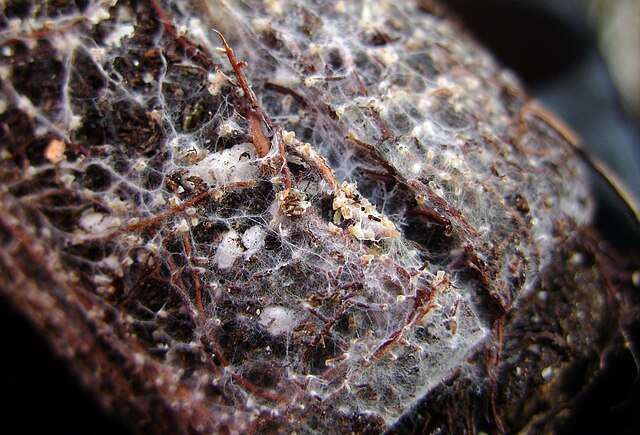
Beneath forests, prairies, and farmlands, there’s a hidden network holding ecosystems together: mycorrhizal fungi. These below-ground partners exchange nutrients with plant roots, shaping everything from crop yields to carbon storage, drought resilience, and even forest regeneration. In a rapidly changing climate, their importance is only growing, yet our scientific understanding of them remains strikingly uneven.
Mycorrhizal fungi — https://en.wikipedia.org/wiki/Mycorrhiza

A groundbreaking systematic map published in New Phytologist offers a panoramic look at how little we truly know. Instead of adding one more experiment to the mix, the authors asked a fundamental question: What have scientists actually tested about mycorrhizal fungi and climate change — and what’s been left out? Their answer isn’t just a review. It’s a research audit that exposes our field’s blind spots.
New Phytologist — https://en.wikipedia.org/wiki/New_Phytologist
Mycorrhizal Fungi: Why They Matter and How We Study Them
Mycorrhizal fungi form living bridges between plants and the soil, enabling crops and forests to access phosphorus, nitrogen, and water that would otherwise be out of reach. These symbionts boost plant health, enhance biodiversity, stabilize soils, and underpin the world’s largest terrestrial carbon sinks.
There are two primary types that dominate global ecosystems: arbuscular mycorrhizal (AM) fungi, which associate with most crops and grasses, and ectomycorrhizal (ECM) fungi, which are crucial in temperate and boreal forests.
Arbuscular mycorrhiza — https://en.wikipedia.org/wiki/Arbuscular_mycorrhiza
Ectomycorrhiza — https://en.wikipedia.org/wiki/Ectomycorrhiza

Scientists have spent decades exploring these relationships, especially as environmental pressures mount. Yet the reality is that most research focuses on a narrow set of questions and conditions. The new systematic map, which reviewed more than a thousand experimental studies, reveals the extent of this tunnel vision. Most experiments are set in labs or greenhouses rather than real-world forests or grasslands, and they overwhelmingly test just one environmental driver at a time — usually elevated temperature or nitrogen.
The Trouble with Single-Factor Science
Ecosystems, of course, do not operate in isolated bubbles. Real plants and their fungal partners often face multiple stressors simultaneously: heat, drought, erratic rainfall, salinity, and nitrogen pollution. Despite this, very few experiments have explored how these forces combine to affect mycorrhizal function. The overwhelming focus on single-factor studies means we have limited insight into the complex reality faced by plants and fungi in nature.
Additionally, the bias toward laboratory and greenhouse research means that field conditions — with their unpredictable weather, soil variation, and diverse biotic communities — are often overlooked. This raises doubts about how reliably we can apply lab findings to real-world agricultural or forest systems.
Whose Fungi Get Studied? A Narrow Cast of Characters
There’s also a clear disparity in the types of fungi that have been studied. Most research centers on arbuscular mycorrhizae, likely because they are easier to culture and manipulate experimentally. ECM fungi, which are key players in forest carbon storage and long-term ecosystem stability, are much less represented.
Similarly, most studies are set in temperate or agricultural systems, leaving tropical, boreal, and arid regions underexplored — even as these areas face some of the most rapid and profound climate shifts.
What Remains Unknown? The Gaps That Matter
Perhaps the most sobering finding from the map is how many questions remain unasked. Little is known about how multiple global change drivers interact to affect mycorrhizal systems. There is also a shortage of research into rare or “unusual” types of mycorrhizal associations, even though these could be crucial in certain ecosystems.
Even more fundamentally, there’s a lingering question about whether findings from greenhouse experiments can reliably predict what happens in the wild.
This patchwork understanding is risky. As the world races to forecast how ecosystems will respond to climate change — whether in terms of crop productivity, forest resilience, or global carbon cycling — we may be building predictions on an unsteady foundation of incomplete data and experimental bias.
The significance of this research lies not just in its findings, but in its challenge to the scientific community: before we can predict, we must first acknowledge what we don’t know. As carbon markets, sustainable agriculture, and conservation policies increasingly hinge on fungal science, it’s vital to broaden our experimental horizons.
Future research needs to integrate multiple stressors, prioritize field studies alongside lab work, diversify the range of fungi and ecosystems under scrutiny, and expand beyond the usual geographies. Ultimately, mapping the gaps is an act of scientific humility — and a necessary step toward building models and policies that actually reflect the tangled, unpredictable, and dynamic relationships fungi have with our changing planet.
References
- Verbruggen, E. et al. (2024). Mapping experimental evidence on mycorrhizal fungi responses to global change. New Phytologist.
- Wikipedia (cross-checked): Mycorrhiza, Arbuscular mycorrhiza, Ectomycorrhiza, New Phytologist.
- IPCC AR6 WGII (Public Domain figures).
- USDA NRCS Soil Biology resources.
- Wikimedia Commons (CC BY / CC BY-SA images as cited).