Meta Description
Every breath carries fungal spores. For most people, the immune system dismisses them silently. But in some, the body remembers — and that memory becomes the basis for a disease that standard tests have long struggled to reliably detect.
The Passenger That Most People Never Notice
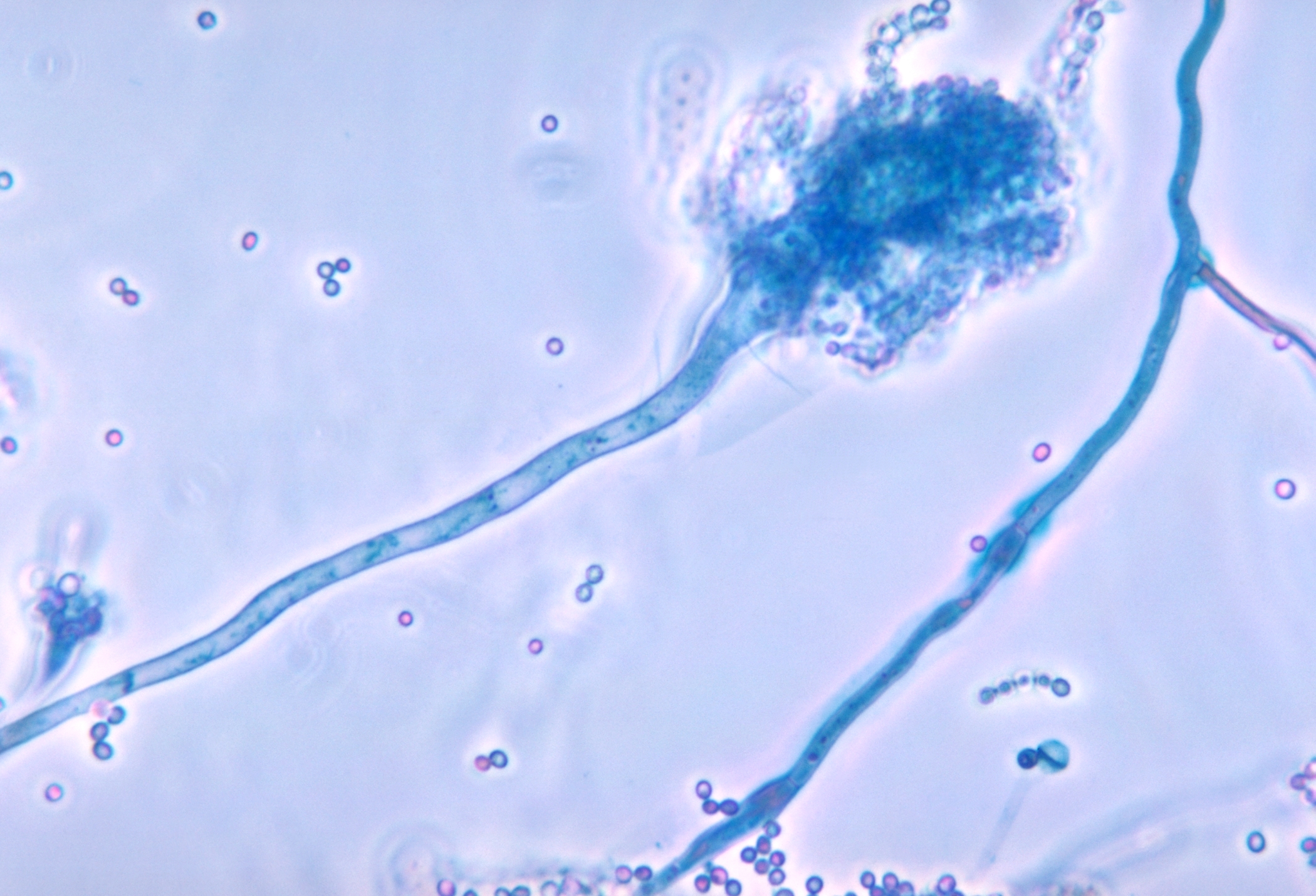
Every breath carries more than oxygen. It carries fragments of the living world — microscopic spores drifting through homes, hospitals, parks, and outdoor air. Among the most common of these is Aspergillus fumigatus, a fungus so widely distributed that virtually every person on Earth inhales its spores on a daily basis.
For the vast majority, this exposure is entirely uneventful. The immune system’s first line of defense — macrophages and neutrophils in the airways — identifies the spores, neutralizes them, and moves on. The encounter leaves no trace. Aspergillus passes through as part of the invisible background of daily life, neither causing harm nor registering as a threat.
But in some individuals, the response is different. The immune system does not dismiss the spores — it remembers them. It generates antibodies, establishes sensitivity, and in some cases begins to react to Aspergillus presence within the lungs with an intensity far out of proportion to any actual danger. What was harmless becomes a trigger. And what begins as sensitization can progress, in vulnerable individuals, to a condition called allergic bronchopulmonary aspergillosis — ABPA — in which the immune system’s overreaction causes ongoing inflammation and, if undetected for long enough, permanent structural damage to the airways.
The challenge that has defined this field for decades is not treatment. It is recognition.
Why ABPA Is So Easy to Miss
ABPA does not announce itself with a distinctive set of symptoms that clearly separate it from other respiratory conditions. Its presentation overlaps substantially with poorly controlled asthma — persistent wheezing, coughing, breathlessness, fatigue. Patients may cycle through repeated courses of treatment for asthma or respiratory infection before the fungal component of their condition is identified.
This is not a failure of clinical attention. It is a structural problem in how the disease presents. According to NCBI StatPearls, ABPA affects an estimated 11% of adults with asthma and 10% of adults with cystic fibrosis — populations large enough that the condition is far from rare, yet small enough that it does not register as the first explanation for respiratory symptoms that look like many other things.
The consequences of delayed detection are measurable. Ongoing eosinophilic inflammation in the airways leads to mucoid impaction, bronchiectasis, and progressive structural change. By the time ABPA is clearly identified in some patients, the lung damage it has caused has already reduced functional capacity in ways that cannot be reversed. Earlier detection does not just improve outcomes — it may be the difference between lungs that recover and lungs that don’t.
Two Ways of Asking the Same Question
Diagnosis has traditionally relied on two complementary approaches, each attempting to answer the same underlying question: has this person’s immune system recognized and responded to Aspergillus?
Skin prick testing works by introducing a small amount of Aspergillus antigen beneath the skin and observing the body’s immediate reaction. A wheal-and-flare response — visible redness and swelling — indicates that IgE antibodies are present and reactive. It is fast, inexpensive, and provides a real-time readout of immune activity.
Serum IgE testing works differently. Rather than observing a reaction, it measures the antibodies themselves — specifically, Aspergillus-specific IgE levels circulating in the blood. This approach reads the immune system’s record rather than its response: not what is happening now, but what has already been established.
The distinction sounds subtle. Clinically, it is significant.
A negative skin prick test result can be influenced by recent corticosteroid use, antihistamine medication, or the specific antigen preparation used — factors that suppress the visible reaction without necessarily reflecting the absence of sensitization. Serum IgE testing is less susceptible to these confounders because it measures the antibody directly, regardless of whether a skin reaction can be elicited at the moment of testing.
Many centers now favor serum IgE assays because they offer greater standardization and reproducibility. A threshold of Aspergillus-specific IgE above 0.35 kU/L is considered indicative of sensitization, while total IgE levels above 500–1000 IU/mL, combined with other criteria, support a diagnosis of ABPA.

What the Research Shows About Sensitivity
A comparative study examining both approaches in patients with suspected Aspergillus sensitization and ABPA found that blood-based IgE testing demonstrated higher sensitivity than traditional skin testing — meaning it was more likely to correctly identify individuals whose immune systems had already responded to fungal exposure, even when outward signs were subtle or inconsistent.
This finding has practical implications that go beyond methodology. In clinical settings where patients present with poorly controlled asthma and no obvious explanation, a negative skin test might previously have been sufficient to set aside a fungal diagnosis. Serum IgE testing opens a second line of inquiry — one that the body’s internal record, rather than its surface-level reaction, answers.
The two approaches are not competitors. Current guidance typically recommends skin testing as an initial screen when clinical suspicion is high, with serum IgE measurement following to confirm sensitization and assess severity. The value of the research is not that one replaces the other, but that it clarifies their respective roles — and particularly, that a negative skin test should not foreclose the investigation.
The Threshold Problem: Sensitization Is Not Disease
One of the most important concepts in this field is the distinction between sensitization and disease — a distinction that both methods must be interpreted within rather than used to determine on their own.
Aspergillus sensitization — the presence of specific IgE antibodies — is common in people with asthma. Studies suggest that 35–50% of patients with cystic fibrosis show detectable sensitization to A. fumigatus without meeting criteria for ABPA. A positive test result alone does not diagnose disease — it identifies a subset of patients who warrant further investigation.
ABPA diagnosis requires a convergence of findings: elevated total IgE, Aspergillus-specific IgE and IgG, radiographic evidence of airway involvement, and a compatible clinical history. No single marker is sufficient, and clinical judgment remains the framework within which all test results are interpreted.
The contribution of more sensitive diagnostic tools is not that they produce diagnoses independently — it is that they reduce the likelihood of a condition being missed when a patient’s immune system has already begun to respond.

A Broader Shift in Diagnostic Thinking
The move toward blood-based diagnostics in Aspergillus-related disease reflects something happening more broadly across clinical medicine: a shift from observing what the body does on the surface toward understanding what it has already set in motion internally.
Skin testing is inherently a test of present reactivity — does the body respond when challenged now? Blood-based testing is a test of immunological memory — has the body already built a response? These are different questions, and in patients who have been treated with corticosteroids, who are not currently exposed to high Aspergillus concentrations, or whose disease is in a subacute phase, the second question may be the one that yields a meaningful answer.
This shift also has implications for who gets investigated in the first place. As awareness grows that Aspergillussensitization is underdiagnosed in asthma populations — particularly in humid climates, hospital environments, and settings with older building stock — more sensitive detection tools create the conditions for earlier intervention across a broader population of at-risk patients.
Who Carries the Highest Risk
Aspergillus exposure is universal, but disease is not. The individuals most at risk of progressing from exposure to sensitization to ABPA share several characteristics:
- Asthma — particularly poorly controlled or difficult-to-treat asthma
- Cystic fibrosis — where chronic airway colonization by Aspergillus is common
- Chronic lung conditions — including COPD and post-tuberculosis bronchiectasis
- Immunosuppression — which alters how the immune system responds to fungal antigens
Geographically, environments with high ambient humidity, limited ventilation, and older building infrastructure create conditions of elevated fungal exposure — raising the baseline risk for sensitization in susceptible individuals. This includes much of Southeast Asia, parts of Sub-Saharan Africa, and densely populated urban environments with aging housing stock.
FAQ: Aspergillus Sensitization and ABPA
Q: What is Aspergillus sensitization? It is an immune response in which the body develops specific IgE antibodies to Aspergillus antigens — meaning the immune system has recognized and responded to fungal exposure. Sensitization is more common than disease and does not always lead to clinical illness.
Q: What is ABPA? Allergic bronchopulmonary aspergillosis is a condition in which the immune system’s response to Aspergillus colonization of the airways becomes exaggerated and self-sustaining, producing inflammation, mucoid impaction, and progressive airway damage. It occurs primarily in people with asthma or cystic fibrosis.
Q: Why is blood-based IgE testing more reliable than skin testing? Skin testing reflects present reactivity and can be suppressed by corticosteroids or antihistamines. Serum IgE testing measures antibodies directly, providing a record of what the immune system has already established regardless of current medication status or testing conditions.
Q: Does a positive test mean someone has ABPA? No. Sensitization to Aspergillus is common in asthma populations — 35–50% of cystic fibrosis patients show sensitization without having ABPA. Diagnosis requires elevated total IgE, specific IgE and IgG, and clinical or radiographic evidence of disease. Test results must be interpreted in full clinical context.
Q: Who is most at risk of developing ABPA? Individuals with asthma, cystic fibrosis, or other chronic lung conditions who experience ongoing Aspergillus exposure. Those with immunosuppression or living in high-humidity environments with elevated fungal load face additional risk.
Q: Why does early detection matter? Because ABPA produces progressive structural damage to the airways over time. Delayed diagnosis allows inflammation to cause bronchiectasis and fibrosis that cannot be reversed. Earlier identification through more sensitive diagnostic tools allows treatment to begin before permanent damage occurs.
References
Academic Sources
- PMC (2021). Aspergillus sensitization and ABPA — comparative diagnostic study. PMC. https://pmc.ncbi.nlm.nih.gov/articles/PMC8471116/
- StatPearls (2026). Allergic Bronchopulmonary Aspergillosis (ABPA). NCBI Bookshelf. https://www.ncbi.nlm.nih.gov/books/NBK542329/
- PMC (2017). Tests to assess sensitization to Aspergillus fumigatus in cystic fibrosis. PMC. https://pmc.ncbi.nlm.nih.gov/articles/PMC5606171/
- Merck Manual Professional — Allergic Bronchopulmonary Aspergillosis: https://www.merckmanuals.com/professional/pulmonary-disorders/asthma-and-related-disorders/allergic-bronchopulmonary-aspergillosis-abpa
Official Sources
- CDC — Aspergillosis: https://www.cdc.gov/fungal/diseases/aspergillosis/index.html
- WHO — Fungal Priority Pathogens List: https://www.who.int/publications/i/item/9789240060241
Article prepared by the MoldNewsHub editorial team based on peer-reviewed research and publicly available scientific literature.