Can Fungi Forecast Climate Change?

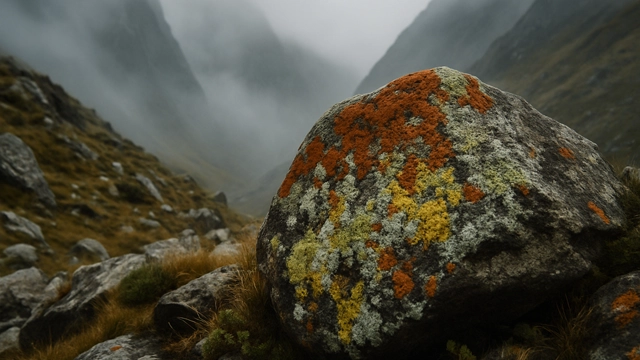
Up in the Himalayas, where cloud forests meet alpine air, a silent sentinel clings to rock and bark: the lichen. Often overlooked as “mossy patches,” lichens are in fact intricate fungal–algal partnerships—and they may be among our best biological sensors for a warming planet.
In a groundbreaking study spanning altitudes from 1,000 to 4,500 meters, Indian scientists have mapped 1,475 species of lichens across the Indian Himalayas. But instead of just tallying species, they looked deeper: into the traits that make lichens tick.
What they found might just change how we listen to nature’s climate signals.
What’s in a Trait? A Lot, If You’re a Lichen
Rather than focusing only on species names, the researchers examined functional traits—physical and ecological characteristics that determine how lichens interact with their environment:
- Growth form (crusty, leafy, or bushy)
- Attachment strategies
- Type of algal partner
- Water-holding capacity
And these traits weren’t randomly scattered. They showed clear elevation patterns, revealing how climate conditions shape lichen communities. Mid-elevations (2,000–2,500 meters) were a hotspot for diversity, likely due to optimal moisture, temperature, and host availability.
As climate zones shift upward with global warming, the distribution of these traits is expected to change, making lichens a natural “barometer” for microclimatic variation.
Why Lichens, Though?

Lichens are extremely sensitive to environmental stressors—especially:
- Temperature changes
- Air pollution
- UV radiation
- Precipitation patterns
They don’t move, so any changes in their structure or function often reflect changes in the environment itself. Unlike weather stations, lichens record long-term shifts, not just daily anomalies.
Think of them as biological thermometers embedded in nature’s walls.
So What’s the Warning?
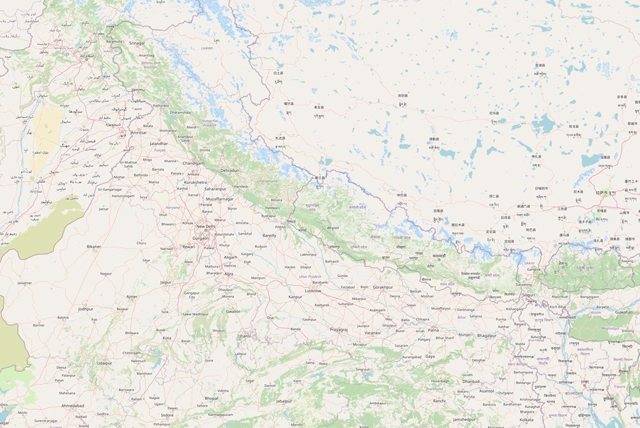
While the study doesn’t yet document a time-series shift (i.e. lichens changing over years), it sets up a powerful baseline. By understanding which traits dominate in cooler vs. warmer zones today, scientists can:
- Detect future community shifts
- Flag climate-sensitive zones
- Guide conservation priorities
- Develop trait-based monitoring systems for forests and mountains
The researchers are clear: more longitudinal work is needed. But this approach—combining species data with functional ecology—marks a new era of lichenology with climate relevance.
The MoldNews Verdict
“They grow slow. But they speak fast—if you know how to listen.”
This study positions lichens as more than ecological decoration. They’re living indicators of Earth’s quiet transformations, especially in sensitive regions like the Himalayas.
And as climate change accelerates, the fungi that cling to bark and stone may just be our most eloquent storytellers—capturing not just what’s lost, but what’s still possible to preserve.