Meta Description
Fungi do far more than decompose dead leaves. Inside every fungal cell, a sophisticated biological engine is running — sensing the environment, adjusting its chemistry, and quietly driving some of the planet’s most important processes. Here’s what’s actually happening beneath the surface.
The Forest Floor Has a Secret
Walk through a forest after rain. The smell that rises from the soil — that deep, earthy richness — is not just the scent of wet dirt. It is the smell of work being done.
Beneath your feet, fungi are breaking down fallen wood, dead leaves, and organic debris that has been accumulating for years. They are converting complex molecules that almost nothing else can touch into simpler compounds that plants, bacteria, and entire food webs depend on. Without this process, forests would slowly bury themselves in their own waste. Carbon locked inside dead matter would never return to the cycle that supports life.
A recent study reveals that the answer turns out to be far more sophisticated than the word “decomposition” suggests.

A Tool Kit That Took Millions of Years to Build
Most organisms digest food internally. Fungi do something fundamentally different — they digest their environment before absorbing it.
When a fungus encounters a piece of wood or a dead leaf, it doesn’t consume it whole. Instead, it secretes specialized proteins called enzymes directly into the surrounding material. These enzymes work like molecular tools, each one designed to break apart a specific type of chemical bond. Some target cellulose — the structural scaffold of plant cell walls. Others go after hemicellulose, a complex sugar polymer woven between the cellulose fibers. And some — the most remarkable of all — can break down lignin, the extraordinarily tough aromatic polymer that makes wood resistant to decay.
Lignin is not easy to break. It is a tightly cross-linked, three-dimensional structure that resists most chemical attacks — by design, it is what protects plants from being consumed. Most bacteria cannot touch it. Most animals cannot digest it. Yet certain fungi, particularly the white rot fungi like Phanerochaete chrysosporium, have evolved an enzyme arsenal — including lignin peroxidases, manganese peroxidases, and laccases — that can dismantle lignin piece by piece.
It is, in a very real sense, a chemical superpower that took hundreds of millions of years to develop.
Not Just Reacting — Reading
Here is where the story gets more interesting.
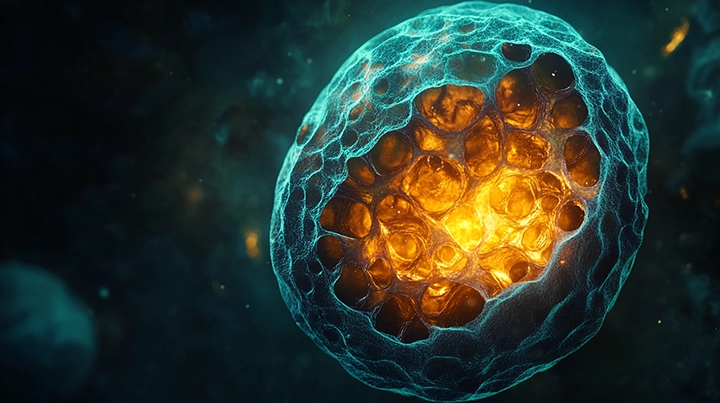
Fungi do not simply flood their surroundings with enzymes at random. They read their environment first. Through molecular signaling systems embedded within their cells, they constantly sample the conditions around them — measuring nutrient availability, moisture levels, temperature, and the chemical signatures of the materials they are growing into.
Based on those readings, they adjust. When nutrient sources become scarce, certain species can switch their metabolic pathways to utilize alternative energy sources. When conditions become stressful, they alter their growth patterns — pulling back from unproductive areas and redirecting resources toward more promising ones. When specific substrates are detected, they ramp up production of the precise enzymes needed to break those materials down.
This is not passive biology. It is active, continuous decision-making at the cellular level.
Think of it less like a sponge absorbing whatever it touches and more like a factory that receives real-time signals from its environment and adjusts its production line accordingly.
📷 [IMAGE 2 — Place here] Suggested image: Fungal hyphae network growing through soil or organic materialSource: Wikimedia Commons — Fungal hyphae soil Caption: Fungal hyphae extending through organic material. These thread-like structures are not just physical extensions — they are the delivery system for enzymes and the sensory network through which the fungus reads its environment. Credit: Wikimedia Commons, CC BY-SA 4.0

From the Forest Floor to the Climate System
The implications of all this extend well beyond individual trees and forest floors.
Fungi play a central role in the global carbon cycle. When they decompose organic matter, the rate at which they do so determines whether carbon stays locked in soil — effectively removed from the atmosphere — or gets released back into it. A forest’s capacity to act as a carbon sink depends in part on how active fungal decomposition is, and how quickly that activity responds to changing conditions.
This is where the connection to climate change becomes direct. As global temperatures rise and rainfall patterns shift, fungal systems will respond — adjusting their enzymatic output, their growth patterns, and their metabolic rates. Those adjustments, multiplied across the world’s forests and soils, will influence how much carbon enters the atmosphere and how quickly ecosystems can adapt.
Small changes in cellular regulation, in other words, can translate into measurable shifts in global carbon dynamics. The engine inside the fungus is connected, through a long chain of ecological relationships, to the climate of the planet.
The Soldier’s Uniform and the Future of Energy
There is a striking footnote to the story of fungal enzymes — one that begins in the South Pacific during World War II.
American soldiers stationed in tropical conditions kept finding their cotton uniforms and canvas tents disintegrating with unusual speed. The culprit, eventually identified, was a microscopic fungus later named Trichoderma reesei — a species with an extraordinary capacity to secrete cellulases, the enzymes that break down cotton and other cellulose-containing materials.
Decades later, that same fungus became one of the most important organisms in renewable energy research. The enzymes that dissolved military equipment are now being engineered and deployed industrially to convert plant biomass into fermentable sugars — a key step in producing second-generation biofuels from agricultural waste rather than food crops. The fungal machinery that evolution built to decompose forest litter is being repurposed to help address fossil fuel dependence.
It is a reminder that understanding how biological systems work — really work, at the molecular level — opens doors that are impossible to anticipate in advance.

The Smallest Level, the Largest Scale
There is a broader principle running through all of this.
The behavior of ecosystems — how forests respond to drought, how soils store or release carbon, how plant communities recover after disturbance — is built from the behavior of individual organisms. And the behavior of those organisms is built from molecular processes happening at a scale we cannot see without specialized equipment.
Fungi make this connection unusually visible. Their influence on the world is well documented: they decompose organic matter, support plant growth through mycorrhizal networks, regulate nutrient cycles, and shape the composition of soils across every terrestrial ecosystem on Earth. But all of that influence flows from internal mechanisms — from enzyme cascades and signaling pathways and gene regulatory networks that operate inside cells.
Understanding those mechanisms is not just an exercise in scientific curiosity. It is essential for predicting how ecosystems will respond to environmental change, for designing biotechnological tools that work with biological systems rather than against them, and for recognizing that the organisms we most often overlook may be among the most consequential on the planet.
FAQ: Fungal Mechanisms and Their Impact
Q: What are fungal enzymes and why do they matter? Fungal enzymes are specialized proteins secreted by fungi into their surrounding environment to break down complex organic materials. They are essential for decomposition, nutrient cycling, and increasingly, for industrial applications in bioenergy and waste treatment.
Q: How do fungi break down lignin, which most organisms cannot? Certain fungi — particularly white rot species — produce a specialized set of oxidative enzymes including lignin peroxidases, manganese peroxidases, and laccases. These work together to chemically dismantle lignin’s complex molecular structure, a capability that took hundreds of millions of years to evolve.
Q: How do fungi “sense” their environment? Fungi use intracellular signaling pathways that detect chemical signals in their surroundings — nutrient concentrations, pH, temperature, and the molecular signatures of specific substrates. These signals trigger changes in gene expression, enzyme production, and growth patterns.
Q: What is the connection between fungal activity and climate change? Fungi are primary drivers of organic matter decomposition in soils, which directly influences how carbon is stored or released. Changes in fungal activity due to temperature and moisture shifts can affect carbon cycling at a global scale.
Q: How are fungal enzymes being used in industry? Fungal enzymes are being applied in biofuel production — particularly using Trichoderma reesei enzymes to convert plant biomass into fermentable sugars — as well as in waste treatment, paper production, textile processing, and the development of new antifungal treatments.
Q: Are fungi really that important to ecosystems? Without fungal decomposition, organic matter would accumulate rather than cycling back into the soil. The nutrients that plants depend on, the carbon dynamics that regulate climate, and the soil structure that supports agriculture all depend on fungal activity operating continuously at the microscopic level.
References
Academic Sources
- Ren et al. (2024). Fungal systems for lignocellulose deconstruction: From enzymatic mechanisms to hydrolysis optimization. GCB Bioenergy. https://onlinelibrary.wiley.com/doi/10.1111/gcbb.13130
- Dashtban et al. (2023). Lignocellulose degradation in bacteria and fungi. Frontiers in Microbiology. https://www.frontiersin.org/journals/microbiology/articles/10.3389/fmicb.2025.1583746/full
- Leonowicz et al. (2011). Fungal biodegradation and enzymatic modification of lignin. PMC. https://pmc.ncbi.nlm.nih.gov/articles/PMC3180040/
- Sista Kameshwar & Qin (2020). Lignocellulose degradation: An overview of fungi and fungal enzymes. PMC. https://pmc.ncbi.nlm.nih.gov/articles/PMC6999254/
- Haitjema et al. (2023). Lignin deconstruction by anaerobic fungi. Nature Microbiology. https://www.nature.com/articles/s41564-023-01336-8
- Kubicek et al. (2019). Cellulases and beyond: the first 70 years of Trichoderma reesei. Microbial Cell Factories. https://link.springer.com/article/10.1186/s12934-016-0507-6
Official Sources
- U.S. DOE Office of Science — Fungi Aid Biofuel Production: https://science.osti.gov/Science-Features/News-Archive/Featured-Articles/2009/09-14-09-s
- MDPI Agronomy — Role of Ligninolytic Enzymes in Sustainable Agriculture: https://www.mdpi.com/2073-4395/15/2/451
Article prepared by the MoldNewsHub editorial team based on peer-reviewed research and publicly available scientific literature.