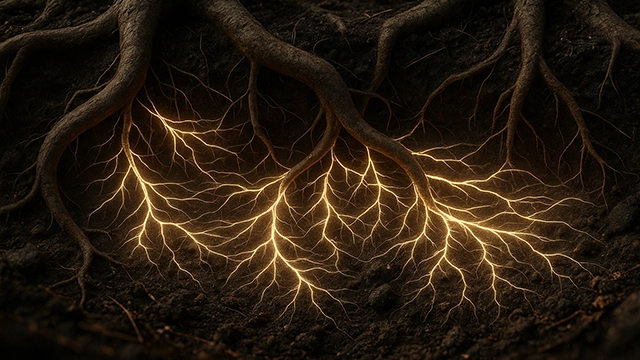
When we think of forests adapting to climate change, our minds often jump to visible signs—drought-stressed leaves, shifting tree lines, or forest fires. But a crucial part of this survival story lies underground, in the microscopic alliances between tree roots and fungi. A sweeping new study reveals just how much these invisible partners—particularly non-mycorrhizal endophytes—may shape forest resilience in a warming world.
Thousands of Trees, Thousands of Volunteers
In one of the largest citizen science efforts of its kind, over 1,000 volunteers across 20 U.S. states helped scientists gather root samples from diverse forests. The goal: map how root-associated fungi shift across temperature and rainfall gradients. Using high-resolution sequencing, the researchers zeroed in on three main fungal guilds:
- Arbuscular mycorrhizal (AM) fungi
- Ectomycorrhizal (EM) fungi
- Non-mycorrhizal endophytes (NME)
Each of these groups has a unique ecological role, and their presence or absence may determine how well trees thrive—or struggle—under pressure.
Drought-Tolerant Friends Beneath the Surface
The findings were striking. In hotter, drier regions, non-mycorrhizal endophytes—a lesser-known and poorly understood group—became increasingly dominant. Meanwhile, many ectomycorrhizal fungi declined with dryness, though some held strong in colder zones. AM fungi, on the other hand, were strongly tied to better seedling growth, especially in harsh conditions.
What does this mean? It suggests that fungal flexibility, not just tree traits, may define a species’ ability to adapt to climate extremes.

Surprise Ally: The Cladosporium Effect
Among the many endophytes studied, one genus stood out: Cladosporium. Best known for its roles in decomposition and indoor allergies, Cladosporium was surprisingly abundant in dry, hot soils—and it appeared to boost the growth of Acer (maple) seedlings.
This opens new questions: Could certain fungal taxa act as secret weapons for tree survival in degraded or changing environments? And how many beneficial microbes have we overlooked by focusing only on mycorrhizal fungi?

A New Lens for Forest Resilience
This study reframes how we think about tree adaptation. It’s not just about bark thickness, leaf morphology, or root depth. Trees form dynamic, shifting alliances below ground—and these partnerships may evolve faster than the trees themselves. In other words, the fungi surrounding a tree may help stretch its climate limits.
As warming continues, these root-fungal relationships could become critical not only for natural forests but also for reforestation and conservation efforts.

A Takeaway That Roots Us
Forests don’t fight climate change alone. Beneath every healthy tree is a network of microscopic collaborators—some familiar, others still mysterious. The science is clear: fungi aren’t just passengers; they’re co-pilots in ecosystem resilience.
So next time you walk through a forest, remember: the most important partnerships are often the ones you can’t see.

References
Academic
- Peña, R. et al. (2017). Ectomycorrhizal fungi for survival under drought. New Phytologist. Full text
- Jumpponen, A. & Trappe, J. M. (1998). Dark septate endophytes and their roles in forest ecology. Canadian Journal of Botany. Full text