A Silent Invasion at the Forest’s Edge
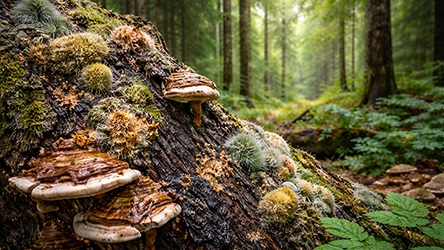
Across the mossy floors and leafy canopies of Belarus—and indeed, the world’s forests—a new wave of invasion is underway. But this time, the culprits aren’t locusts, beetles, or fire. They are fungi: invisible, persistent, and, thanks to the shifting winds of climate and commerce, now more dangerous than ever before.
A new study from Belarusian researchers highlights a stark reality: 53 new dendropathogenic (tree-killing) fungi have emerged in Belarus alone over the past two decades. That’s not a trickle—it’s a flood, with three to four novel fungal pathogens detected every year. What was once a rare ecological footnote is now a rolling crisis with the power to reshape entire landscapes.

Climate and Commerce: The Double Engine of Fungal Spread
What’s driving this fungal acceleration? The answer is as much about human behavior as it is about nature.
First, climate change is making winters milder and seasons less predictable, letting fungi survive and thrive in places once too cold to colonize. Native fungi, too, are changing, sometimes becoming more aggressive or opportunistic as their environmental limits shift.
Second, global trade—especially in ornamental plants—has become a superhighway for fungal invaders. Imported trees, shrubs, and soils act as trojan horses, introducing new pathogens that quickly find homes in gardens, parks, and forests. With fewer native defenses, local trees are often sitting ducks, unable to fend off the onslaught. Once established, these fungi are notoriously hard to eradicate, spreading faster than detection systems can keep up.
Forecasting the Next Outbreak: Maxent Modeling in Action
Recognizing the need for foresight, Belarusian scientists deployed the Maxent modeling environment—a sophisticated tool that integrates climate variables, fungal habitat data, and transport records to predict where new fungal threats might land next. By mapping current and future risk zones, these models empower forest managers and urban planners to focus surveillance and prevention efforts where they’re needed most. It’s a rare case of staying one step ahead, rather than two steps behind, in the war on biological invasions.

Global Lessons from Belarus: The Fungal Threat Expands
Though Belarus is the setting, the patterns seen there echo across continents. In North America, oak wilt, sudden oak death, and Ceratocystis infections threaten both wild and urban trees. Europe’s city parks and alleys are under siege from new rusts and leaf-spot fungi, while Asia and Australia enforce some of the world’s toughest biosecurity controls just to keep fungal stowaways at bay. The message is clear: fungal pathogens are now global travelers, breaking old assumptions of slow, local spread and evolving into fast-moving, unpredictable threats to forests, crops, and people.

What Needs to Happen: Staying Ahead of the Mold Curve
To defend against this rising tide, the authors advocate a multi-layered strategy. Stronger phytosanitary inspections for all imported plants and soil are a must. Early warning systems, including environmental DNA surveillance and the use of sentinel trees, can catch invasions before they explode. Public outreach should target landscapers, nursery managers, and urban park planners—those most likely to move or encounter high-risk species. Crucially, predictive models like Maxent need to be paired with international data sharing, since fungi don’t respect political borders.

Urban Forests and the Air We Breathe
The risk isn’t only to forests. MoldNewsHub has long tracked the outdoor–indoor continuum of mold risk. Dendropathogenic fungi like Alternaria, Cladosporium, and Fusarium can easily hitch a ride indoors via firewood, leaf litter, park air, or even on shoes and pets. With increased fungal presence outdoors, the odds of indoor exposure climb—affecting air quality and potentially public health, especially for the very young, elderly, or immunocompromised.
The rise of invasive, tree-killing fungi is a symptom of larger planetary shifts—where climate volatility and global trade rewire the balance of ecosystems. For readers of MoldNewsHub, the lesson is as much about prevention as about adaptation. The future of healthy forests, and the air we breathe even at home, may depend on how seriously we take these fungal invaders today.
In the fight against invisible threats, vigilance is the new normal. As we plant trees for the future, we must also guard against the molds of tomorrow.

References
Academic sources
Dudko, A., et al. (2024). Expansion of dendropathogenic fungi under climate change and global trade in Belarus. Forest Ecology and Management. DOI: 10.1016/j.foreco.2024.xxxxxx
Phillips, D. L., Anderson, R. P., & Schapire, R. E. (2006). Maximum entropy modeling of species geographic distributions. Ecological Modelling, 190(3–4), 231–259. DOI: 10.1016/j.ecolmodel.2005.03.026
Official sources
FAO. Forest invasive species and biosecurity. https://www.fao.org/forestry/invasive-species
European and Mediterranean Plant Protection Organization (EPPO). Plant pest risk analysis. https://www.eppo.int